
The Duck, the Path, and the Uncomfortable Zone
How to change your ways
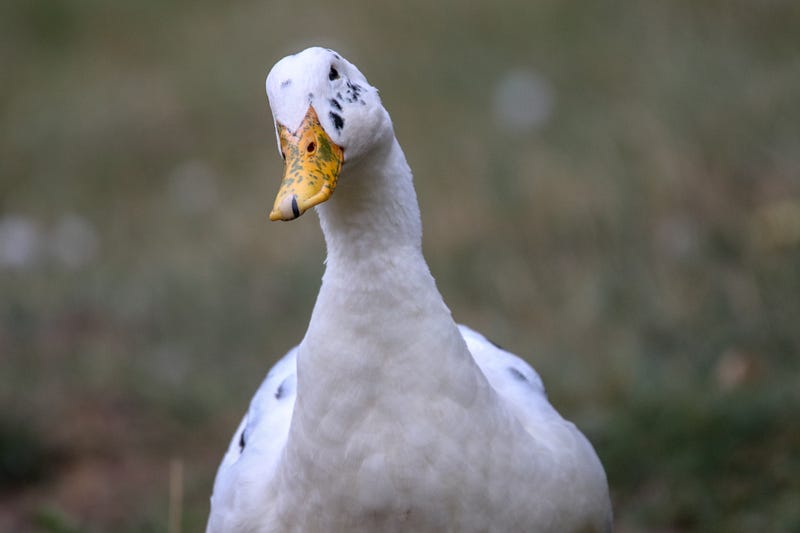
Egbert the duck was stuck in his ways.
“I always waddle down the garden path at this time in the morning,” he said. “Then I quack at passing cars on the verge of the road.”
He looked thoughtful for a moment.
“There’s a problem now though, and it spoils my routine.”
I watched his feathery downcast face and handed him a fruitloop to cheer him.
“They poured gravel on the path, and my webs can’t take it any longer. The teeny stones tickle, you see. I wouldn’t mind, but the family dog comes out to watch me hop and squawk as I do my best to shake off the shingle.”
At this point, Egbert did an impression of what happens.
“It’s like this,” he moaned, shaking his beak and rolling his eyes as he leaped around.
I told him I could see his problem and sympathized with his dilemma. Then I suggested he step off the stony path to waddle on the grass instead.
“Oh, no!” He insisted. “I couldn’t do that! I don’t like change at all.”
I asked him if he’d always been a stickler for routine.
“Oh yes,” he quacked. “When I was a duckling, I refused point blank to come out of my shell. ‘Come out,’ people said, but I sat tight for days.”
I scratched my head for a few seconds, contemplating how to deal with the issue. Then I thought it would be good to find out what finally coaxed him from his egg all that time ago.
“I think it had something to do with that gone off eggy smell in my surroundings. I just couldn’t put up with it a second longer and had to flee.”
Then an idea struck me. Maybe if I made the garden path unappealing, Egbert would change his ways and use the grass for his morning stroll to the verge.
I fetched plenty of rotting fruit, banana skins and such like, and laid them along the path. At first, Egbert was upset.
“What have you done?” He shrieked at me, fixing me with his beady left eye, and puffed up his feathers.
I told him it was for his own good, but he launched himself onto the path, holding his right wing over his beak to shut out the pungent aroma.
After a few hours, Egbert jumped from the path to the grass.
“I can’t cope with that pungent aroma” he said and took a shy step forward, shuffling his favorite web through the lawn. And then the other web followed, until he was actually waddling.
I was proud of him that morning. My parents, though, wondered why I emptied the old fruit and vegetable peelings, meant for recycling, onto the path.
“I did it for Egbert” I told them. They didn’t seem impressed.
It’s a couple of years on now, so I’ve come home to ask Egbert how he’s coping. This is what he says.
“I’ve given up quacking at cars. There are too many, and it’s not the same anymore. These days I taunt the dog before breakfast.”
I asked him if he has plans for the future.
“No. I’m just going to taunt the dog.”
Like Egbert, dear reader, you are in danger of getting stuck in your ways. The consequences could be you do the same old thing, day in, day out, and don’t leave your comfort zone.
The best way to stop doing what you usually do and move on to something better is to make what you usually do really nasty, so you don’t want to do it anymore.
Spending too long on your phone? Get a horrible ring tone and wrap the phone in barbed wire. Or place the phone at the top of a steep hill.
Want to stop eating boiled sweets? Ask a friend to suck them and re-wrap them before putting them back in the packet. You won’t like them so much. (I don’t wish to explain how I know this).
Apply the same idea to all your bad habits and activities you want to give up, and you will achieve good results.
Copyright © 2019 Bridget Webber. All rights reserved


