
The Dual Edges of Education in Social Mobility
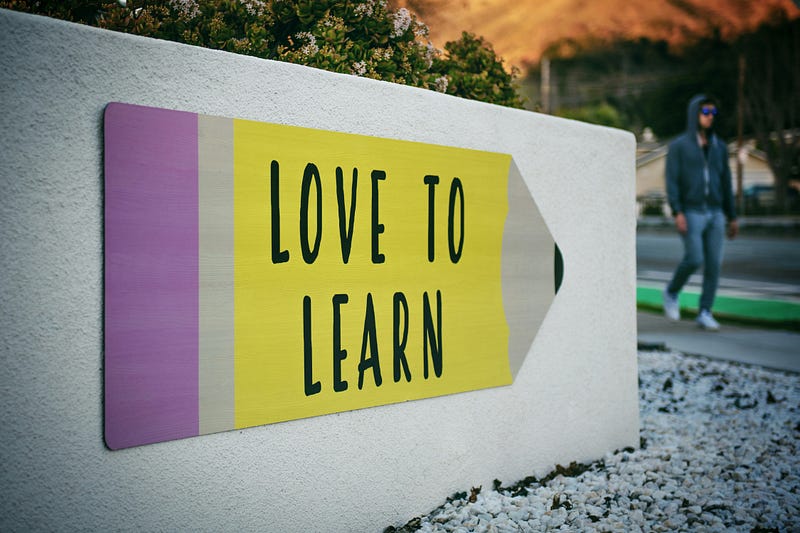
In the crisp air of early mornings, I often find myself strolling past the local school, its walls echoing with the vibrant chatter of students. It’s a place pulsating with potential, a microcosm where futures are forged and dreams are nurtured.
I recall my own days within such walls, where education seemed like the golden key to unlocking a world of opportunities. My parents, staunch believers in the power of learning, often spoke of education as the great equalizer, capable of leveling the playing field for those born into less fortunate circumstances. In classrooms, we were taught that with diligence and intelligence, one could scale the heights of social mobility, transcending the limitations of socioeconomic backgrounds.
However, as I progressed through the educational system, the landscape started to reveal its complexities. I noticed disparities, subtle yet persistent, like fault lines running beneath the surface of a seemingly level ground. There were classmates whose stories were starkly different from mine, for whom education was not a journey of exploration but a struggle for survival.
In one of my classes, there was a boy, let’s call him John. John’s attendance was sporadic, his uniform often worn and his homework rarely complete. Teachers labeled him as ‘troubled’ or ‘disengaged’. It was only through a shared project that I got a glimpse into John’s life. His reality was a stark contrast to the narratives we were fed; education for him was not a priority but a privilege. Balancing part-time jobs to assist his family, John’s academic pursuits were constantly overshadowed by immediate financial pressures. His potential was constrained not by a lack of ambition but by a dearth of resources and support.
John’s story is not singular but represents a larger, more systemic issue. Education, ideally a tool for social mobility, often mirrors and magnifies the inequalities prevalent in society. The quality of schooling, the availability of resources, and the support system a student has access to can drastically vary, creating a chasm between the haves and have-nots. This disparity poses a glaring question: How can education be the great equalizer when the scales are so unevenly balanced from the onset?
As I ventured beyond the confines of my schooling, into higher education and then into the professional world, the dichotomy of education as both a catalyst and a barrier became even more pronounced. I witnessed peers who soared, their talents and efforts magnified by the amplifying effect of quality education. Yet, I also encountered brilliant minds, much like John’s, whose potential remained stifled, their aspirations dimmed by systemic barriers and a lack of supportive scaffolding.
This duality of education strikes a profound chord within me. It’s a reminder that while we celebrate the power of learning, we must also recognize and address its role in perpetuating inequality. The narrative of education as a straightforward path to social mobility needs to be reexamined, its nuances unpacked, and its disparities challenged.
In grappling with these reflections, I’ve come to see my role not just as a passive observer but as an active participant in the dialogue for change. It’s about advocating for policies that ensure equitable access to quality education for all, regardless of zip code or background. It’s about supporting initiatives that provide holistic support to students, recognizing that true learning extends beyond textbooks and classrooms. It’s about being a mentor, a supporter, or simply a listener, understanding that sometimes the most profound lessons are taught through empathy and understanding.
Education is a force profound and pervasive, capable of shaping destinies and societies. And as I witness the young minds entering the school gates, I’m filled with a sense of resolve — a resolve to contribute to a narrative where education truly becomes a bridge, connecting not just minds, but lives and futures, in the most equitable and empowering ways.