
The Doggy-Style Leadership Or What I Learned About Humans By Training a Puppy
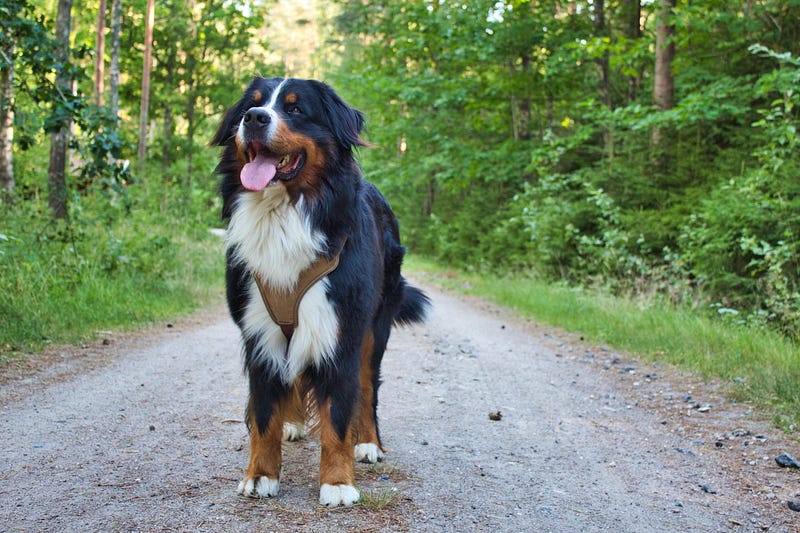
My employees call me an emotional leader. My kids call me a free-range mom. The former and the latter agree that I can be overwhelming with a psychological-turned-spiritual perspective on every little incident, although they do admit reluctantly that my unconventional approach often works. I prefer a peer-to-peer-eye-to-eye approach and care about the long-term growth and autonomy of my less-experienced team members a lot more than their reverence to my expertise and position. As a result, I give more attention to the underlying driving factors of someone’s behavior than dry results of their performance and spend an enormous amount of time reasoning and communicating options, needs, and opportunities for their change. It’s not to say that I don’t want to feel significant now and then, but overall, I prefer to be loved rather than needed.
According to Daniel Goldman, my leadership attitude would fall between democratic and coaching styles. Kurt Lewin would classify me somewhere on the edge of the delegating Laissez faire leader. My mentors gently call me a rebel and often wonder about my disrupted sense of discipline and structure, as well as whether my subordinates act the same way toward me as I do toward my mentors. And they are right in many ways. I have questioned authority for as long as I can remember. I always believed that the respect and loyalty of the followers should be earned by the leaders, not the other way around. I didn’t resonate with the management philosophy in which the bosses emphasize the titles, heavily reward good behavior with benefits and perks, and seek complete control over the team in every situation. It seemed very external and superficial to me. I vow to human growth and human potential development and cultivate in my dependents the maturity of making choices and following through with the responsibilities that come with those decisions, even when it is not beneficial to me as the leader.
However, this common reasoning of who-is-on-top mentality started to sink in deep into my psyche when I decided to get the puppy three months ago. With her, came an array of unexpected observations about the nature of human nature, which didn’t change my leadership style, but surely helped me to reassess everything I thought I knew about leadership, myself, and the people interactions, as a result, allowing me to retain the same, albeit much more conscious leadership choices.
OBSERVATION # 1: SOCIETAL SHAMING IS MIGHTY
Knowing what one wants is neither popular nor welcomed in our society. We are primed on what is right, important, accepted, or, in the worst-case scenario, undesirable. Knowing what one doesn’t want is valued higher than knowing what one does want. In fact, to be crystal clear on what an individual desires and to get precisely that is perceived as selfish and irresponsible, contrary to a trillion reassuring self-help videos on the subject.
I didn’t grow up with and have never been exposed to dogs in my entire life. I also never took interest in the nuts and bolts of the operations of the canine industry. A few years ago, I saw a photo of a Bernese mountain dog online, learned that she was one of the most family-oriented dogs, and decided that she will be the one for me and my home, when we are ready.
When the time came, I checked out the dogs in the shelters, but none of them were Berneses, so I decided that my doggy girl will come from a breeder.
“Do you know how breeders treat the dogs?”
“Is it OK for you that someone makes money off poor little creatures when there are so many of them caged and abandoned?”
“Do you find it ethical to pay money to the professionals who torture animals?”
“Do you know what they feed the mothers?”
People looked at me with disgust and disbelief as if I was about to commit the biggest crime of my life. In the human resources world, it would be the equivalent of blaming a manager for hiring a top-school graduate for a particular job and not giving a chance to their counterpart out of a community college or with no education but years of experience.
“Listen”, I told to all of them. “ I tried, I went to shelters. But the shelters don’t have what I want. And I want a specific puppy. Why should I settle for something different if I neither care for the bigger cause nor see anything else that I feel is an equal substitute?”
“Because you should care. It’s important.” They replied.
OBSERVATION # 2: OBEDIENCE AND CONTROL MAKE IT EASY
I have heard many times that a dog is an excellent preparation for the kids. I wouldn’t know. I did it backward and had kids first. I am known for living my life backward. And truthfully, within the first week of her arrival, my puppy taught me more about parenting than my kids did in the fifteen years. A certain kind of parenting, that is.
Three days into dog parenting, I caught myself crying because I couldn’t get a grip on my life. My puppy was everywhere, chewing on everything that she could find, including my flesh and kids’ clothing. I needed to get quick control of my environment by establishing unquestionable strict authority in the house over my dog.
My puppy’s strategy of re-parenting me was successful because she bit me. Biting hurts. Naturally, my children bite too in their way, nibbling on my heart and ego every so often. My teenager also barks very loud. But I learned to communicate and reason our misunderstandings, forgive their imperfections, and grow blotches of numbness on certain subjects. However, we, as humans, tend to react to physical pain a lot faster than to emotional or mental pain. You can’t reason with the puppy on a deep psychological level. You have to retreat and act within seconds, otherwise, she will bite harder.
The pattern is simple: command, treat, repeat. It works. It makes it easy to regulate the environment and retain a sense of control in the situation. It leaves very little freedom of choice for the puppy. She is happy as long as she sleeps, plays, eats, poops, and has the company of her human family. She is OK to abstain from choices if the above-mentioned needs are covered.
I advocate that there is a lot more to the human world than these basic processes. We are complex beings without guarantees, and vulnerability opens up a space for meaningful connections through the pain, depth, and lack of security. Unfortunately, we treat kids and employees too often as human puppies because we are afraid of their bites and our loss of control. Obedience is an easy way out.
OBSERVATION # 3: DIVERSITY AND INCLUSION ONLY WORKS ON DOGS
Social and mainstream media screams from all corners that we need to embrace and treat everyone in the same equal way regardless of the differences between us. It is true in theory, but in practice, we, as humans, tend to lean toward the similarity of others and are open to inclusion only within the level of our subjectivity.
When it comes to puppies, however, a vast majority of people, regardless of race, color, social and family status, or age, lose their cool and melt in the unconditional drooling sentiments toward a funny-looking furry creature with a slobbery mouth, perky ears, and wiggly tail. This is the only successful example of true diversity and inclusion in action on a mass scale, which I have witnessed so far.
OBSERVATION # 4: PLAY IN THE DIRT HELPS TO STAY HUMBLE
It doesn’t matter how expensive your cloth is, it will be torn and stained by a puppy.
It doesn’t matter how much time you spend cleaning the house, it will still smell like a puppy.
It doesn’t matter how sophisticated the pads, blankets, snacks, and toys are, they will be demolished by the puppy.
It doesn’t matter how much research you did to get the appropriate leash, the puppy will hate it for a while.
It doesn’t matter how well-mannered you are, the puppy will bark and poop whenever she feels the need.
It doesn’t matter how skilled you are with the dogs, the puppy will bite you anyway. The last one came as a shock to me, after watching dozens of puppy-training videos and participating in a few sessions with a puppy doula. The difference between me and experienced puppy handlers is that they set the boundaries from the first bite. I wait in a scared-hurt-hopeful daze imagining that the puppy will understand the issue herself or grow out of it eventually.
Oh, wait! I think that I do this in my private relationships as well. Another shocker…
The bottom line is that neither the experience nor the gear, no matter how impressive, protects from the scratches, blemishes, dirt, and frustration in the reality of being a puppy caretaker. Each new journey of building trust with a living being requires simplicity and patience: old shoes, that can handle the road; worn-out jackets, that weather the teething; simple foods, that soothe diarrheas; and basic tricks, that can direct the behavior. I would say this is equally applicable and effective for dogs and humans.
OBSERVATION # 5: SLOW PACE RETURNS VALUE TO TIME
In the fast-paced world of pre-corona, many of us had no time to breathe due to the pressure of performance and outcome deliveries. In the days of the corona, most of us, with the families in the house, got stuck in the loop between the bedroom, bathroom, kitchen, and a work station, gasping for fresh air outside the mask on a short stroll, while monitoring akin to crooks that no one would catch us in the act. In both worlds walking a puppy four times a day would be and still is considered a luxury of time. However, these walks have taught me to maintain focus and discipline more than two kids and four degrees did in many years, and this is probably the only luxury that I allow myself these days.
Since I have never been around dogs, everything about a puppy behavior is new to me and requires concentration and adjustment. She doesn’t wear a diaper, unlike my kids did, therefore if I don’t want to wash the floors many times a day, I better get up early, or drop what I am doing, and take her out. On the street, I never know which way she will turn, when she will jump on me or bite my jacket, or decide to cuddle and play rough with a stranger, flirt with a big dog next to her, or just do her business in the middle of the road. She takes her time to sit and watch the cars, to chase the birds, smell the ground, and jump from a bench to a bench. I can’t rush her, I can only wait for her to get exhausted hoping that she will stay still in the house. So I am forced to mimick her behavior: observe the nature, slow down the pace, smile at and strike a conversation with the passersby. And honestly, I have learned to treasure these slow daily walks along the same routes because noticing minute details around me allowed my thoughts and worries to dissipate in the surroundings and then reconstruct in an alternative structure by the end of the walk. As a side perk, nothing cures social anxiety more than having a dog. And the perception of time freezes.
One of the most recurring suggestions that I get from employees in coaching sessions for the CEO of the companies they work for is that they wish that the management would come to the floor where the employees reside to see and practice the work-life in the organization from their perspective. My puppy teaches me to adjust my life to her level of existence and engage in it at least partially from her perspective. Maybe the CEOs could do the same by simply slowing down, relating, and increasing the frequency of connection.
BONUS OBSERVATION: LEADERSHIP AND TRAINING ARE NOT ONE.
My final takeaway from the puppy journey is that leadership has two forms: animalistic (control-based) or humanistic (choice-based). Moreover, leadership and training, although often intermixed, are not equivalent or even remotely close to each other. They require entirely separate sets of skills and attitudes and serve in different ways. Leadership’s purpose is to bring the individual or the team toward the vision, and the training purpose is to ensure the maximum use of the aptitude.
I choose to remain a human leader for my cohorts. I like it that way. I find control and command exhausting. My puppy, however, needs a trainer who will prime her for a human mom with an overwhelming psychological-turned-spiritual perspective on every little incident and a peer-to-peer-eye-to-eye approach.
I can’t do it alone. A leader can never achieve things alone.