
The Distinguished Professor With a Murderous Past
Professor St. James was a teen when he murdered his parents and sister in cold blood
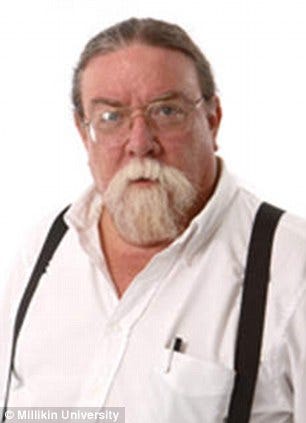
In 2013, James St. James was a professor and department head of psychology at Millikin University in Decatur, Illinois. He was well-respected at the university and was distinguished in his field. However, no one knew that he was hiding a deep and dark secret.
In 1967, St. James had murdered his parents and sister as a teenager. The secret was outed when reporters at the Georgetown Advocate tracked him down and connected him to the murders.
How could such an esteemed and award-winning professor of psychology be a murderer and how did he even get to become a professor?
The teen who murdered his family
St. James was actually born as James Gordon Wolcott. His parents were Gordon and Elizabeth Wolcott and he had one older sister, Libby.
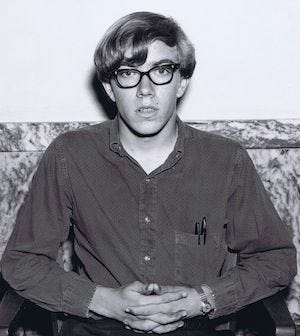
In 1967, St. James was 15 years old and living in a small town in Texas called Georgetown. His father was a biology professor at the local university. His family was well-known and respected in the town.
St. James and his sister, Libby, age 17, went to Georgetown High School. Both were good students. His sister was valedictorian of her high school class and St. James also got good grades and was described as having a high IQ.
St. James might have been a good student but he was also troubled. He started sniffing the glue used in model airplanes and he got into the anti-Vietnam war and peace movement of the late 60s. However, his father did not want him to be involved in the peace marches and forbade him from attending the rallies and marches. Soon, he started to feel at odds with his family and felt that they were driving him insane.
On the night of August 4, 1967, St. James attended a concert with his sister. After returning from the concert, he sniffed glue and armed himself with a .22 rifle. It was midnight when he decided to go on a murderous rampage.
He went into the living room and shot his father twice in the chest. He then walked into his sister’s bedroom and shot her in the chest and in the head. Next, he walked over to his mother’s bedroom and shot her 3 times in the head and chest. His father and sister died on the spot but his mother was barely surviving.
St. James hid the rifle in an attic crawlspace and ran out of the house and hailed a car with three college students. He told them that someone had killed his family and kept yelling “How could this happen!”
The students went to the house and found his mother barely clinging to life. They immediately contacted the police and his mother was taken to the hospital where she ended up dying.
Although St. James initially pretended that he did not kill his family, he changed his mind and revealed the truth when the police questioned him. He told them that he had been planning the murders for a week and that he had made up his mind to kill them the night before the shootings. He also showed them the hiding place of the rifle that he used in the murders. The police placed St. James in the county jail.
The diagnosis and a strange trial
Many psychiatrists questioned St. James about his murders. He told them that he hated his family. Strangely, his reasons for hating his family seemed trivial.
He mentioned that his sister was annoying, his mother chewed her food too loudly and that his father forbade him from getting involved in the peace movement. There was no evidence that they abused him or had been cruel to him. However, St. James admitted that he had been sniffing glue for several months and was suicidal.
The psychiatrists declared that he suffered from paranoid schizophrenia and was mentally competent to stand trial.
There was only a brief trial. The defense for St. James claimed he was mentally insane and the all-male jury handed out the verdict of not guilty by reason of insanity. All the charges against him were dropped.
He was taken under the care of psychiatrists who committed him to Rusk State Hospital until he could regain his sanity. In 1974, he was declared to be sane and released. In the meantime, he inherited his parents’ estate and even received his father’s monthly stipend from his university pension fund.
Life as a college professor
Upon his release from Rusk State Hospital, St. James decided to pursue a career in academics just like his father. Ironically, he decided to study psychology. He received a Bachelor’s degree and a Master’s degree in the field and then graduated with a Ph.D. degree.
He also changed his name from Wolcott to St. James and received a job as a professor of psychology at Millikin University which is a Presbyterian liberal arts school. He never revealed his murderous past in the Millikin job application.
At Millikin, St. James did exceptionally well and was liked and respected by students and colleagues. He rose up in the ranks, received distinguished academic awards, and became department head of the Behavioral Sciences Unit. He has been a faculty member in the department since 1986.
In his personal life, he never married or had a family of his own.
Conclusion
When the news of St. James’ horrifying past was revealed in 2013, Millikin University decided to stand by him,
Given the traumatic experiences of his childhood, Dr. St. James’ efforts to rebuild his life and obtain a successful professional career have been remarkable.
There had been calls for his resignation but the university decided not to heed them. He had his staunch supporters with one of them even remarking on a public forum,
James is honestly one of my favorite people in the world. He was my favorite professor, research adviser and mentor. If I had children, I would trust him to babysit my kids. I don’t know what happened or if he’s still schizophrenic or not. But he’s one of my closest friends and mentors and I support him completely.
St. James may have turned over a new leaf but questions still arise over the murders. Was St. James really insane or just highly intelligent enough to get away with the murders?
As of 2021, St. James is still listed on Millikin University’s website and the faculty directory of the Behavioral Sciences department.
Sources: Jim Fisher True Crime, Millikin University, Statesman, Chicago Tribune
For more from me on Chameleon,