
The Disastrous Day I Burnt Down My Mother-In-Law’s House
And then turned it into a profitable, money-grabbing catastrophe
It was an ordinary day, just like any other.
I was on my way home from work — until a frantic call shattered the tranquility.
“The house is burning down! Please come and do something,” my girlfriend pleaded.
I looked up and saw ominous fumes billowing into the sky, marking the location of the disaster.
Without a second thought, I leaped off the bus, deviating from my usual route, and sprinted uphill for three long blocks.
The Flames
As I arrived at the scene, firemen were already battling the flames, and my brother-in-law had managed to enter the blazing house and retrieve the keys to move the car to safety.
But it was then that the truth hit me like a ton of bricks — this was my fault.
You see, my mother-in-law was an adventure seeker, a free spirit that embarks on thrilling journeys each month.
While she indulges in dog sled backcountry skiing in the Andes, kayaking with whales in the Atlantic, or mountain biking through pumice stone deserts, my girlfriend and I take on the responsibility of dog-sitting at her home.
It was during one such dog-sitting stint that this calamity unfolded.
The Cause
The night before the incident, I was watching a soccer game.
And it is a customary lucky treat to eat milanesas at every game. So I turned on my mother-in-law’s electric oven, but while I was waiting, the power went out. I went to check the circuit breaker box: none of them had tripped.
Unaware of the power outage’s true cause, I continued watching the game on my computer, not realizing that this momentary inconvenience would set in motion an unexpected chain of events.
By the second half, it was dark. And my girlfriend arrived, puzzled by my choice to hide in the dark while our neighbors had electricity.
It was then that we discovered that something was amiss with the house’s power supply.
So I went to check the street light pillar and found the main breaker out of its original position. Busted.
The main breaker had been knocked out of position — something unusual had gone wrong.
Blinded by hunger and oblivious to the warning signs, I ended up cooking the milanesas in the gas oven. Little did I know that this seemingly harmless act of negligence would have catastrophic consequences.
The Aftermath
We went to bed, nothing out of the usual. We went to work, and everything was normal. But in the early afternoon, my girlfriend got a desperate call from her mother, asking if she was close to her place: neighbors had alerted her of thick smoke billowing from the roof of her house.
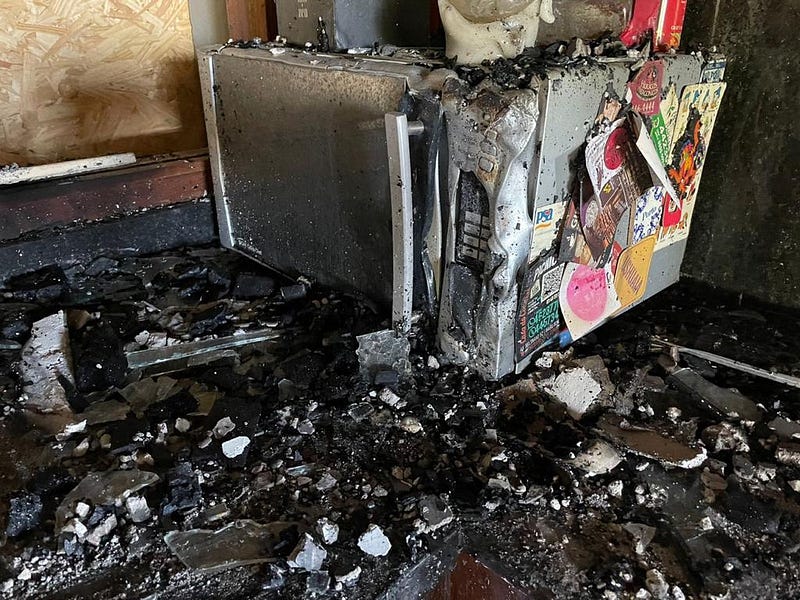
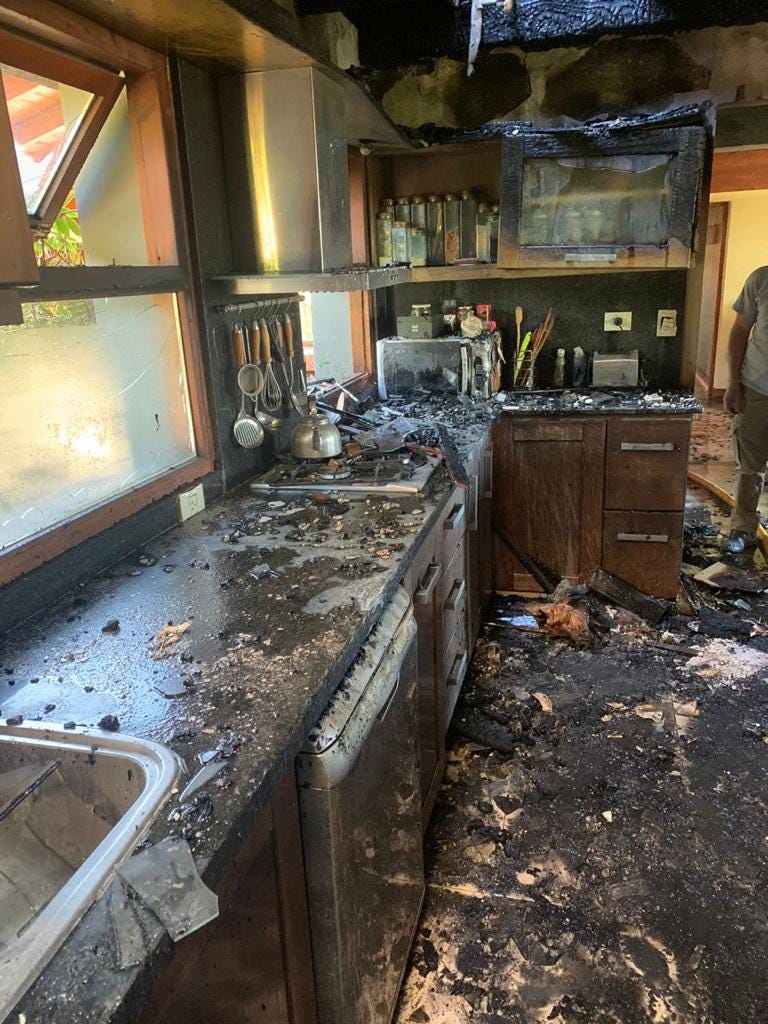
Long story short: the same short circuit in the oven that had blown the thermic during my game set the house on fire. By all accounts, my fault. I did not consider it alarming that the main pillar, which only responds to large short circuits, jumped.
The fire had ravaged the entire kitchen, dining room, living room, and most of the loft, consuming everything in its path, including her cherished adventure gear — skis, kites, fly-fishing rods, and kayaking equipment — all lost in the inferno.
In the aftermath of the fire, the air was heavy with grief and loss. The house was filled with suffocating smoke, the smell of charred memories and possessions that could never be recovered.
The Upside
Amidst the heartache, however, a glimmer of hope emerged. My mother-in-law had the foresight to invest in the best fire insurance available.
What seemed like a devastating blow would gradually transform into a money-grabbing opportunity.
The reconstruction of the house began at lightning speed, and within just two months of the fire, my mother-in-law had the property rented out.
The fire expert’s report played a pivotal role, backing up a generous compensation that covered all the repair costs and damages, even reimbursing her for the lost outdoor adventure equipment.
A modest expense of $60 per month or $720 per year for insurance ended up covering $250,000 in expenses.
The restored house boasted
- an updated techy and luminous kitchen
- a renovated dining room table and chairs
- new ski boots, kite-surfing equipment, kayaking gear, fly-fishing rods, camping set-up
From catastrophe to a profitable resolution.

The Lessons
This life-altering event taught me invaluable lessons about personal finance, insurance, and the importance of being vigilant and prepared. While the experience was painful and shocking, it also reminded me of the resilience of the human spirit and the potential for transformation amid adversity.
- “Risk comes from not knowing what you’re doing.” — Warren Buffett
Indeed, ignorance and negligence led me to make decisions with far-reaching consequences. It became evident that understanding the potential risks and being proactive in safeguarding our assets and investments is paramount.
- “Learn from yesterday, live for today, hope for tomorrow.” — Albert Einstein
While we cannot change the past, we can shape our future. My mother-in-law’s decision to invest in comprehensive fire insurance allowed her to rebuild her life swiftly and without significant financial strain.
- “When it rains, it pours.” — Saying
This disaster taught us to approach personal finance with greater mindfulness. The importance of financial planning and protection became all too clear. Life is filled with unpredictable twists and turns, and while some events may seem tragic, they can also present opportunities for financial growth and resilience.
- “Opportunities don’t happen. You create them.” — Chris Grosser
Certain disasters can unexpectedly present financial opportunities. By leveraging insurance coverage, actively participating in the claims process, and making informed decisions, my mother-in-law received compensation that not only covered repair costs but also allowed for upgrades and personal indulgences. Be proactive and maximize the potential benefits that can arise from challenging circumstances.
- “Frugality includes all the other virtues.” — Cicero
Frugality is not just financial discipline but prudence, temperance, and wisdom. It means cultivating a well-rounded approach to managing finances and achieving long-term financial success.
And it’s not about sacrificing enjoyment or depriving oneself. Instead, it aligns spending with core values, prioritizing what truly matters.
Amidst the chaos and financial strain caused by the fire, the story subtly highlights the significance of frugality.
- A safety net of savings that can act as a buffer during emergencies
- Cutting unnecessary expenses
- Being mindful of spending
- Budgeting
All these simple habits can free up resources to allocate toward essential needs and unforeseen circumstances.
My mother-in-law’s ability to recover financially was not solely dependent on insurance alone; it was also shaped by her frugal approach to managing resources post-fire.
The Final Path
From the ashes of tragedy, we have emerged more financially prepared for whatever challenges the future may hold.
Every decision we make has the power to impact our financial well-being.
And either pay for a kitchen upgrade or put you in eternal debt.