
Women Lose Their Lives Because of Doctor’s Dismissal: The Gender Health Bias.
We don’t deserve to die because of stereotypes, dismissal, and a lack of research.
Years ago, I began suffering from migraines almost daily. I was a junior in high school and missed school more frequently than I could count.
During this time, I went to the doctor often. But, after my last visit, I never went back. Why? You may ask. Well, when I told the doctor I had been experiencing migraines she looked me up and down and then swiftly asked me,
“Do you think it might be because you are wearing ponytails too much?”
Just to show you how absolutely laughable that was, here is a picture of me in high school:
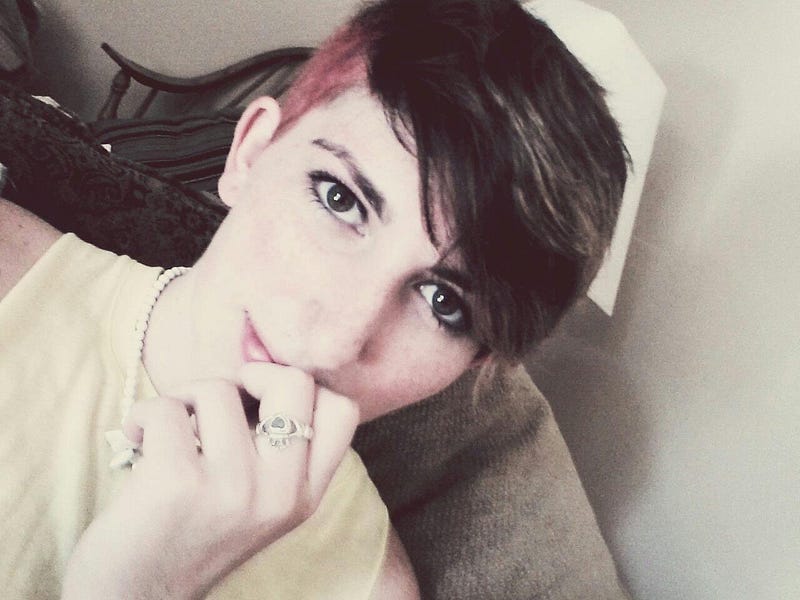
Yup, that’s me, with a very short pixie cut. No Ponytail. This doctor looked me up and down and seriously asked me if my headaches could be coming from me putting hair up that I did not have. She then quickly wrote me prescriptions for caffeine pills and anxiety pills (which I feel are kind of a contradiction) and told me those would help before rapidly shooing me away.
Suffice to say, I never went back.
A few years later, after I was married and grown, I went to the doctor six months after I decided to take myself off my birth control. This seemed to cause mayhem in my body. I hadn’t had my menstrual cycle in months, gained 40 lbs, and once again, was having frequent migraines.
After explaining these systems I was asked the inevitable question that every woman has been asked when we go to the doctor.
“Do you think you might be pregnant”
No, I told the doctor. It was not physically possible for me to be pregnant. I am 100% sure I am not pregnant. Despite this, she ordered a pregnancy test, costing me money, and never looked fully into the problem.
I never found out what was happening to my body during both of these examples, and thankfully the symptoms don’t seem to have been serious, as they have at this point all but gone away. (I still have migraines but way less frequent).
But, not all women are quite as lucky as me that their symptoms weren’t severe. Additionally, most women, share this experience of having their symptoms ignored by doctors.
Through the years, multiple studies have found that women are treated unfairly in the medical industry. This can include ignoring our symptoms, underprescribing our medicine, or undervaluing our pain.
For example, a study published in Academic Emergency Medicine found that women who went to the emergency room were forced to wait longer to be seen by a doctor than men who went with the same symptoms. Another study found that women were less likely to be prescribed pain medication, and yet another found that women were more likely to be prescribed anxiety medicine when we ask for health concerns to be addressed.
There is a wide range of reasons this could be happening. For one, doctors could just believe that women are overreacting to their pain.
Maybe it’s not as bad as she says — they think. Maybe it’s all in her head — they say. Maybe women are just overdramatic.
But, regardless of the reasons, maybe it’s time doctors stop with the preconceived notions of how women think, feel, and handle pain and actually listen to their patients. I experienced doctors not listening to me, but as I said, I am one of the lucky ones.
For others, it has cost them their lives.
Women are more likely to die from heart complications and heart attacks. Why? Because doctors don’t recognize the different symptoms or don’t listen to the patients who complain about them.
In the United States, women are more likely to die from giving birth and the following complications than they are in most other (European)countries. This gets even worse when we consider that Black women, in particular, are three to four times more likely to die due to birth complications in the United States.
Why as a society, and a country do we continue to allow this to happen? Women don’t deserve to have their health and wellness ignored. We don’t deserve to have our lives placed at risk because of stereotypes or under-research. Women deserve better from the health industry.
So please, we are begging you. Do Better.
If you would like to keep up with me and a plethora of other talented writers you can do so by signing up for a Medium Membership here.
If you enjoyed my post and would like to buy me a coffee, so maybe I can read a few more books and make some more content, you can do so here. :)


