
The Dinner Party
A Short Story
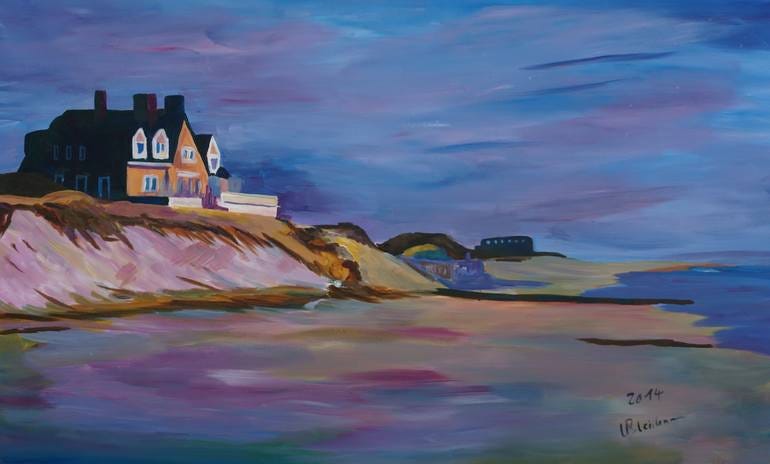
Our estate was situated on the North Shore of Long Island; a grain of sand amongst the quaint villas that gave the Island its reputation. Constructed with the austere grandeur of affluent society, my wife and I lived amongst its chambers, bathed in its salons, and relished its lush backyard that our friends named the pearl of the property. It was more than we needed, yet we enjoyed it thoroughly.
In my formative years, I could only dream of owning an estate this grand. I spent my early 20s impetuously believing I could be a writer; a great one at that. My days were spent vigorously typing up stories on the black typewriter my father had gifted to me on my fifteenth birthday. I imagined people would love the works I so carefully crafted, and I envisioned they alone would help me build a mediocre life for myself; one where I could settle on the brink of wealth and the middle class. And so this mirage led me to New York in its glamour and grace; a promising land that assured me I could believe in myself, and that I should believe in myself because everyone else there believed in me. And led me to meet Gloria Gildstein.
I was scrambling through the streets of New York City, my hands full of paper as my mind was of hope, until I stumbled into what felt like a brick wall. My pages flew into the air like leaves blown by a billowing gust of wind, fluttering in the breeze and settled on the concrete. Once I had finally collected my papers and my poise, I looked up to find a woman towering over me. She wore a black sundress with short-sleeves that showcased her freckled forearms. Her face was shielded by her black sunhat, whose brim circled her head like the rings of Saturn. Barely bothered by the encounter, she offered her hand and I took it. And with it, I took a new life.
Her face was revealed once I met her eyes standing. They were a magnificent green that reminded me at once of the Royal Palace of Oz; piercing, but promising. Her blonde hair was styled similar to that of a flapper: short and curled at the ends. Although I hadn’t seen it yet, I knew it bounced when she danced. Her lips looked as though they were crafted by the hand of a dexterous painter. His metal tool slowly shaping their curves the same way he moulded the oil paint on his canvas. As I looked at them my eyes caught a glimmer that could only come from that of exorbitant jewelry; jewelry that was passed down generationally to tie its new members to old wealth. I found its host in a pearl necklace that rested delicately on her neck. To this day, I don’t think I’d know her without it.
She looked me up and down as if she was adding me into her repertoire of faces that she could call upon for later recognition. I was overwhelmed with the curiosity that consumes you when you first meet someone worthy of it. She emanated a spectacular opulence I knew I’d never match, and as I regained the consciousness that had slipped away in her presence I realized I recognized her from the film I saw the night before. In her apparent observation of my best attempt to dress, she chuckled before I could speak:
“The pair of us look as though we should be attending a funeral”.
Noticing I complimented her look of all black I smiled, and we had begun the nosedive into a love many believed we would never recover from.
Gloria Gildstein became my wife that fall. It was the most sublime wedding I’d ever attended, and it was mine. It was no reflection of the passion we’d felt for each other in its delicacy and elegance, but we were satisfied in that it served its purpose: to bound ourselves to each other for as much time as we had left. We moved into the estate in which we currently live shortly after, and with it, moved into our place among the Long Island socialites. Revelling in the extravagance her wealth had built for us, we enjoyed brunch prepared by the finest chefs in New York the first morning, and have been enjoying it every morning since.
The house stood imposingly, with a backyard that looked out towards the water. I adored its view in the mornings where I’d read the daily paper as I sipped my coffee into the early afternoon. We lived our mornings lazily in its quarters, a corollary of both pursuing vocations within the arts, and sitting on an inherited fortune. Our love became quiet as soon as it occupied its rooms.
The living room was where we spent the winter seasons. When no acting roles needed fulfilling, Gloria could be found laid across the lavender couches, voraciously reading classic novels I’m not sure she understood. Her dainty feet were often resting on their high arms; her toes always painted a shade of red similar to that of her lips. She would spend hours on those couches as if the days didn’t have any other demands that needed tending to. I would often catch her slowly drifting into a light sleep as I walked up the stairs to take my bath in the late afternoon.
I spent my days on whichever couch she didn’t take residence on, often the one that only had room for one. My hours were taken up by my vigorous writing, typing up manuscripts I believed to have potential, but were always rejected under the pretense that New York publications were occupied with manuscripts that just had more.
And so our days together were balanced by my working and her lack, thereof, and our nights were taken up by a bottle of wine that found itself empty as quickly as we found it full.
When the summer months rolled around we relocated outdoors. A satisfyingly spacious atmosphere for two, we sipped chilled tea on the patio to pass the afternoon hours that slowly crept past us; slow like the beads of sweat I watched drip down her back as she painted her toes beside the pool. The pool remained still all summer, save for the rare occasions Gloria would climb upon a plastic blow-up and float around its waters, reading whatever novel that enthralled her that week. How many books we had lost as a result of her insouciance while she fell asleep in the hot sun.
The summer evenings were reserved for hosting lively parties encumbered by gardens that were groomed once a day. The flowers were delicately cared for; I never found a single one withered. They made the grounds as vibrant as Gloria was in her youth, and existed with a vivacity that mimicked that of her spirit. But it was the grass that knitted its outward appearance together, with the finality of that of an opera, a choir singing the final song. Sometimes I’d watch the workers clip the grass from our bedroom, closely examining the ground as if it was of utmost importance that all blades be cut to the exact same length.
The grass was always green on the outside.
On a summer night on a Thursday, shortly after we had returned from sunning in the Hamptons, we hosted a party with our closest friends. They arrived in their sumptuous vehicles of pastel colours, parking them on our driveway and down the street. In they came with their tasteful dresses and suits made of the finest linens and silk. Their excited chatter filled our house like a chorus of bird chirps until it dissipated into the backyard. They held glasses of bubbly alcoholic beverages with their pinkies to the sky, served to them by our caterers that ran around the party like frantic ants, trying to fulfill the wishes and demands of their guests.
When dinner was announced the glasses of bubbly made their way to the dinner table accompanied by their respective drinkers. Gloria was the last to sit down as some contention in the kitchen demanded her attention. Directly across from me at the other head of the table, she raised her glass, and dinner commenced.
Despite the chatter that filled the area under the awning, Gloria ate silently. As I looked at her time came to a still, and the background noise of our guests dispersed into the thick summer air. I wanted so desperately to take her in my arms in that moment, to feel the propinquity I knew we’d already lost. But whatever closeness we once had had dissolved as quickly as we acquired it, like a drop of ink in a bowl of water.
When Gloria finally felt my gaze she looked up and spoke with an air that reminded me I was futile to believe I had any sort of independence, that my empire was built on what was entirely hers: “How’s your supper?”.
I told her it was wonderful and what had begun as a naive joke the first day we met was actualized at last.