
The Difficulty of Being a Caregiver
Our family is falling apart…
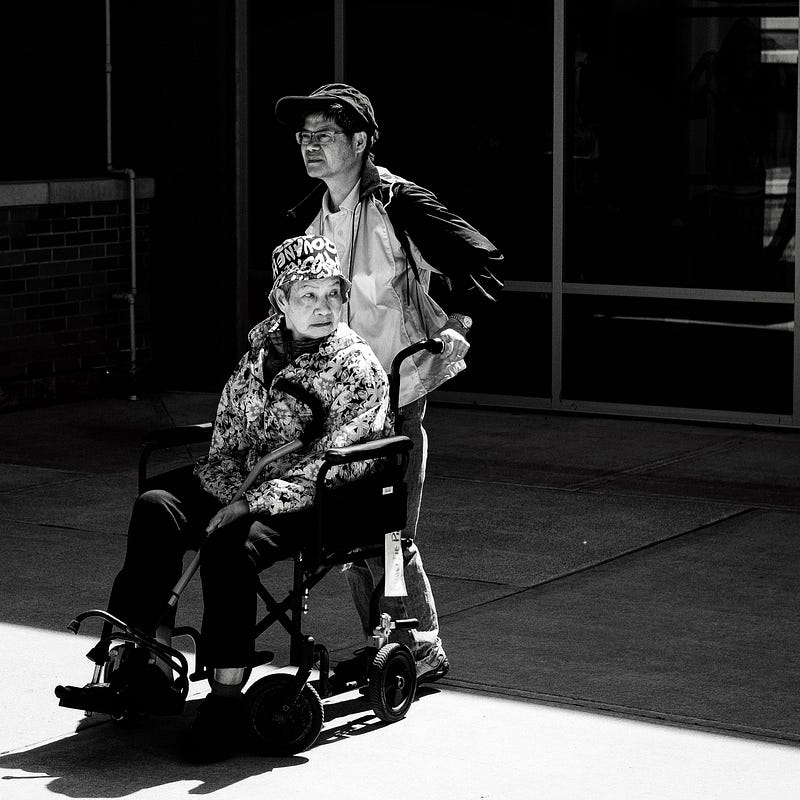
My 93 year old mother-in-law has been volleyed back-and-forth between her three daughters for several years now. It’s painful to watch. She had a stroke in 2013, and it’s been downhill ever since.
I try and help in the ways and I can, but I have my own mobility issues which prevent me from assisting to the degree that I would like. But I know what it’s like to be a caregiver. I’ve done it several times and it’s not easy.
The first time was when I was twelve. My mom was involved in a serious car accident which slammed her into a wall. She shattered her femur, and was laid-up in a body cast for nine months, her hospital bed a poignant reminder of what can happen to any of us without warning.
At that time, my twin sister was also getting very sick, so I was the only one in the family who was able to help her. Caring for my mother and twin sister wasn’t easy. My older sister decided to ditch the family and get married, and my brothers were already in college and rarely did anything. It was not easy but I did what I could. At least I was young and strong, but I had to grow up quickly.
The second time was when my mother had cancer in 1999. On Christmas they found a spot on her lung. She battled the disease for six months with chemo and radiation, shriveling away like an old tree.
My partner and I went to see her every other weekend to keep her company and provide some support for my stepfather. My older sister lived only 20 minutes away from my mom, but she didn’t do much of anything, except give my mother manicures. My mother hated manicures.
In 2015, my older selfish sister had cancer and expected me to rally around her and become her caregiver. I decided not to. She had been selfish for so many years, that I just couldn’t help her in the ways that she wanted me to. I don’t regret my decision.
So here I am again, in a caregiving position for my mother-in law, witnessing the toll caregiving takes upon the family. There are so many emotions and arguments. It’s horrific seeing what transpires at the end of life for someone who is slowly dying.
My mother-in-law is out of it. She is very unstable on her feet, and her bodily functions erupt like a wild volcano. She’s unaware that her body isn’t cooperating and doesn’t remember what transpired three minutes ago.
I try and help in the ways that I can, but these decisions are not mine to make. The solutions that I offer are often pushed to the side because of all the bickering. But I was a volunteer at a senior center for 17 years, and I know what’s going on. It’s hard to sit on the sidelines and see what is inevitable.
I have told them for past last several months that they need to start making arrangements because Dorothy‘s condition is not going to get better. It’s going to get worse. All of us are not equipped physically, mentally, or emotionally to take care of her anymore. We are all in our 60s, with our own health challenges.
One sister is crumbling emotionally. My partner is like a hot match with her moods and temper. The third sister doesn’t believe her mother should be put in a facility because she’s worried about what the neighbors might say.
So now we are left with a 93-year-old who is failing, and unaware that she is a burden to other people. I am afraid the family is going to implode.
As anyone knows, being at caregiver exacerbates all of the relationships within a family. The dynamics are escalated. It’s like a wildfire going on between the siblings. It makes me want to get in a car and leave, hoping that somehow all of these issues will resolve themselves on their own, but they won’t.
Are we really meant to live this long, when our bodies are failing, and we have no cognition of what’s going on? Why can’t we give our elders some dignity and put them out of their misery like we do our pets?
What is the purpose of keeping them alive, taxing our medical system, our caregivers and depleting financial reserves? What’s the point of seeing somebody live if their quality of life is so lousy?
I wish I could fast forward through this time period, but I can’t. I know there are no easy answers, and until there are, we will all have to suffer with the caregiving that we do, and the things that we have to endure.
Please feel free to share your own caregiving stories.
You might also enjoy this story.


