
The Difference Between Pride and Arrogance
In another article, I defined shame as the emotion that alerts us of a decrease in our social status. The opposite of shame is pride, which therefore could be defined as an emotion triggered by a gain in social status. Like shame, pride is anchored in basic human neurophysiology and is probably encoded in our genes. It is found in all human cultures and appears early in childhood. However, pride also becomes culturally laden to give rise to the related emotions of honor and dignity. And pride has its negative side in emotions like arrogance and hubris.
Can we get some insights about pride from neurophysiology? Do shame and pride represent opposite mechanisms in the same brain regions or they have their own brain areas? A study in 2008 using functional magnetic resonance imaging (fMRI) of 16 volunteers [1] showed that pride involves the activation of the right posterior-superior temporal sulcus and the left temporal pole, which are brain regions associated with social cognition and ‘theory of mind’. Theory of mind is a mental activity unique to humans consisting in making a representation of what is happening in the mind of other people. Accordingly, pride may be related to detecting what others think of us. A 2014 study [2] also used fMRI in 25 volunteers to study pride together with shame and guilt. It found that these three emotions activated the amygdala, insula and ventral striatum, but pride produced a stronger activation than shame or guilt. The ventral striatum contains the pathway linking the ventral tegmental area (VTA) to the nucleus accumbens. When it was discovered it was called the “pleasure pathway” because rats (and even humans) fell a strong compulsion to press a lever that would electrically activate it. This pathway uses the neurotransmitter dopamine and is responsible for the addiction caused by opiates, cocaine and other drugs. Nowadays it is called the “reward pathway” because it produces the motivation to engage in certain behaviors. Therefore, when we do something that we perceive as successful this pathway gets activated to give us that “pat on the back” that makes us feel good. We can see how it would be part of the emotion of pride to make us feel good about what we do. Pride also activates the medial prefrontal and posterior cingulate cortex [2], which are regions encoding the self-referential aspect of emotions, that is, how emotions relate to our sense of self and self-esteem. Pride has also been shown to be associated with feeling entitled to take decisions on behalf of others or to restore fairness [3]. Therefore, pride is an empowering emotion that motivates us to act and take control of a situation. In this, pride acts as the opposite of shame, which stops us from speaking, paralyzes us, and pushes us to the fringe of our social group.
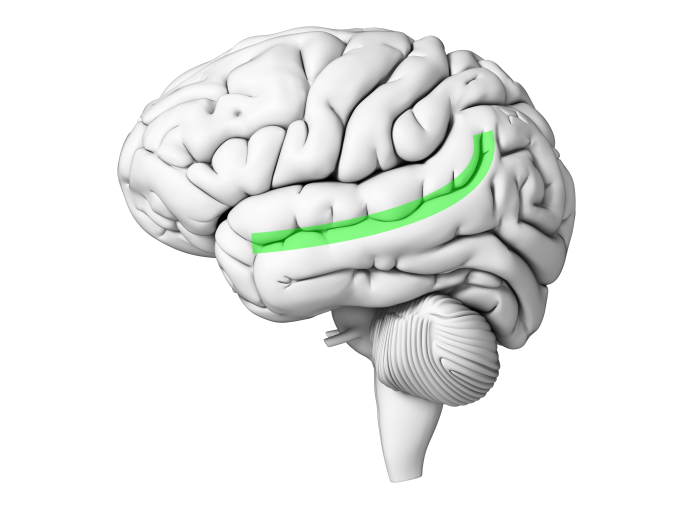
Pride comes from the praise we receive from people around us and also from the inside, from the value we give to our own actions. Arrogance originates when there is a discrepancy between these two forms of pride: we think more of ourselves than people around us. A study of brain activity of 276 volunteers [4] showed that different brain regions are engaged in pro-social ‘authentic pride’ and egotistic ‘hubristic pride’. Authentic pride activates the bilateral superior temporal gyrus, which is related to social activity, whereas hubristic pride activates the left orbitofrontal cortex and posterior cingulate cortex, the regions related to the sense of self. It is interesting how other social emotions come into play to suppress arrogance. From the evolutionary perspective, we can see that maintaining a fair social hierarchy in a human tribe was essential for it to function effectively to ensure mutual survival. If an arrogant individual threatens social harmony by claiming a status that he doesn’t deserve, it is necessary to “bring him down a peg or two”. One emotion that does that is indignation: anger generated by perceived unfairness. Indignation evokes altruistic punishment [5–7] to confront the offending individual. Another emotion that counters arrogance is ridicule: a forced loss of dignity inflicted upon the arrogant person. Wisecracks, retorts and jokes may be useful social mechanisms to shame arrogant individuals. Perhaps this can explain the adaptive value of humor and laughter: they provide a way to maintain social hierarchy without having to resort to costly physical confrontation [8]. Indeed, laughter seems to act as a valve for the relief of social tension.
This tension between pride, shame and arrogance has important political implications. I grew up during the last years of the Franco dictatorship in Spain. In the midst of the student protests of 1968, my father was the president of a major university and in charge of the repression. I remember him complaining on the phone to his subordinates that if they took a certain course of action the next day they would appear in La Codorniz, a humoristic publication of the time. In fact, ridicule played a large part in bringing down the dictatorship. Dignity and honor were fundamental for the fascists, they could not stand being laughed at. In modern American society, the battles of identity politics are fought using blaming and shaming as the weapons and pride as the shield. What is victimism if not a way to shame the oppressor at the same time as taking pride for being a victim?
In the personal sphere, shame and pride form the foundation of our self-image, our self-esteem and our ego. That is why shame can produce such profound and long-lasting damage, even leading to suicide. But pride has its nasty side, too. For some people, it seems, activating the VTA-accumbens reward pathway by means of professional success becomes the most important thing in life. The tension between shame when we lose and pride when we win becomes the core of our being. Those self-referential regions of the brain, the medial prefrontal and posterior cingulate cortex, create the ego, a narrative of who we are that is predicated on our achievements. Although the standard belief among psychologists is that people that are prone to shame are those with low self-esteem, I think that high achievers are also very sensitive to shame because the tension between shame and pride is so basic for their identity. Shame causes suicide, but paradoxically suicide is also prevalent among extremely successful people that shouldn’t be ashamed of themselves at all. Perhaps they drive themselves so hard that end up being extremely unhappy. Or perhaps when they have reached the top, when there is no place to go but downwards, life becomes meaningless to them. The way to internal freedom, them, may well be in letting go of both of our shame and our pride to create a sense of self anchored on other positive emotions like curiosity, compassion and love.
References
1. Takahashi, H., et al., Brain activations during judgments of positive self-conscious emotion and positive basic emotion: pride and joy. Cereb Cortex, 2008. 18(4): p. 898–903.
2. Roth, L., et al., Brain activation associated with pride and shame. Neuropsychobiology, 2014. 69(2): p. 95–106.
3. Mancini, A. and F. Mancini, Do not play God: contrasting effects of deontological guilt and pride on decision-making. Front Psychol, 2015. 6: p. 1251.
4. Kong, F., et al., Amplitude of Low- Frequency Fluctuations During Resting State Differentially Predicts Authentic and Hubristic Pride. J Pers, 2017.
5. Fehr, E. and S. Gachter, Altruistic punishment in humans. Nature, 2002. 415(6868): p. 137–40.
6. Boyd, R., et al., The evolution of altruistic punishment. Proc Natl Acad Sci U S A, 2003. 100(6): p. 3531–5.
7. de Quervain, D.J., et al., The neural basis of altruistic punishment. Science, 2004. 305(5688): p. 1254–8.
8. Proyer, R.T., S. Wellenzohn, and W. Ruch, Character and dealing with laughter: the relation of self- and peer-reported strengths of character with gelotophobia, gelotophilia, and katagelasticism. J Psychol, 2014. 148(1): p. 113–32.