
The Deeply Spiritual Dimension of Ramadan and Why I Fast
… because it’s really not about ‘starving yourself’.
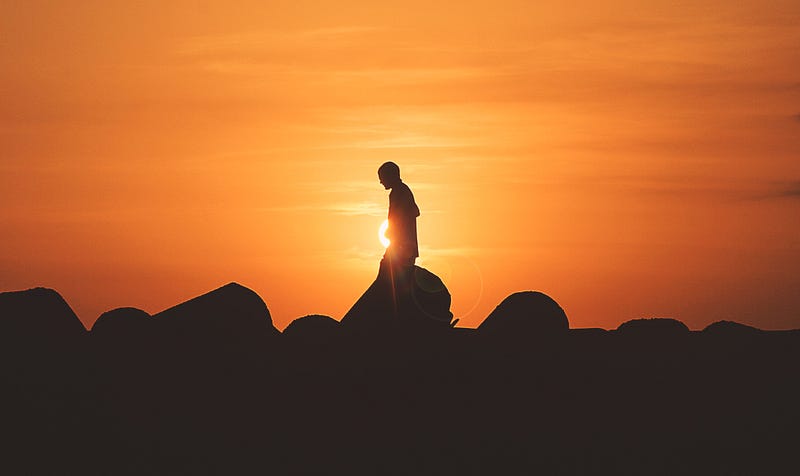
Ramadan is here once again — a time of the year, that for me, is absolutely magical.
I remember a good few years ago, I was sitting with my teenage nephew when he loudly proclaimed, “I can’t wait for Ramadan! Samosas, pakoras… all that nice food!”.
I smiled and looked at him. “Ramadan isn’t all about that nice food though darling,” I said. “Do you know why we actually fast?”
He looked at me blankly and then as if a light had switched on somewhere in the back of his head, he robotically mumbled, “Oh, to know what the poor people feel like.”
It’s funny, when I was his age and younger, I used to say the exact same thing: to know what the poor people feel like. Maybe it’s because that’s what I was taught in Islamic school and that’s all I had ever known without anyone telling me otherwise, or maybe it was just the easy response to give to a non-Muslim person when they asked, horrified, why I was starving myself.
Personally, my relationship with Ramadan has changed every single year ever since I was a child, with the twists and turns that life brings, and it took for me to almost completely lose my religion, for me to find faith again but for myself this time.
It was only when this happened that I truly began to understand the blessing that Ramadan is, its deeply spiritual dimensions and just how much beauty it gifts us.
What is Ramadan?
For those that don’t know, Ramadan is the ninth month in the Islamic holy calendar and is comprised of 29–30 days of abstaining from food and drink, as well as other bodily needs/desires for Muslims during daylight hours.
In the UK during the summer months, that means that sometimes our fasts can last up to 20 hours a day — a pretty long time to go without food or water, especially in the heat. But in the absence of all those outwardly desires and needs, something truly amazing begins to happen — and suddenly, you have no excuse but to focus on the inner aspect of yourself, and I believe that is truly where our treasure lies.
It is also not just Muslims that fast. As well as the ever-increasing numbers of intermittent fasters, most of the world’s religions prescribe some type of fasting, whether that is a Christian person during Lent, a Hindu person once or twice a week, or a Jewish person on Yom Kippur.
These fasts require the faster to give something up or to abstain from something in the name of their Lord, and ultimately to better themselves as human beings in order to grow closer to God, and closer to themselves.
Why do Muslims fast for a whole month though?
Well, I see it this way. Although most human desires are completely natural, sometimes we can become victim to these desires. In excess, these desires can become harmful to us, our bodies and our own spiritual growth and development, which is why our holy book, the Qur’an, advises against certain things — but many of us can sometimes fail to follow that advice, or find it difficult to do so.
However in Ramadan, suddenly things that are actually lawful to us on a day-to-day basis such as food, drink and sexual relations with our spouses are made unlawful from sunrise to sunset. The effect of this is tremendous. We find ourselves willfully submitting to the act of abstaining from food, drink and other things because this is what is required of us during this holy month; we find ourselves saying no to normal things which are otherwise allowed, showing us the human capacity within ourselves to abstain from whatever we want, whenever we want. This just goes to show that we can say no to those things that the Qur’an advises us are harmful, on a normal day outside of the holy month — it’s all about training the mind, the body and the spirit, and Ramadan gives us the perfect time to do that.
Ramadan: The Healer
Ramadan is pretty much a prescription from a doctor for us to heal — the doctor being the Lord almighty. The whole month is a healing process within itself — a way of building and cultivating self-fortitude, courage, and self-belief.
It’s an arduous journey that first begins with the body, and the external facets — but which then goes on to penetrate the inner facets of the soul, the spirit and the heart. By removing all those usual physical wants and needs, it allows the time and space to focus on the inner self: after all, we are not our bodies, or our clothes, or the food that we eat. We are infinite souls with such massive potential to reach a level of consciousness in our everyday lives to bring us closer to our Lord, and personally, Ramadan is a huge reminder of this.
Through fasting, we learn to understand our carnal selves, and by taming our physical appetites, desires and greed we begin to pave a path that elevates us from our physical being up to the spiritual dimension of our being. And that is so beautiful.
A. Helwa says, in her breathtaking book ‘Secrets of Divine Love’:
“Ramadan teaches us that the spiritual path is not so much about doing as it is about non-doing. When we surrender and let go of the desires that do not serve us, we come to see that we’re floating peacefully along the river of God’s decree.”
Ramadan — if done and appreciated fully — teaches patience, perseverance, gratitude and humility.
It allows a fresh start to those who may have found themselves falling and a new perspective to those who already thought they were on their way.
Ramadan is a time of reflection, of soul-nurturing and of personal spiritual growth and development, and that’s in addition to the amazing detoxing, healing and nurturing process the physical body undergoes as well.
The gift of Ramadan — because that is exactly what it is, a gift — stuns me to silence through its generosity and its beauty, and its perfect example of how we should try and live our lives every single day.
So, all of this and even more is why I fast. And for me, it is a complete honour and a privilege to do so.
Partially derived from an earlier post here. Why I Fast — SABAH ISMAIL (sabah-ismail.com)
(Let’s keep in touch. Sign up for letters of love and light here.)