
The Deepest Regrets People Share at the End of Life
We can learn from their voices and choose a different path.

Consciously facing the end of life can evoke strong feelings and initiate a process of reflecting on the choices you made. Veils are ripped asunder and social rules thrown aside in a last chance urgency to get down to the bone. Did you hearken to the call of your spirit or end up sublimating your desires to the needs of others or the relief of social conformity?
Hospice workers such as Bronnie Ware, author of “The Top Five Regrets of the Dying,” describe conversations filled with regrets about taking the easy way out, rather than tackling challenges in a self fulfilling way.
The number one regret people voice is a big one. They did not live a life true to themselves, but did what other people expected of them.
How do you discover the root of your own authenticity? It requires undertaking a process of cancellation. We have to try on various roles to discover the ones most relevant to our life path. We will flounder in some directions and flourish in others. In the process of weeding out, a list of desirable options will slowly form and coalesce into a viable course of action. Casting our net wide can result in an unusual catch we might not have considered.
After high school, I attempted setting out on an acceptable trajectory by enrolling in college. I’ll never forget the day during winter quarter, freshman year, when I watched a film in a Cultural Anthropology class about the Yanomami Indian tribe living in the Amazon jungle. Their region had never before been penetrated by white people and the anthropologist was filming a reality straight out of the pages of National Geographic magazine.
I felt like a fire alarm went off in my system. I could barely stay seated. There wasn’t even a conscious thought process involved. I needed to go out into the field now, not after laboring through a multitude of classes I wasn’t interested in, to land a degree. I barely finished out the quarter while actively planning my first global adventure.
A big lesson had been thrown my way. Be dedicated to curiosity, try out different roles and see where you strike a match. If that small flame led to a bonfire, I would be on course. This is also the way we develop our intuition. Once we start trusting ourselves, our environment begins supporting our personal decisions.

The second regret was they wished they hadn’t worked so hard.
It takes no stretch of imagination to believe this profound regret. My professional life was in the healing arts and I worked with people of all ages, sometimes multiple generations within the same family. Because I was a trusted confidant, I heard their uncensored feelings and the depths of their pains and joys.
Younger people often entered my practice completely burned out, depleted by exhausting emotional states and the demands of jobs they could no longer refresh with enthusiasm. The initial lure of hefty salaries and what they thought might result in an enviable lifestyle had quickly lost its glamour. They made a lot of money in our tech oriented city but also felt they had sold their soul. They worked 80 hours a week or more and it wasn’t enough, according to their peers and employers. Work became a blood letting from the stone of their despairing hearts.
College graduates often bemoaned their field of study. Their parents had been reluctant to buck out for classes unless they chose certain categories with a ‘sustainable’ future. When I asked them what they would prefer doing, their answers usually referred to passions in the creative arts and sometimes doing manual labor such as landscaping or construction. What really stood out, was how many of them never used their degrees and higher education in a satisfying way and ended up not having an interest in careers they had been trained for.
They hungered for a deep dive into their own selves, to embark on a quest ushering in a more meaningful life. They felt stuck in place by a lifestyle that had morphed into an albatross they dragged around in the required daily grind.
Most of their parents were pleased by the outward success of their offspring. They liked the comfort zone of their own values reflected back. But there’s a glitch. Parents cannot even imagine what their children are born to learn in their futures. There will be unknown careers looming ahead in fields not even existing at this time. Why pigeonhole youth when the playing field is wide open and rampant with possibilities?
When I asked parents if they were fulfilled by the careers and lifestyles they had chosen, a surprising number of them stated they derived meaning in life mainly through providing for their families. Their own desires were placed on a back burner, at a cost. Due to this pervasive resignation, we risk ending up dissatisfied in the latter stage of life.
Many held the belief their offspring should endure toeing the same line. I heard a lot of opinions about everyone having to grow up and assume adult responsibilities at some point. This ancestral patterning is dominant in Western culture and discourages identification of your own path.
We have no guarantee of our lifespan, so create and seize opportunities now.
We all need purpose and meaning in our lives. If we are inhibited in the pursuit of who we are in our core, it’s all too easy to fall into despair, depression and settle for a life of less than. Do we have to wait until near death to realize that?
There are some blessings in being born into a large family. I was kid number eight in a line up of eleven children. Even as a young child, I felt myself to be expendable, in a positive way. I thought my parents had so many children, it wouldn’t matter if I didn’t live up to their dreams. They were so very done with parenting by the time I entered high school, their biggest concern was my graduating without getting ‘in trouble’ and getting the hell out of dodge. Whew, another one launched and three to go. Their attitude was the polar opposite of a helicopter parent and one of my tickets to self liberation.
It gave me permission to live a life in reverse of the norm. I was a nomad at heart and logically concluded the prime of youth was the best time to take advantage of wild and free roaming. It didn’t make sense to place my passion on a future checklist, years passing away until retirement, enduring a suspension of true animation.
Each time I returned to the U.S. I lived a simple life, working intensively and saving almost every dollar I earned to fund the next adventure. I enjoyed the jobs I found and relished developing new friendships and using my skills in varied ways. It didn’t really matter where I chose to work as all employment fed into my heart’s desire.
We can all do this. I was not an exception to the rule, even though friends and family were sure they couldn’t do the same. I merely developed the necessary courage to find my own way. The global education I received greatly assisted me in eventually targeting and establishing a meaningful career, where my needs could be met while in service to others.
Number three was the wish they had the courage to express their feelings.
We can all relate to this one, no matter our age. We owe it to ourselves to clarify how we feel, what we feel and how to effectively state our feelings. Assumptions about our behaviors can run rampant if we suppress our emotions. Even hesitant, inelegant communication can build bridges to others and confidence within ourselves.
At the very least, we can be willing to give emoting a chance. The more we speak up, the sooner we realize we will not faint in a ditch by doing so. We also identify our feelings through voicing them and seeing how our expression affects others as well as ourselves.

Number four was a wish they had stayed in touch with their friends.
There’s an epidemic of loneliness in contemporary culture. We get immediate gratification from our devices and maintain an illusion of intimacy through false connection.
The prime eradication of loneliness stems from within our own selves. It’s a good idea to be friends with your own being. Showing up inside means accepting what arises in your thoughts. They can become amusing and nauseating simultaneously in their sheer repetition alone. We end up realizing this is a universal, human dilemma and make a shift to viewing life’s parade with a dose of humor if possible and compassion always.
Ask yourself how many of your friends and followers would show up if you needed support. The friends you can usually count on are the ones you resonate with in person and have an investment in. It takes time to establish history with a circle of loved ones and you have to be willing to risk exposing your vulnerable and touchy zones and dealing with the same in others.
The final regret was a wish they had let themselves be happier.
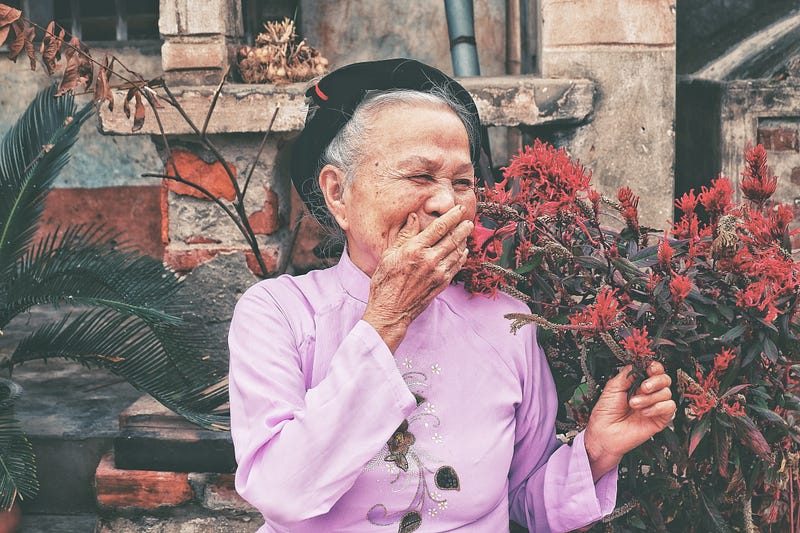
That’s a stunner in the use of language alone. How can we ‘let’ ourselves be happy if we are not mentored in the art of developing our happiness. Where are those rarefied individuals bent on pursuing and living out their own visions? What does authentic happiness look like and how does it show up for each one of us? We’ll only have the answers to those questions through personal trial and error.
We are the only ones responsible for our happiness and we don’t access it by becoming mysteriously satisfied one day. We need vivid examples of fellow humans demonstrating their fulfillment and encouraging others to follow suit.
All of the above regrets were due to a lack of courage. This was stated by the dying in their own words, not mine.
Courage is a vital component of physical, emotional and spiritual well being. I realized early in life that the direction I chose was a fairly risky, non traditional manner of learning. It was guaranteed to tax me until I mastered the basics.
I took small steps at first, starting out with a hitch hiking trip down the west coast of the U.S. It worked out well, so I gathered funds and hitched across the U.S. with two girlfriends in tow. We had unforgettable adventures and my courage was bolstered enough to head out internationally.
Building courage and developing intuition was akin to a runner working up to a marathon. We don’t sign up for a race without expecting to lay down some serious mileage to build up our endurance and assure success in our goal. By the time I travelled internationally and entered the third world, I was honed and prepared through a previous series of tests and challenges.
This may be a dream, but many of my dreams have come true. May we all learn to discover the path to personal enrichment in our lives. May we embody the courage necessary to honor our hearts and by doing so, embolden others. Our lives are precious material to experiment with and they will hopefully direct us straight back into our hearts.