
The deep heritage of Jacksonville’s Florida Theatre…and that time Elvis Presley could only move his little finger on ‘Hound Dog’
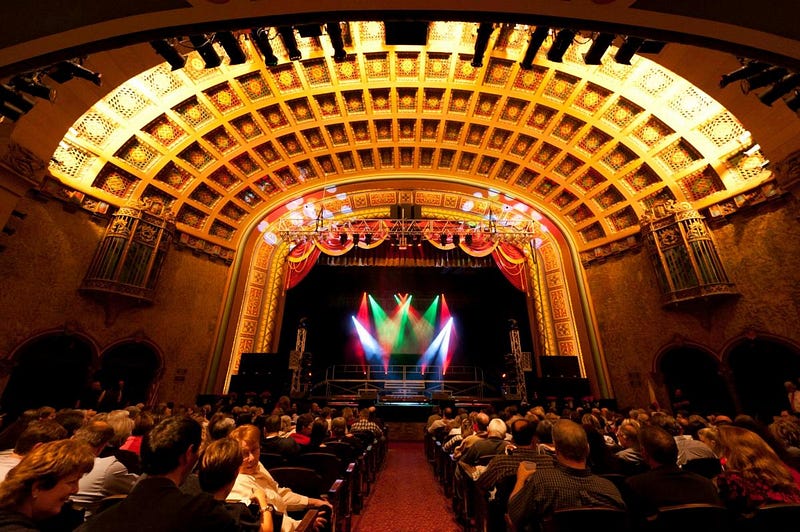
Jacksonville’s Florida Theatre is steeped in a deep musical heritage that continues to attract a wide array of major recording artists. Built in 1927, the theatre was conceived as a movie palace with ample room for stage productions. Even then the building boasted air conditioning and central heating.
Listed on the National Register of Historic Places, it is Jacksonville’s last remaining remnant of 1920s fantasy architecture, exemplified by that era’s Mediterranean Revival. The interior resembles a Middle Eastern courtyard with shimmering stars, balconies, fountains, a nearly six-story arch, and optimal sound to boot. At 1,900 seats, the stage can be seen clearly from all angles.
If one could enter a time machine, the early 1930s would be the theatre’s golden age. After a cartoon, news segment, and short comedy subject were successively screened, an orchestra played an overture — unbelievably on a movable orchestra pit — for an impending feature length film. But the decline of vaudeville gradually forced management to turn their attention to plays sponsored by non-profit organizations and concerts.
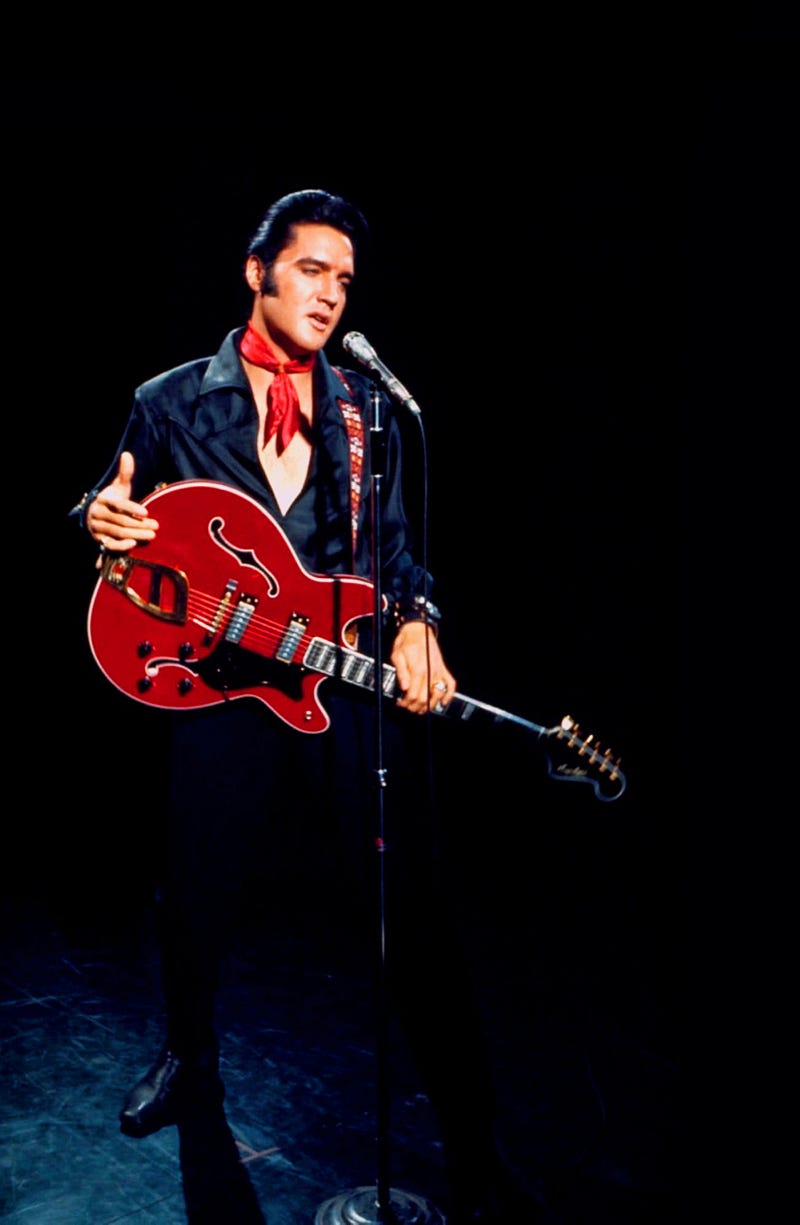
A notorious if virtually forgotten incident happened 60-odd years ago at the Florida Theatre. Over two sweltering summer days on August 10 and 11, 1956, Elvis Presley blazed through Jacksonville for six performances [the King of Rock ’n’ Roll’s debut indoor performances in the city, not his first overall as has been widely reported]. Along with fretboard icon Scotty Moore, upright bassist Bill Black, drummer D.J. Fontana, and the Jordanaires on supporting harmonies, Elvis toured non-stop during his meteoric rise to fame.
Controversy was a constant companion. Jacksonville’s teenage girls almost succeeded in ripping Elvis’s clothes off the previous year when he was cutting singles for Sam Phillips’ indie Sun Records, so a local Baptist preacher decided to do something about Presley’s “spiritual degeneracy.” After holding a prayer service summoning the Lord to save the singer’s soul, the preacher contacted juvenile court judge Marion Gooding, who prepared an unsigned warrant charging Elvis with impairing the morals of minors. Elvis was told that if he shook his hips, the warrant would be signed and an arrest would be imminent.
Elvis’s unscrupulous, wily manager Colonel Tom Parker went into swift protection mode, hiring a lawyer to sit in the audience at each show. Judge Gooding also decided to observe the proceedings after having a face-to-face summit with Elvis about certain movements considered taboo. Side-to-side wiggling was acceptable but back and forth motions were prohibited. That actually happened.
Policemen were ubiquitous, each show was filmed, and Elvis seemingly complied with the judge’s mandate. Moore remembered that the Florida Theatre was where “the curled lip and the little finger thing really got started. Elvis stood there flat-footed and did the whole show.” Brimming with foot-tappin’ nervousness even when reclining on a sofa, Elvis didn’t understand the controversy and was clearly dismayed when telling reporters, “I don’t do no dirty body movements.” In the mid-’50s Eisenhower-repressed America had not seen a white performer possessing such unbridled sexual magnetism.
A few weeks later, Elvis began filming his first movie, a forgettable B-western named Love Me Tender that nevertheless did gang busters at the box office costarring breathtaking Priscilla Beaulieu doppelganger Debra Paget. The Jacksonville incident became a minor blip in Elvis’s career, although Life magazine covered the brouhaha. The establishment may have been the temporary victor, but 42 years after his incomprehensible demise Elvis’s discography has not lost resonance. Rarely nostalgic, Elvis made light of the “all I could move was my little finger” controversy during the sublime ’68 Comeback Special.
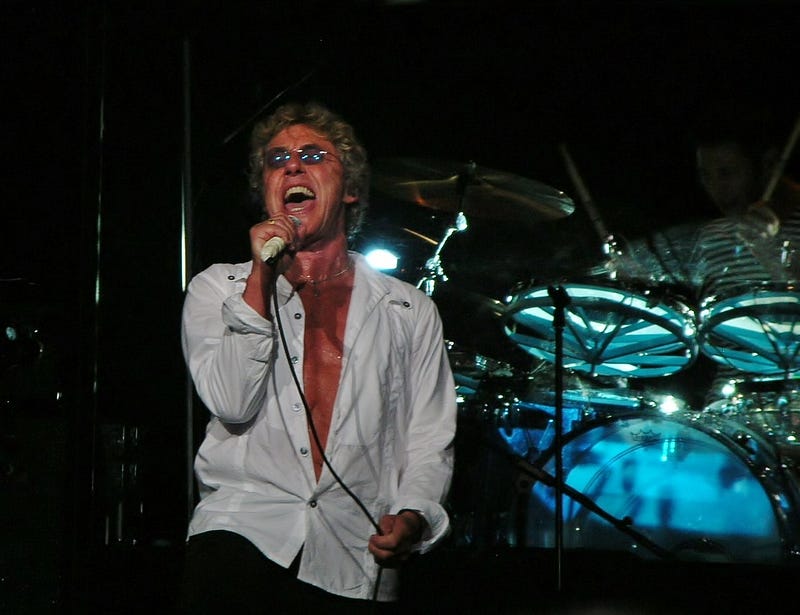
The Florida Theatre hosted various artists during the ensuing decades, barring a furlough in the early 1980s for extensive renovations. Personally, I visited the venue for the first time in October 2009 when Roger Daltrey, lead singer of the Who, unleashed his solo “Use It or Lose It” experience. I was back in the saddle the following summer when the Happy Together 25th Anniversary tour rolled around. Sixties artists performed that night including the Buckinghams, Mark Lindsay of Paul Revere and the Raiders, Micky Dolenz of the Monkees, Flo and Eddie of the Turtles, and the Grass Roots. Both shows and countless others were fantastic with a friendly staff on hand if anyone needed help. The old adage fits — there is something for everybody at the Florida Theatre.
© Jeremy Roberts, 2011, 2019. All rights reserved. To touch base, email [email protected] and mention which story led you my way. I appreciate it sincerely.


