
The Decline of the Organic Meeting Spot
People used to congregate in public places, hoping to meet others. What happened, and how can we reconnect?
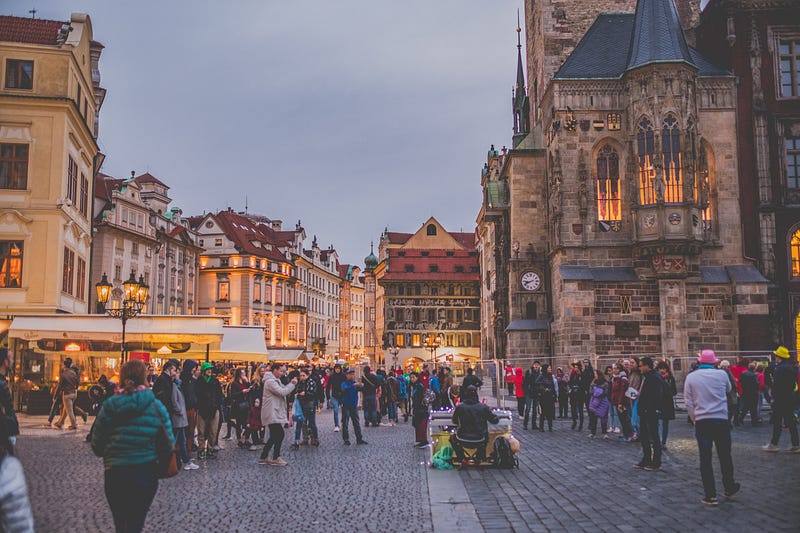
I just finished reading Hippie by Paulo Coelho, a memoir of his travels during the 70s, which left me in awe of a more carefree, unstructured time period. What struck me the most about Coelho’s story was how people used to gather with the intent of meeting new people. I’m not talking about gatherings of friends who already know each other. I’m talking about people showing up at a universal gathering place solo.
The gathering place described in Hippie was Dam Square in Amsterdam. A solo traveler wanting to hop on the magic bus to Kathmandu could meet new friends and find travel companions there. This is how the author meets Karla, his travel companion turned girlfriend.
In today’s world, where many are isolated, lonely, and online almost constantly, is this the kind of change we need?
During the time period so vividly described in Hippie, people connected fluidly and organically. They could travel on a whim for minimal cost, encounter one adventure after another, and receive help along the way.
Was the ease of connection what created a sense of limitless possibility?
There was always the chance of running into someone with bad intentions. Still, on the flip side, one could meet their soulmate, best friend, future business partner, or someone unforgettable.
This was before my time, but even within my lifetime, how we socialize has changed dramatically.
Growing up in the 80s, I played outside with neighborhood kids. I often rode my bike to my friend’s house, which had a pool. If just a few kids were there, it wouldn’t be long before others would show up and join us, and parents, too. I lived in that pool most summers, with perpetually shriveled fingers and brassy hair. The smell of chlorine reminds me of my childhood. This was our equivalent to Dam Square.
I can’t think of any places like this in my community now. Few kids play outside and organically meet other neighborhood kids like they used to, at least not in most urban and suburban parts of the U.S. Instead, play dates are arranged. Similar arrangements now exist for adults.
What happened?
For one, more people are working longer hours now. We have way less free time than we did in the days of Hippie.
Along with longer work days, the means of communication have changed. Today’s technology engenders texting and calendaring. We no longer have to pick up a phone or ring someone’s doorbell. A text is quicker and more convenient but lacks the same level of social connection and spontaneity as a phone call or impromptu visit.
Another factor might be our declining trust levels. Take, for example, this Pew poll about American citizens’ confidence in each other, which the majority think has declined over the last twenty years.
These attitudes are not unique to America. In Europe, trust has declined in several countries. It was found in this survey that trust in the government was correlated to trust in others, in general.
But is this widespread lack of trust grounded in reality?
Violent crime has dropped significantly in North America, Europe, Asia, Australia, and New Zealand since the 1990s. However, given the negativity we’re exposed to 24/7 on the news and social media on our phones, a lack of trust seems par for the course.
Through these outlets, we’re exposed to far more scenarios involving distrustful people than helpful, kind people, which can create an impression that there is more crime and danger than there really is.
Stories of serial killers scare parents into keeping kids indoors. Accounts of mass shooters and other unhinged people keep many of us on guard in public, whether we realize it or not. Every alert popping up about every crazy thing going on can affect a person. Even disabling those apps still means friends, family, coworkers, and the collective are influenced by it, which influences everyone else. Nobody is impervious to mass influence.
Can we reconnect?
As much as technology has isolated us, in some ways, it’s brought us together. Meetup groups, both online and in-person, can connect strangers — which is great. But without a change in collective attitude about trust and strangers, I don’t see how organic socializing will flourish again.
It doesn’t mean being overly trusting is the solution. But maybe not assuming the worst in people is.
Thanks for dropping by! 😀👋 I hope you enjoyed this story. Please consider supporting me with a cup of coffee. https://ko-fi.com/lindseyanne


