
The Debate on Institutional Racism on Keti Koti Day
The Dutch Government debated about institutional racism. What We Should Learn From The Past To Make A Better Future.
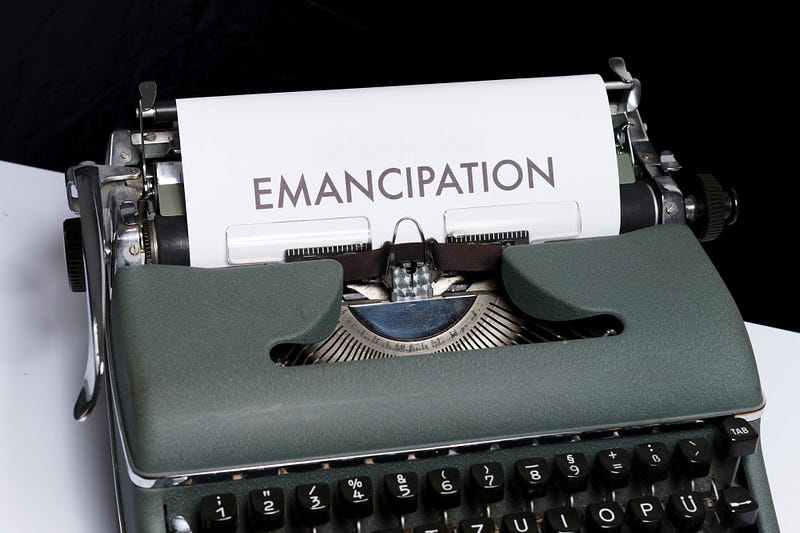
On the 1st of July, it is Keti Koti. It is an annual celebration on the 1st of July that marks Emancipation Day in Suriname and the Dutch Antilles. There was a debate in the Dutch government about institutional racism.
On the 1st of July, it was the celebration of freedom after the abolition of slavery in Suriname and the Dutch Antilles in 1863. In Suriname, they fully felt free ten years later, in 1873. They had still working on the same farm for ten years, during the transition.
Most enslaved people left the plantations in 1873. People suffered there for generations. Former salve owners have been compensated for the amount ƒ9,867,780.00 (In 2020 about €250 million). There were 32,911 released slaves in Suriname.
Every year there will be a Remembrance Day. This year, it was a little bit different. Also because of the events that had happened.
Keti Koti Festival The Netherlands
There is also a Keti Koti festival in The Netherlands since 2002. It is a festival that is all over The Netherlands on the first of July to celebrate the abolition of slavery. And to remember it.
This Remembrance Day, Keti Koti, means: ‘the chain is cut’ or ‘the chain is broken’. This Keti Koti is also called ‘Maspasi’ or ‘Prisiri Maspasi’. It is an ‘Emancipation’ or ‘Emancipation Festival’, as it is called.
Unfortunately, this year the festival couldn't take place because of the Corponavirus pandemic.
Link slavery and BLM in The Netherlands
During the Keti Koti remembrance day — in Amsterdam in from of the statue — on the first of July 2020, the organization of the remembrance day says — in these times — there is a link with BLM in The Netherlands, as the past of black people leads to slavery and the ancestor's stories from children from the enslavers.
Among others, the mayor of Amsterdam, Femke Halsema, and Minister of Culture, Ingrid van Engelshoven, gave a speech.
In her speech Halsema said:
The Memre Waka, a tradition with which the Keti Koti opens month at the official residence, was different this year from other years. Because of the limitations of the Coronavirus, and the emotions about the violent death of George Floyd.
It also felt different for the people who have been involved in this tradition for years because Perez Jong Loy was no longer with it. This charming and outspoken activist passed away on December 7 last year.
A few months earlier I spoke to him and told him how the poison of racism works. He said “Racism piles up in minor incidents.”
Perez was one of many people who fought against the current for years for the recognition of the past of slavery and the impact of that past in the present.
For example, he organized the annual commemoration moment, along with the Jewish community, at the image of Eli-ezer recently defaced with a racist slogan. Eli-ezer was an African man, probably brought to Amsterdam as a slave and buried in the Jewish cemetery in Ouderkerk in the year 1629.
He also drew attention to the year 1873, because many slaves had to continue working for 10 years after the official abolition of slavery. In it we can also see a symbol of the difficult progress we are making in our quest for equality for all.
We feel that too, as we see that the coronavirus and its social consequences hit hardest on people who are already disadvantaged. And we see the justified impatience with the thousands of people who gather, from the Mandelapark in Amsterdam’s Bijlmer to the Grote Markt in Groningen. Black lives matter. Or as can be read on banners “Enough is enough.”
A tipping point has been reached.
What started with a few activists who dared to question injustice and start confrontational conversations …
Who were ignored and ridiculed, or more often hated and threatened….
In the past month, this has grown into an unstoppable new popular movement of mothers and daughters, fathers and sons, grandparents and grandchildren. From shopkeepers, teachers, nurses and police officers.
That is a movement that does not destroy traditions, but helps to make traditions better and to create new ones. Which does not erase our past, but rather adds new history.
That history teaches us that change is possible, but the present teaches us that change is too slow.
We have to work harder. Research on the past, for example on the role and responsibility of the city of Amsterdam and of the wealthiest and most powerful residents of the city. Important research will be published on this in the autumn. We improve education and information about that past with a museum provision for slavery history. And we enrich our public space and culture of remembrance.
We do that because we want to tell the whole story about who we are.
Amsterdam — a haven for the religiously persecuted — was also the city where meticulous records of how much human merchandise would survive transportation across the Atlantic. The regents who built beautiful canal houses were also the merchants who were looking for lucrative jobs at the West India Company. And many a philosopher and scientist in our so learned city was concerned with legitimizing slavery or theories of the superiority of one’s own race. Looking away, stashing away, denying: that is not possible and we do not want to. The injustice, the pain, the humiliation and the grief deserve recognition. Now, tomorrow and all years after, however far slavery may be in the past.
And that we counteract the effects of the slavery past. With the fight against racism and the repair of subordination. In our schools, on the labor market and with our government.
We once built ships to kidnap and trade people and conquer land. Now we must conquer people’s hearts. So let’s build tables. Large enough that everyone has a voice. Round enough that everyone is visible. And strong enough, so that everyone can hit the table with their fists, if necessary.
In my mind I see Perez Jong Loy grabbing his toolbox.
Also, Minister Ingrid van Engelshoven of Culture gave a speech:
“I have added a large family worldwide.”
That’s what George Floyd’s aunt said when she spoke at his funeral service.
In the days before, many thousands of people had taken to the streets. In the United States, in Europe, and in our own Dutch cities.
You saw them too.
Perhaps you followed, or your parents, your children, or grandchildren were in the crowd.
You could see that no one in the crowd was the same. But in their will to change something, the demonstrators were indistinguishable.
Dear people,
What happened in the past month takes place at a time when the Netherlands is discovering and confessing that we are far from learning about ourselves.
If there is one period in history that we want to know very little about, or more painfully, that we turn our back on, it is the Dutch role in the slave trade.
But just as determined as we have run from our past, we can turn around and look back.
Looking back to a time when so much wealth has been accumulated, and heartlessly exchanged for an unimaginable amount of fear, pain, sadness and violence.
You and I, here today, we live without physical chains.
We have not seen anyone enslaved.
And we’ve never met freedom fighters like Cuffy and Tula.
But our slavery past is still close, in the stories of black grandparents, and their fathers and mothers.
And it doesn’t stop there.
As long as one Dutchman discriminates against another, based on his or her skin color, we are still witnesses to a terrible past every day.
It manifests itself in abuse, in humiliation, hatred or violence, and in systems. More often it is audible and tangible in a comment, consciously or unintentionally.
Whatever the form of discrimination, it is insufficiently recognized and broken. There are always reasons to look away.
Partly because of this, slave traders and owners of hundreds of years have not been restrained from their atrocities.
And although humans [fortunately] are not immune to progress, today we still find reasons not to talk about discrimination.
And the silent, white majority gets nervous when the word “racism” falls.
That’s all right, we say.
Then it was there too, I want to make it.
We never lose or forget the fact that the freedom of our black ancestors was once traded by our white ancestors.
But we still have not lost that many of us live in separate worlds so much later. And that is what I charge the Netherlands from then and now.
Differences that have been caused a long time ago still get in our way. And we can only move forward together if we recognize our history without fear and dare to speak about it.
Today, therefore, the dialogue that this Cabinet has organized starts, about how the slavery past still affects our daily lives.
I hope it will open the eyes of many Dutch people, young and old.
At this time last year, a wise, 11-year-old girl was in the newspaper.
She said:
“That so many people know nothing about slavery is because adults don’t show the information.”
It is confrontational to say, but she has a point.
It proves how important education about the slavery past is. It also tells me how important exhibitions about the slavery past are.
We need places where you discover that there was a time when people were robbed of their loved ones, sold, employed, and killed.
By the English. By French. And by our Dutch ancestors.
With a national museum provision for the slavery past, that history is brought into sharper focus. And it is also recorded that we are making progress.
Because the legacy of the slavery past, the still daily discrimination and racism, belongs in a museum, and has nothing to look for in our future.
All those people who took to the streets in the past month have known that for a long time. Their protests should help cross the rest of the Netherlands.
Dear people,
We cannot call the rulers of long ago to order.
We cannot hold those who live in 2020 directly responsible for what has been behind us for generations.
But what divided our ancestors should not continue to separate us.
If we want to reflect together on what lies behind us, and if the Dutch today want to color the future together, regret, repentance and shame are not enough for a gruesome past.
As a government, we have the duty to prevent unequal treatment and exclusion in everything we do.
And when I look in the mirror on behalf of this government, I have to recognize that this is still not always successful.
Anyone who feels the pain of exclusion and inequality deserves this honesty.
This is the only way to create space for conversation, understanding and connection. This is the only way to create space to do better. And only through this way is there hope for a future without racism and discrimination.
Let’s take an example from that global family that George Floyd’s aunt was talking about.
That is one of reconciliation. And we have to want to be part of that.”
The debate of the Dutch government and excuses from the government
On the same day on the first of July, the Dutch government debated the institutional racism in The Netherlands.
Government parties D66 and ChristenUnie believe that the government should apologize “for the role the Netherlands played in the slavery past”.
The apologies should become part of a wider public debate about “the black pages of our history”, Segers, MEP from ChristenUnie, said. “We cannot just leave them closed and we cannot quickly say ‘sorry’ about it. We as a whole society must reconcile ourselves with a past in which inhuman suffering has been sustained, which continues to this day.”
MEP Jetten from D66: “Expressions of regret, repentance, and shame are appropriate. But we do not yet take historical responsibility for our history. That is only possible if we acknowledge the suffering of many people and apologize for our own actions.”
On June 13, GroenLinks leader Klaver already called for apologies. “You can only move forward with the future if we recognize our past,” he said.
But Prime Minister Mark Rutte did not agree. He believes this could get polarized: “It is not a strange request. But the question is whether you can hold people who live today responsible for the past. Others may experience that as painful.”
Incidentally, there also seemed to be no chamber majority for apologies. “It’s about understanding and empathy”, said the prime minister.
“At the same time, we have to be careful not to put people away as racists who are not or do not want to be.” According to him, it is not America here in terms of racial violence. “But also here it matters which color you have. It is among us.”
The organization of the Keti Koti festival wants our King, Willem-Alexander, to give excuses on the ground of Suriname.
Dialogue group on slavery history
Since Remembrance Day this year, there will be an advisory board who should take action to start the conversation about racism, slavery, injustice, and equality.
This group exists of a total of six people, chaired by Frits Goedgedrag, a member of the Council of State and former governor of Curaçao. They will be advised on and off by a permanent group of scientists. Musician Typhoon and former soccer player Edgar Davids are taking also place in this advisory board.
This board must give advice next year in 2021. There must be a plan with steps on how there must be acted. It was unclear, in my view, what the action should look like.
Is this all going to help?
Also, the feelings of black people are one of what should be talked about. The group should realize that. They are a diverse group with different backgrounds.
And then the policies. If they’re going to fight about the racism and equality issues, what do the Dutch people think about these subjects? Are they still believable?
Politics should give the right example. And if that is not going to happen, how will Dutch people change if they don’t get the right example of politics? You can do it yourself, but leaders should give the right example.
I think excuses are in its place, black people are from ancestors who were slaves. At least, it is likely that it is the case. I think we should give that recognition to the descendants of the slaves. I think it is appropriate that we do not think that there are no racist people in the Netherlands, we are all that, consciously or unconsciously.
Always watch your behavior. Think before you say something. If you don’t know if it harms someone else, please say beforehand you’re not sure and you want to learn. Ask them if they want to correct you if you are wrong.
You’re learning along the way.


