The Death of Yongsan Garrison
Doctor! The patient is dying! And you’re killing him!
That’s what a military installation closure feels like.
About three years ago, Yongsan US Army Garrison in Seoul, South Korea, was a vibrant military community. It was the headquarters of the US- Republic of Korea Combined Forces Command (CFC) and was the jewel of US Army Posts in Korea. If you were in the U.S. Army and were getting posted to South Korea, this was the place to come.
That was three years ago. Then came the announcement that the Yongsan U.S. Army Garrison was closing. All the US military organizations that were on Yongsan would be moved to Camp Humphreys (a US Army Garrison about 55 miles south of Seoul), and the garrison would be turned over to the Republic of Korea.
Yeah, yeah. We’ve all heard it before. The US and Korean governments have been trying to close this installation since 1993. Every time they attempted to get serious about it, there was always one thing standing in the way — money. Moving over 20,000 US military soldiers, dependents and contractors is not an easy task — and certainly not cheap. The cost was going to run in the billions of dollars. Until two years ago, that was not a politically feasible option.
Well, the geopolitical realities on the Korean peninsula have changed in the last several years. The money that was going to cost to move became secondary to some other geopolitical realities. This time, the decision-makers were dead serious about moving all the US personnel out of Seoul.
While not getting into the pros and cons of all the geopolitics, I can hardly say that I blame the Koreans for wanting the US military presence out of Seoul. Seoul is the capital city of South Korea, and having a foreign military installation in the middle of the capital would be like the British, Germans, or the Canadians having a major military presence in the middle of Washington, D. C.
Having Yongsan Garrison located in Seoul was a convenience for both the US and the Koreans after the Korean War 60 years ago. But as South Korea has emerged into a developed country and Seoul has grown into a world-class city, this convenience turned into a point of contention with the majority of Korean people.
So, about two years ago, the movement began in earnest. Major US military units started the move south to Camp Humphreys. As these significant units moved, the population of the garrison slowly began to dwindle — first a trickle, then a steady flow, and finally a major push.
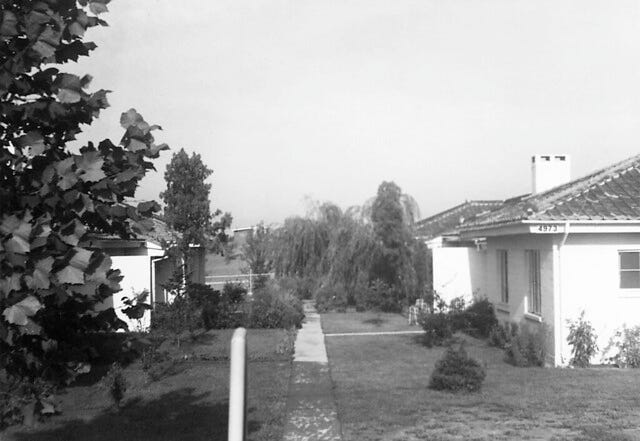
With this outflow of people, maintaining support services became harder and harder to do. June 2019 saw the last graduating classes of the American elementary, middle, and high schools. By July 2019, it was starting to become evident that most organizations had moved off the installation. Vast swaths of the Garrison had become depopulated and looked like ghost towns. Most of the buildings have become unoccupied and are sitting empty. At the same time, it seems that they are mournfully awaiting their fate (many of them will be demolished as the Korean government plans to turn the garrison into a huge park).
I write this at the dawn of a new decade, 2020. Now, the only support services on Yongsan that remain open are the commissary, the gas station, essential mail services, and the morale, welfare, and recreation (MWR) hotel we know as the Dragon Hill Lodge (along with its various boutique shops and restaurants). All the services will have moved south to Camp Humphreys (sometimes referred to as just ‘the Hump’).
If you have ever visited an abandoned town, a ghost town, then you know what Yongsan Garrison feels like. Large parcels of the base feel like they are completely abandoned. Buildings are empty, and each abandoned building has at least three or four ‘no trespassing, violators will be prosecuted’ signs prominently placed at strategic locations on each building. Over 90% of the base housing lies dormant. The chapel held its last service at the end of December. There are almost no cars on post during the evenings and weekends.
Because of the specific job I hold, I’ll be one of the last people leaving the base. Even after I go, there will still be about 600 or so people remaining, mainly because there are no facilities ready for them to occupy down at the Hump. Yet life goes on.
As the supporting services draw down to only the most essential services, it feels kind of like a chronic illness that won’t get better. If the post were a living organism, I would say that it’s dying a prolonged and painful death. It’s like the life is being sucked out of it, only it needs to be on life support just for a little longer. It’s like a patient that has been in a coma for years and will never come out of it. But the doctors won’t pull the life support, because no one has signed a living will. So the patient lives on, not in any cognitive state, but one that still places a huge emotional and financial burden on its family. All of the patient’s relatives are anxious about the impending death of their loved ones, but they don’t know when the patient will die. And the doctors are not much help; in fact, the relatives suspect that the doctors are the ones that are slowly killing the patient.
But when the garrison finally closes, there will still be many of us who want to work and live in Seoul. For an American expatriate, Seoul is undoubtedly the best place to live in Korea. It’s a vibrant city, whose citizens are much more open to Americans (and all foreigners) than other places in Korea. Seoul offers its citizens convenience, excellent quality of life, and various cultural events to numerous to mention. By contrast, the local towns and villages outside of Camp Humphreys have become the arch-typical soldier villages, where what passes off as entertainment and culture are nothing more than the sleazy bars and beer joints typical of an American GI town.
Many of my friends would protest about this characterization of the area outside of Camp Humphreys. They say that there are many beautiful homes and apartments in the area that are one-half to one-third of the price of apartments in Seoul. My response? “Okay, so the housing is nice. Let’s say I even have a nice backyard. My question is, when I leave my house, what’s there to do?”
The answer is always the same: “Not much.”
“That’s what I thought,” I reply. “So, I’d rather continue to live in this vibrant world-class metropolitan city, and I’ll make the adjustments necessary.”
That’s what I plan on doing. My wife and I have been very fortunate, so we will be able to retire here and still live in Seoul, even though it’s rather expensive. There are also two military bases within reasonable driving distance. Since I’m a retired military officer, I have full access to both of these bases (even though we will not need to use them that often — most American products have been imported into Seoul). We will have access to Korean international medical care and will have limited US postal privileges. Fortunately for us, we will be able to adjust to living in Seoul when the Yongsan Garrison completely closes, which is scheduled for sometime in 2021.
Other people are not so fortunate, however. The closure of the post means that they will have to make a move down to Camp Humphreys, or they will have to return to the United States. Unfortunately, both of these choices come with some significant financial hardships. For many people, moving back to the United States is the only viable option, especially for families that have children. The only place to educate American children after the closure of Yongsan will be the various international schools in Seoul. The tuition prices for the few international schools are higher than most for four-year public universities in the United States (anywhere from $20–35 thousand), which puts the cost of staying and educating their children beyond their reach.
The ‘death of Yongsan’ is but one unfortunate intersection of geopolitics with the reality of life. I think that often our leaders are so focused on ‘grand strategies’ or ‘political realities’ of their decisions that they forget that people pay a real price for some of these decisions. I’m not discounting the importance of making these decisions; it’s just that from my perspective here ‘down in the trenches,’ the impact of these decisions on the lives of real people tend to get ‘lost in the mix.’
The closure of Yongsan Garrison has been long overdue, but witnessing its closing is akin to watching someone die a slow death. Moreover, sometimes I feel like a nurse who’s watching the operation on a patient. I know the patient is dying, and there’s nothing I can do about it. But at the same time, I want the ‘doctors’ to do everything they can to keep the patient alive a little longer.
Yongsan will close. The inevitable will happen. The geopolitics of this region almost demand it. But it’s painful to watch after serving there for more than 20 years. I know our leadership has to make the painful decisions to finalize the closure, I get it. But at the same time, it does feel a little bit like the doctor is killing the patient.


