
The Death of Intimacy in Public Schools
All the things that were encouraged by schools that are no longer allowed
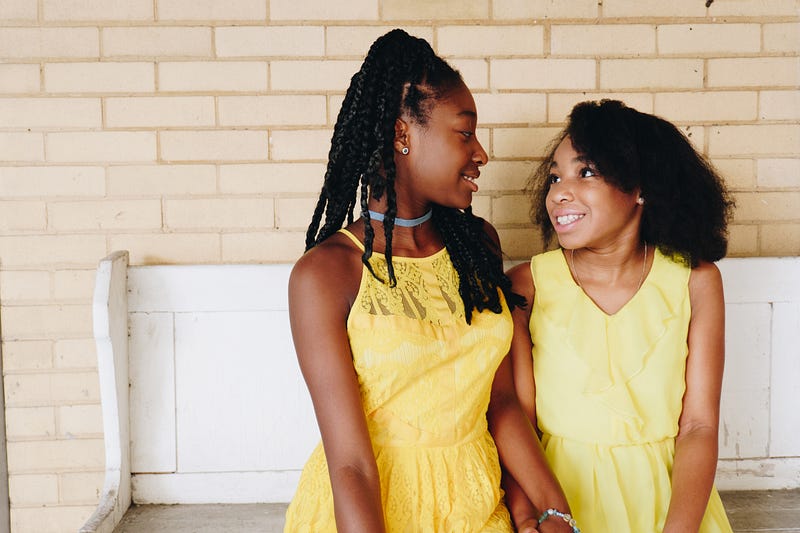
On Friday February 12, 2021, schools everywhere had their Valentine’s Day celebration. On a typical Valentine’s Day celebration, children bring Valentines and treats for their classmates. They can also play some games. This was Valentine’s Day before 2020 of course. While we can still play games like Valentine’s Bingo that do not require physical contact, being able to move around the classroom for different activities is no longer allowed. We can pass out Valentines, but they have to be given to the teacher by a certain deadline in a plastic bag. If they miss that deadline, the Valentines cannot be given out. It takes away the fun and intimacy of Valentine’s Day.

This lack of intimacy in public schools is not just exclusive for Valentine’s Day. It is a problem we have been dealing with all year. Before 2020, teachers encouraged students to interact with one another. They were encouraged to work in groups. They were encouraged to move around the room and engage in interactive activities. Now, interactive learning in the classroom is not dead because of COVID-19, but we must do it in a limited capacity.
As I said, we can play these interactive games, as long as the students are six feet apart. Students can have movement breaks, but they are not allowed to go past their desks. More importantly, they can talk to each other as long as they are not near each other. This lack of intimacy affects friendships in the classroom, students’ ideas of sharing, and intimacy within the school building.
Friendships
Obviously, the most important function of public schools is for a child to have an education. However, schools have a secondary function as well. With a model focused primarily on social interaction, students make friends with one another. As I said, students can still become friends, but they are no longer as close as they used to be. As the reader, you must be thinking, “Well, if the students can talk to each other, we should not have to worry about intimacy.” Let us take a look at the definition of intimacy.
According to Dictionary.com, intimacy is defined as a close, familiar, and usually affectionate or loving personal relationship with another person or group. Even with little exposure to one another, students are still familiar with one another. Still, with the lack of group work in schools, students cannot spend nearly as much time with each other as they used to. The absence of group activities and even the literal space between students does not allow them to know each other on the same level they would pre-pandemic.
My students enjoy one another’s company, but they do not feel particularly close unless they have developed that friendship before the pandemic. That is because the pandemic took away that personal connection they have with one another. From what I am noticing, my students still have friendships with one another, but those heartfelt moments that allow them to really get to know each other are gone.
Sharing
Besides building close and personal relationships, sharing is a concept that gets lost during this pandemic. In the primary grades, we encourage students to share with one another. There is a cliché saying that “sharing is caring.” We teach students that when you share, you become someone people want to befriend. Now, we have to tell students that they cannot share with one another out of fear they will contract a virus.
It has gone from “sharing is caring” to “keep it to yourself.” If a student needs a pencil, another peer cannot offer them one because it is so hard to share things. Granted, this prevents fighting over an object, but it also reduces the intimacy and closeness of that experience of sharing. Students cannot play with each other’s toys and be happy their friends shared with them because it is no longer allowed.
Intimacy in a School Building
Before 2020, intimacy was not just exclusive to the classroom, but the building. There are no more assemblies or school-wide parties being held in the cafeteria. These events allowed students to know people outside of the classroom, whether it be other students, other teachers, or administrators. Students were also able to see other classrooms every once in a while. I started the year as a fifth- and sixth-grade teacher and one of the other teachers in the building gave my students a coupon for a free Frosty from Wendy’s. Then, one of my students asked if he could go to that teacher’s room to thank her. My aide told him that he could not because of COVID. She then looked at me and jokingly said, “No, you can’t be polite. We’re in a pandemic.”
Students cannot even show their appreciation for other teachers in another classroom because of the pandemic. Students do not know the building outside of their classroom. Events that would take place in an auditorium are now virtual, which creates distance between everyone in the building. If there’s an award ceremony, the applause is not as loud when you win an award. A classroom-wide celebration is great, but a school-wide celebration is much better for a student’s self-esteem. It also increases a student’s social network.
Final Thoughts
The COVID-19 pandemic does not just challenge what we know about from a pedagogical perspective, but a social perspective. We now have to get used to living in an era where schools have to be less intimate. We cannot be together like we used to be. We cannot interact with each other like we used to. The social interaction that public schools thrived off of is now discouraged. There is no solution to it. No amount of distanced interaction can replace interaction that is up-close and personal. We cannot fix this problem; we just have to adjust to it.