
The Death of Del Ward
And its ramifications
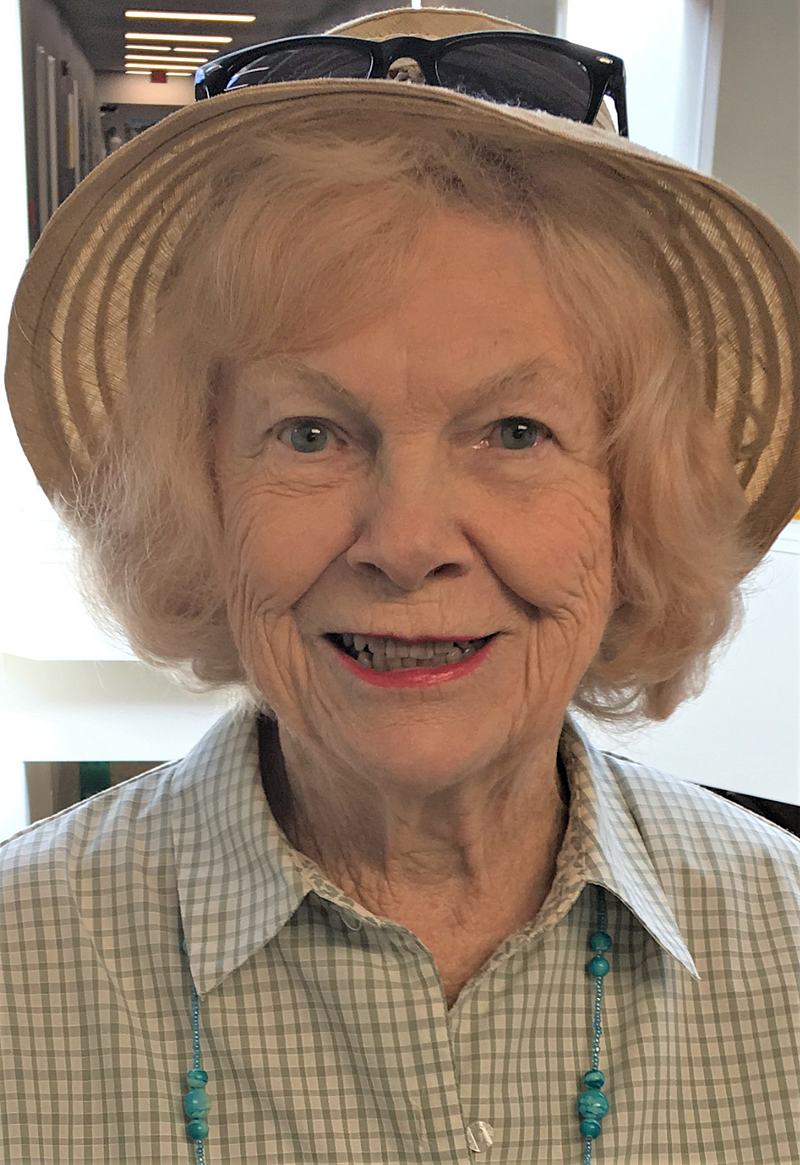
I have a portrait-style photograph of Del Ward near my desk. It was taken during Covid-19 when the hairdresser was unavailable.
It is my favorite because her hair is its natural color. As Del aged, she was concerned her hair would turn gray. It was not gray; it was flaxen. It was perfect.
I loved it.
When the hairdresser became available, Del resumed the red coloration she traditionally chose. I complained. She ignored me.
I glance from my computer throughout the day to smile at Del’s beautiful face. I miss her. During the Church service, her casket was in the aisle next to me. I could touch it with my hand.
At the end of the service, I pushed my mask up under my eyes, hoping no one would see my tears. I walked out the aisle past the crowd in the church, looking straight ahead. On exiting the church, I felt the heavy sound of the death knell tolling from the steeple above.
We were on our way to Rose Hill cemetery for family-only internment. Del’s daughter Hannah asked me to join them.
I rode in the front seat next to the driver. The long row of shiny black limousines with police escort in front led the way. The hearse was tucked in the middle of the procession.

We drove past a giant billboard with three photos of Del.
One of young Del in the broadcast studio. One of ‘prime-aged Del’ and a large current ‘red-haired Del’. With the statement “Thanks Del for giving Georgia 94 years” ending with Del’s sign-off slogan, “Trody Tro!”
None knew what Trody Tro meant. Her signature phrase died with her.
We drove through the arched entrance to the cemetery. Del’s Casket lay high on a hill and the family with the Episcopal priest standing below the crest. We prayed again for Del. The family walked up the hill to stand near Del’s casket one more time.
I stood below on my cane. They were fearful I would fall.
My imagination took control of my mind. I thought about telling my sons, “When I’m cremated, bring my ashes up to Del’s resting place. With a trowel, dig a hole and implant my ashes so I can be with her forever.”
Then I saw the large canopy placed over her coffin, shutting her off from everything forever. I dismissed the dream and moved back to reality. I will be buried with my fellow Marines in a military cemetery.
That afternoon a memorial for Del was held at our residence, Pinegate Senior Home. Pinegate residence filled all the seats to standing room only. Individuals spoke of their memories of Del.
I closed the memorial by singing our favorite song. “I’ll See You again whenever Spring breaks through again.” We sang duet this Noel Coward song many times.
It was popular in the time of our youth when we experienced wartime deprivations and loneliness.
The next day men shook my hand, and women gave me consoling hugs. One said, “Be strong.” I told her I would be.
It was my resolve I would follow Ralph Waldo Emerson’s directive. As a young man, he lost his wife Ellen to tuberculosis when she was only 19. His loving son died of scarlet fever at age 5.
Emerson’s remedy to his heartbreak and depression was to be busy, full of action.
“Don’t hold onto your pain and wait for it to work through. Instead, get up and do something.”
I changed everything I could to enhance my resilience. I moved from one table to the next at mealtime, chatting with different people. I participated in in-house games I ignored before. I met other writers who had published books. I started playing Poker on Tuesdays. I played on Friday only in the past. It gave me more people contact. I changed our Jim and Del morning walk to a different route and time.
I could not change walking past Del’s front porch, where we sat and talked at the close of the day.
Those who expected me to follow the standard withdrawal of grief and exclusion were surprised, perhaps relieved, because they thought I was not taking my loss seriously.
In summary, we all suffer losses in our lives. It is how we cope with those losses that make the difference. There is a better way, the Emerson way. The keyword is resilience, where you make life more demanding than before so you can recover quickly from adversity by filling your time with tasks, going brio until normalcy returns.