
The death of Bobby Sands and the other Irish hunger strikers still resonates to this day
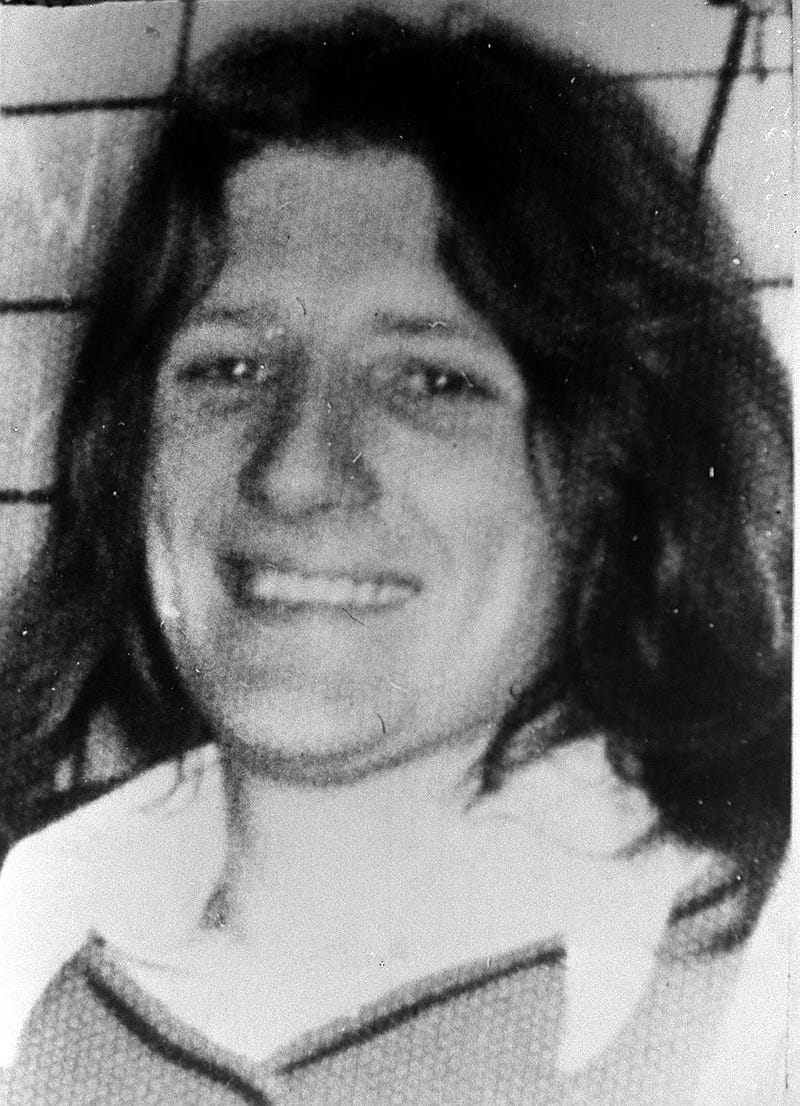
“I am standing on the threshold of another trembling world. May God have mercy on my soul.” With these words, written 42 years ago, Bobby Sands began the hunger strike on March 1 1981 that would culminate in his death after 66 days on May 5.
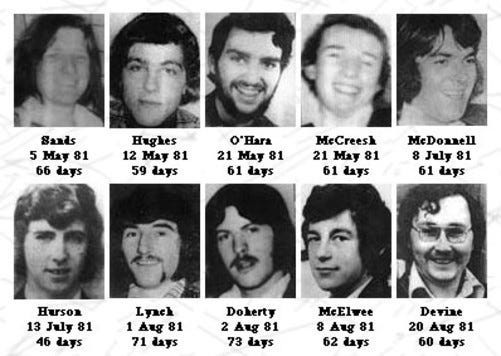
Following in his wake were the deaths of nine others who made the same sacrifice: Francis Hughes, Patsy O’Hara, Raymond McCreesh, Joe McDonnell, Martin Hurson, Kevin Lynch, Kieran Doherty, Thomas McElwee and Michael Devine.
Just over four decades on it is perhaps difficult to appreciate the significance of the sacrifice made by Sands and his comrades, which remains a monumental testament to the power of the human spirit when engaged in the struggle for a just cause.
By the time of Sands’ death in 1981 the Troubles in the Six Counties in the North of Ireland had been raging since the late 1960s, when the Provisional IRA emerged from the failure of successive British governments to reform the sectarian and gerrymandered province, in which the minority Catholic/Nationalist population were regarded as second class citizens, denied the same political and civil rights as their Protestant/Unionist counterparts, and were subjected to loyalist pogroms.
Young, otherwise ordinary working class Catholics such as Sands were forced to make a choice between acceptance of a status quo under which they and their families were persecuted, intimidated, and forced out of their homes by loyalist mobs backed up by a bigoted police force, or resistance.
Sands and his comrades chose the path of resistance and were arrested and imprisoned as a result. Upon Bobby Sands’ second arrest in 1976 he was interrogated, tortured, and sentenced to 14 years in prison in a trial presided over by three judges with no jury. During his first period of incarceration — 1972 to 1976 — Sands used his time well, immersing himself in books and study groups with his comrades to learn about the history of the Irish liberation struggle, national liberation and anti-colonial struggles throughout the developing world, literature, and the Irish language.
The removal of the political status of Irish Republican prisoners began in 1976 under the then Labour government led by James Callaghan. It was a policy timed to tie in with the construction of the new purpose built Maze Prison just outside Belfast, where both republican and loyalist prisoners were to be transferred from the existing Long Kesh Prison Camp nearby, along with other detention facilities across the province. Margaret Thatcher and the Tories, replacing Callaghan’s Labour government in 1979, were determined to continue the policy of criminalisation of republican prisoners as part of a new offensive against Irish Republicanism in general.
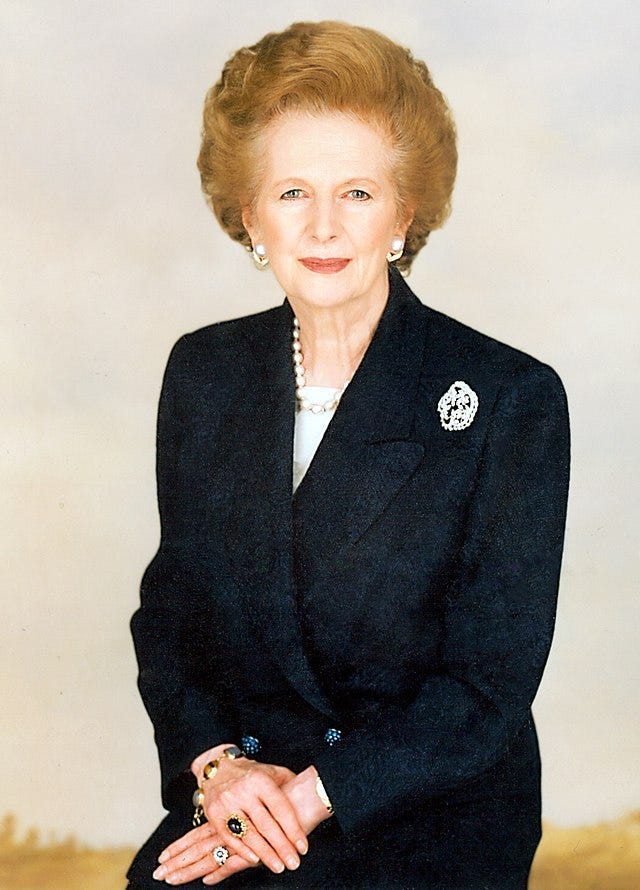
As determined as Sands and his comrades were to see their hunger strike through to the end, Thatcher was equally determined to budge not one inch from the policy of criminalisation. This continued even after Sands was elected as a British Member of Parliament in the midst of his hunger strike in a local by-election, and also in the face of growing international condemnation over the British government’s unwillingness to compromise.
The prisoners had five demands:
1. The right not to wear a prison uniform;
2. The right not to do prison work;
3. The right of free association with other prisoners, and to organise educational and recreational pursuits;
4. The right to one visit, one letter and one parcel per week;
5. Full restoration of remission lost through the protest
The enormity of what Bobby Sands and his comrades achieved with the hunger strike was reflected in its global impact. Upon Sands’s death, opposition MPs in the Indian Parliament observed a minute’s silence and protest marches were held against the British government and in tribute to Sands and his comrades across the world.
Following their example, Nelson Mandela led a hunger by prisoners on Robben Island to improve their own conditions. In Tehran the name of the street in which the British Embassy was located was changed to Bobby Sands Street, forcing the embassy to relocate its entrance to avoid the embarrassment of Bobby Sands Street appearing on the letterhead of its stationery and official documents. Cuban President Fidel Castro spoke movingly about Sands and his comrades during one of his speeches:
Next to this example, what were the three days of Christ on Calvary as a symbol of human sacrifice down through the centuries?
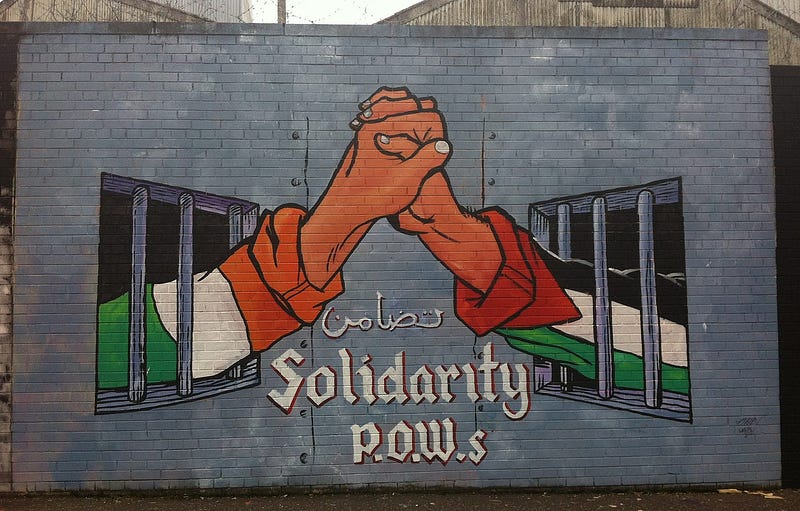
Perhaps the most significant and powerful tribute came in the form of a letter from Palestinian prisoners incarcerated in the Israeli desert prison of Nafha. The letter was smuggled out and reached the Falls Road in West Belfast in July 1981. It reads as follows:
To the families of the martyrs oppressed by the British ruling class. To the families of Bobby Sands and his martyred comrades.
We, revolutionaries of the Palestinian people who are under the terrorist rule of Zionism, write you this letter from the desert prison of Nafha.
We extend our salutes and solidarity with you in the confrontation against the oppressive terrorist rule enforced upon the Irish people by the British ruling elite.
We salute the heroic struggle of Bobby Sands and his comrades, for they have sacrificed the most valuable possession of any human being. They gave their lives for freedom.
From here in Nafha prison, where savage snakes and desert sands penetrate our cells, from here under the yoke of Zionist occupation, we stand alongside you. From behind our cell bars, we support you, your people and your revolutionaries who have chosen to confront death.
Since the Zionist occupation, our people have been living under the worst conditions. Our militants who have chosen the road of liberty and chosen to defend our land, people and dignity, have been suffering for many years. In the prisons, we are confronting Zionist oppression and their systematic application of torture. Sunlight does not enter our cell. Basic necessities are not provided. Yet we confront the Zionist hangmen, the enemies of life.
Many of our militant comrades have been martyred under torture by the fascists allowing them to bleed to death. Others have been martyred because Israeli prison administrators do not provide needed medical care.
The noble and just hunger strike is not in vain. In our struggle against the occupation of our homeland, for freedom from the new Nazis, it stands as a clear symbol of the historical challenge against the terrorists. Our people in Palestine and in the Zionist prisons are struggling as your people are struggling against the British monopolies and we will both continue until victory.
“On behalf of the prisoners of Nafha, we support your struggle and cause of freedom against English domination, against Zionism and against fascism in the world.
End.
Thanks for taking the time to read my work. If you enjoy my writing and would like to read more, please consider making a donation in order to help fund my efforts. You can do so here. You can also grab a copy of my book, ‘This Boxing Game: A Journey in Beautiful Brutality’,from all major booksellers.