
The Deadly SEO Mistake I Made Cross-Posting My Blog Content
Rules to consider when republishing your Google-targeted writing

In the last two months, I’ve been publishing articles on my blog regularly. Probably not the best on the internet but guaranteed, they are non-thin content. (FYI, thin content posts are short posts that Google thinks are not informative, so they don’t tend to rank them high.)
I know it can take months for Google to rank my page, but I’m so tired of seeing the daily visitor count remain at a single digit. I must think of other ways to promote my blog.
Since my primary niche is personal development, I think cross-posting my content at LinkedIn or Medium would be a great approach, given that these two platforms are full of success-hungry professionals and entrepreneurs. Also, since I’ve spent so much time writing a piece of work, I might as well reuse my content if possible.
OK. Let me do some research. LinkedIn surely won’t be an issue, and plenty of bloggers are cross-posting at Medium already.
Great.
I didn’t give this a second thought. Once I published a post, I copied the entire post and pasted it to LinkedIn and Medium immediately. In Medium, I noticed there was a small Import Story button. I gave it a quick try but found it pretty buggy, so I didn’t bother.
And I’ve done it for almost a month. Well, the traffic went up a bit (about ten sessions per day), but the result still wasn’t satisfactory.
What went wrong? Have I taken the wrong approach? Is it normal? I’m not sure because I just barely started. Then one day, I did some SEO research and found out Google will penalize sites that contain plagiarized content.
Well. That doesn’t bother me since I never plagiarize others. My work is 100% original. You won’t find duplicate content of my work unless someone has stolen it.
Wait. Hang on. HollllllllllyShiet.
I just remembered that I cross-post my content elsewhere. What will Google think of that? LinkedIn and Medium are more established than my new blog, for sure. What if Google thinks I copied stuff from there and penalizes me for being a copycat?
Surprise. Medium actually has a dedicated FAQ session for this problem (honestly, are most untechnical bloggers even aware of this?), so I feel I didn’t do things the right way when I started.
Pretty worried, I decided to investigate further.
My Findings
This post pretty much sums up my concerns:
- Duplicate content doesn’t penalize your site. (Whew. That’s a relief.)
- Googlers know that users want diversity in the search results and not the same article over and over, so they choose to consolidate and show only one version. (This is a problem. What if Google only displays the article I posted on other platforms? I want to drive traffic to my blog, not my LinkedIn or Medium account.)
- Google tries to determine the original source of the content and display that one. (It seems like my site is safe, but if I don’t change my way of posting, the site will not reach its full potential.)
What Should We Do?
Tech-wise, the easiest way would be adding the rel=canonical tag in the HTML code where you cross-post your article.
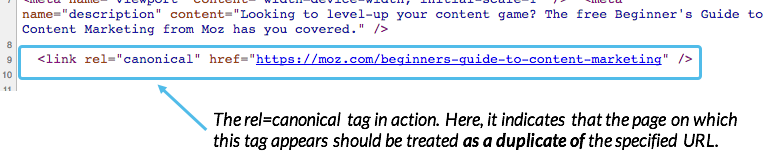
This part of the code tells search engines this URL is the original source of content. If the search query returns such content, then it should display this URL in search results because that’s where the idea originated from.
The problem is we, as content contributors, do not have the permission to modify the HTML code of other sites. Good luck trying to contact LinkedIn’s service department to tell them to add the canonical tag in the article you published two days ago.
Also, note that injecting that code into the content will not work as well. (It’d be scary if you could because that would mean you can potentially hack the site.)
It’s out of the question, so I’ve come up with a few tactics to tackle this potential SEO concern.
Create unique content at different platforms
Publishing unique content exclusive to one platform is undoubtedly the safest method — there won’t be duplicated content.
But hey. Doesn’t that defeat the purpose of cross-posting? I want to promote my writing at other platforms! It could take days, and even weeks, for me to write an article. I definitely want to reuse my blog content as much as possible.
To get around that, I can use an evil twin post strategy from Neil Patel. The idea is to write something similar to the original post, using the same concept and research but different examples. For example, if the original post was a how-to post, write another one that’s ‘how not to’.
Sure, the rewrite will also take time and effort, but since it’s based on the same idea, the writing process should be less daunting.
What’s even better, both posts can be indexed, and if the content is valuable, they both will be on the first page of the search result — the best-case scenario.
Delay cross-posting at other platforms (specifically LinkedIn)
I used to repost my content at other platforms immediately so it would be published at virtually the same time everywhere. But since the crawl rate for new sites is relatively low, the cross-posted content might be indexed by Google before my blog. In other words, my cross-posted content would be recognized by Google first, and most likely they’ll think that’s where the content originated from.
Not really what I want.
To prevent this, I’ll reduce my publish rate at LinkedIn and only publish after confirming Google has indexed my site. (P.S. If you’re reading this on LinkedIn, this was already published on my blog a few weeks ago.)
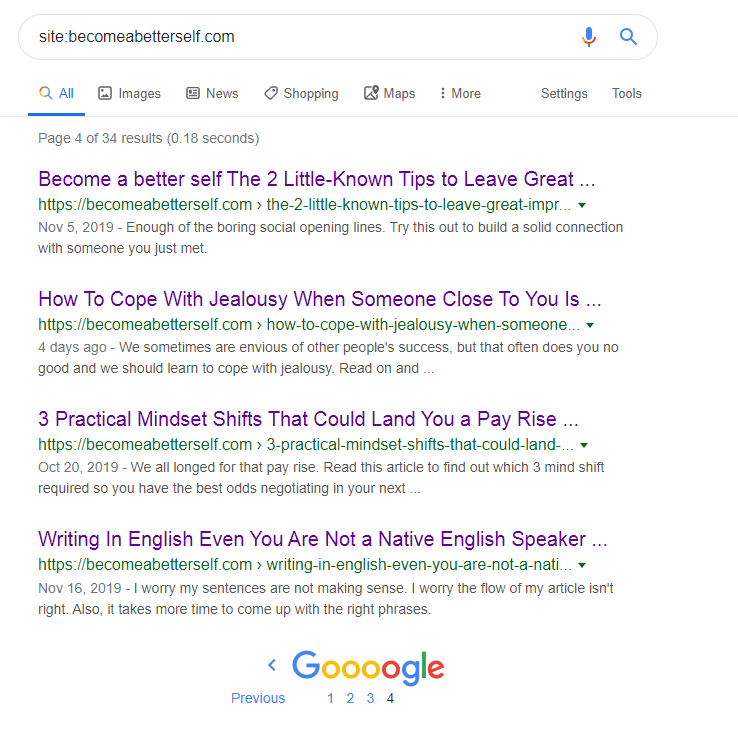
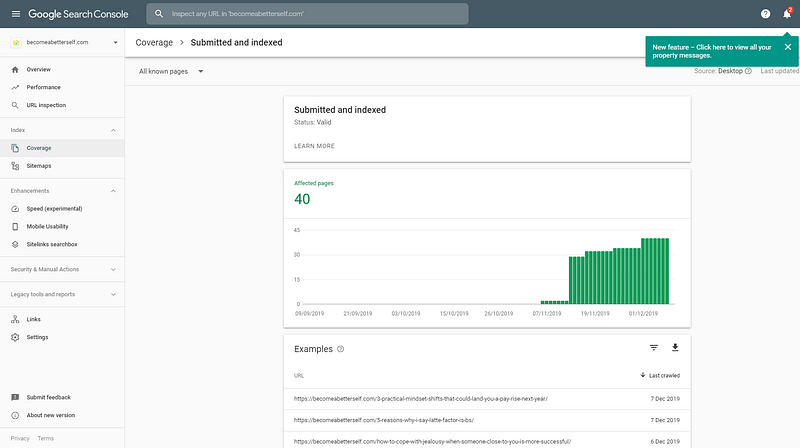
To confirm, search for Site:Your Webpage at Google and see if you can find your page. Or find all indexed pages with Google Search Console by going to Coverage, then looking for Submitted and Indexed pages.
Use the import tool (Medium only)
I mentioned Medium’s import tool earlier, but I didn’t like it.
After doing thorough research, I’ve found out the primary benefit of using the Medium import tool is adding a canonical link to the post. Having this link confirms my blog is the original post, and I won’t need to stress about SEO anymore for Medium.
It strongly outweighs the slight inconvenience, so I’ll always use the import tool from now on.
Add more internal links wherever you can
It’s one of the basics of SEO.
Adding more internal links in your blog post wherever you can will make your site more useful and user-friendly. The reader can browse other topics of yours, which reduces the bounce rate (people leaving immediately) and ultimately improves SEO as a result.
I believe there’s one more reason to add more internal links, especially when you’re cross-posting. It’s not only because the links could potentially direct people to your site but also because I have faith in Google.
If the cross-posted entry has plenty of backlinks to your own blog, surely Google is smart enough to pick up the pattern and tell where the content originated from.
Conclusion
Cross-posting is a common strategy to attract blog traffic, but it could harm your SEO if done incorrectly. If you have been doing the same as me, you can rectify it by implementing a different posting strategy.
First, consider cross-posting unique content by making slight adjustments to your existing post. This way you will have two versions of articles. That could keep you safe from creating duplicated content.
If you frown upon the earlier idea (understandable, because it’s extra work), try cross-posting after you confirm Google has indexed your original article.
Next, try using import tools (if they’re supported) because they’ll let you add the canonical link, which settles everything.
Last but not least, keep adding links to your blog to minimize the bounce rate and also give Google a clue as to where the original idea is from.
I hope these tips are helpful to bloggers, especially the ones who have barely started.
If you have been blogging for a while, throughout your journey, have you made other SEO mistakes?