

The Deadly Coney Island Roller Coaster Inspired By Teddy Roosevelt That Killed 7 People
In the early part of the 20th century, a thrill ride designed to emulate the exciting life of a US President instead became a death machine
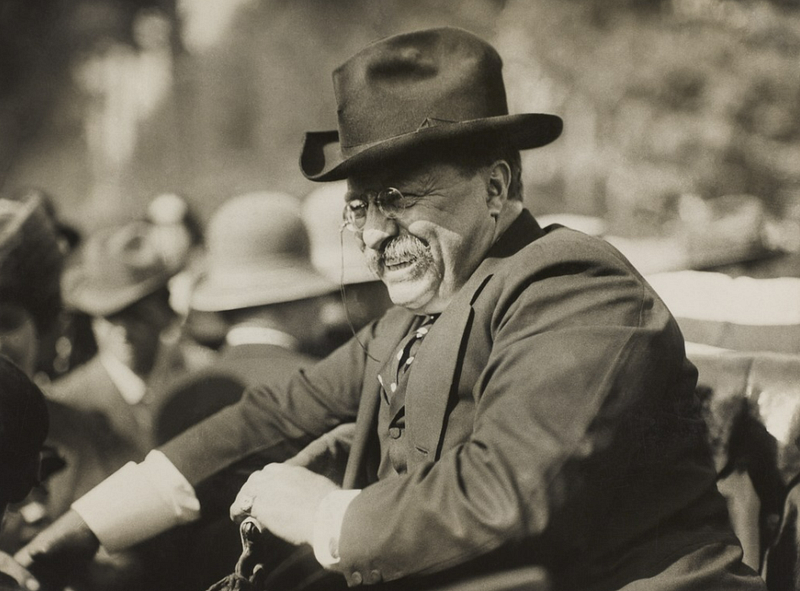
Out of the men who have served as President of the United States over the past 250 or so years, none have had quite the rough and ready reputation of Teddy Roosevelt. After overcoming a sickly childhood he burst into adulthood as an active outdoorsman and lover of life. He was an inspiration to many, including bleeding into elements of popular culture. One such instance was an early 20th century Coney Island roller coaster, which aimed to give riders a thrilling experience akin to the life of the 26th President, but sadly ended up causing the death for seven people.
After attending Harvard and serving in a variety of high-profile political positions, including the President of the Board of Commissioners that oversaw the New York City Police Department, Governor of New York and U.S. Vice President, Teddy Roosevelt was voted into the nation’s highest office as the 26th President, and served from 1901–1909. He was a popular figure across the country, not just from his political experience, but for his vigor. He loved everything about the outdoors and came to widespread prominence in serving in the Spanish-American War in 1898, leading his group of calvary that was dubbed the “Rough Riders.” His evolution into a pop culture icon no doubt served him well during his career.
In the early 1900s, Coney Island in New York (Roosevelt’s home State) reigned as the preeminent amusement park in the United States. Tourists flocked to the Brooklyn shore to stroll along the boardwalk, gawk at sideshows, and go on the latest thrill rides. In particular, the Flip Flap Railway, which was first ever looping roller coaster, became infamous for knocking people unconscious with its fast and dizzying loops.
In 1907, Coney Island unveiled their Rough Riders roller coaster. Named after Roosevelt’s First U.S. Volunteer Cavalry, the ride paid homage to this very popular unit. To add to the authenticity, the operators donned military uniforms, and the ride featured scenes of the war in the hopes of providing a unique and immersive experience. Unlike its gravity-propelled counterparts, Rough Riders ran on an electric third rail, similar to a subway car, with conductors controlling the speed manually. Their judgment of when to speed up or slow down was instrumental in successfully navigating the twists and turns of the attraction.
Unfortunately, with no automated speed regulation, operators often pushed the ride to its limits, navigating drops and turns speeds well beyond what was safe and appropriate. In retrospect, it was a disaster waiting to happen, and it wasn’t long before this became a self-fulfilling prophecy.
The lack of proper safety measures proved catastrophic in June, 1910 when the coaster took a sharp turn, ejecting 16 riders, resulting in four fatalities. This occurred during the midst of a particularly hot night, and the amusement location had stayed open as long as there were people wanting to spend money. Given the heat, riders were still on hand and taking rides past 2 .a.m., when this incident occurred.
Despite the tragedy, Rough Riders continued to operate after the accident. It was not unusual for the time, as the lack of standardized safety measures in all things was similarly matched by a more muted outcry after tragedy than what is seen today.
It was only a matter of time before the ride claimed more victims. History repeated itself on July 27, 1915, when a car tipped over, claiming three lives as they fell 30 feet onto the concrete below. The deceased included 19-year-old Ruth Cuddy, 55-year-old Anna Hartman and 23-year-old James McDonald. The operator at the time was McDonald, who was said to have been operating the ride for the very first time that day.
Remarkably, amidst the tragedy, two survivors emerged from the chaos — Clara Moles and her 4-year-old son, Edward. After being thrown from the car, the mother saved herself and her child by clinging to an iron railing with one hand while holding on to her son’s arm with the other high above the ground; not unlike a scene from a movie. Her predicament was witnessed by two detectives who climbed the coaster’s framework and was able to bring the two safely down to the ground.
Following the latest fatalities, Thomas Ward, the ride’s manager, was arrested and charged with homicide. He was eventually acquitted by a jury, who determined that the deaths were unavoidable and not due to negligence. Superintendent P.J. Carlin later issued a statement assuring the public that the ride was safe:
“These amusement devices at Coney Island are inspected every day. This coaster was inspected three hours before the accident. It was all right then and it is all right now. Our inspectors rode over it in safety a few hours after the accident without any repairs or changes having been made. The trouble was entirely with the operation of the car.”
However, no assurances could save the ride this time, as it had caused too much death and destruction to continue. The Rough Riders roller coaster was officially shut down in 1916.
Although the Coney Island roller coaster, dubbed the Rough Rider, was eerily similar to President Roosevelt in its daring and danger, its track record of death proved to be unpalatable to continue as a public attraction. In the years since, rides have gotten increasingly terrifying and complex and there are better safety measures in place. Although they may not be infallible, it’s hopeful we won’t see multiple instances of fatalities, and a young mother holding on for dear life by one hand high in the air ever again.