
The Deadliest Day in Human History
It was a Thursday in January
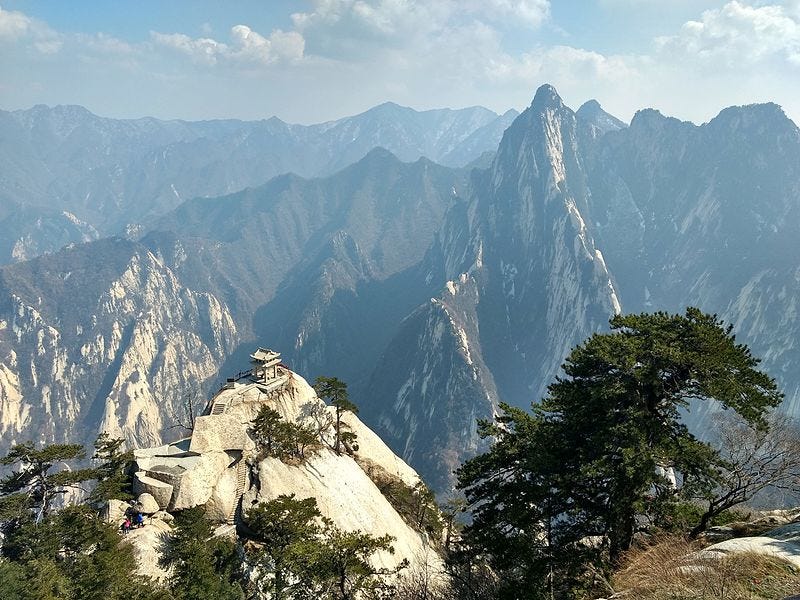
The deadliest earthquake in human history is at the heart of the deadliest day in human history. On January 23, 1556, more people died than on any day by a wide margin.
Although military weaponry has advanced vastly since 1556, including the nuclear bombs’ advent, mother nature’s wrath has yet to be passed by humanity.
The world population in 1556 is estimated to have been less than 500 million people. Still, even as the world approaches 8 billion people, no single day has been as deadly as that Thursday in January when the Shaanxi Earthquake hit central China.
The Shaanxi Earthquake
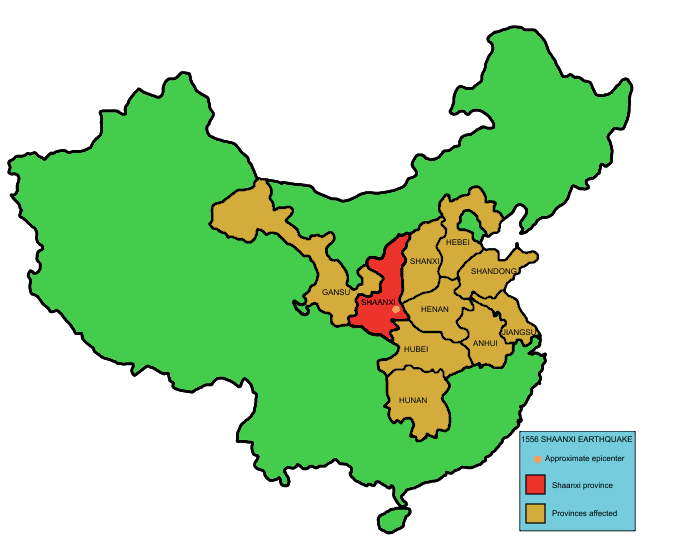
The Shaanxi Earthquake caused the deaths of 830 thousand people in China. The earthquake leveled the three cities closest to the epicenter in Shaanxi province. It caused landslides, mudslides, ground fissures, and fires that killed people over a 520-mile swath of land in central and eastern China.
The 1556 earthquake is often referred to as the Jiajing Great Earthquake. According to Britannica, the earthquake took place during the Jiagjing Emperor's rule, the Ming Dynasty's eleventh emperor.
Ripe for destruction
According to Climate Policy Watcher, many people in central China at the time of the Shaanxi Earthquake built their homes in loess caves. Loess is fine-grained soil eroded from the Gobi desert in northern China. Loess is an easy building material to manipulate, but its structures had no chance to stand up to the tremors of a powerful earthquake.
Loess is only part of the story. The cities in the area were built with rigid stone. The problem with stone buildings is that they are susceptible to collapse under vibration, and when they collapse on people, their weight tends to kill them.
The deadliest day in human history
It was a winter day in central China when tragedy struck. A normal January Thursday turned into the deadliest human catastrophe in world history.
According to History, the epicenter was in the Wei River Valley between the cities of Huaxian, Weinan, and Huayin. In Huaxian, every single building collapsed. It is estimated that about 60% of the population was killed in areas closest to the epicenter.
Ground fissures opened up that were 60 feet deep, landslides and mudslides buried people, and fires raged. According to History Collection, a translation from China's annals goes as far as to say that mountains and rivers changed places, and new hills and valleys were formed out of nowhere. All the buildings in certain cities collapsed suddenly.
Magnitude in Perspective
It would not take the most powerful earthquake in world history to cause immense devastation to the area. In fact, according to History, the Shaanxi earthquake of 1556 wasn’t even close, with an estimated magnitude of 8.0–8.3.
According to Rong-Gong Lin II of the LA Times, to put a magnitude of 8 in perspective, an intensity 10 earthquake is extreme, an intensity 9 is violent, and an intensity 8 is severe. However, an intensity 8 earthquake only causes slight damage to specially designed structures but great damage in poorly built structures. As discussed, the central China structures in 1556 were poorly built, which led to maximum devastation.
Largest magnitude in history
According to the USGS, the largest earthquake ever recorded was a magnitude of 9.5 on May 22, 1960. An earthquake of magnitude 10 or larger cannot happen because magnitude relates to the length of a fault line on which it occurs.
The 1960 Great Chilean Earthquake happened in Chile and killed approximately 1,655 people there. It resulted in a Tsunami that killed an additional 61 in Hawaii, 138 in Japan, and 32 in the Philippines.
Why China was unprepared for the Shaanxi Earthquake
China had not seen an earthquake of the magnitude of the Shaanxi Earthquake in over 250 years since the 1303 Hongdong Earthquake.
Long before the Ming dynasty came to power, the Mongol dynasty, also known as the Yuan dynasty, ruled China. According to Britannica, Temur, Kublai Khan’s grandson, was China's ruler during 1303, when the Hongdong Earthquake happened on September 25 of that year.
According to Science Museums of China, The 1303 Hongdong Earthquake was estimated to have a magnitude of 8.0. It is described similarly to the catastrophe of 1556. More than 200 thousand people were killed, and the cities of Taiyuan and Pingyang were leveled.
After 250 years, when the Shaanxi Earthquake struck, perhaps the legends of massive earthquakes were considered in the past.
Takeaways
Mother nature is still the most powerful force in our world. Human technological capabilities have improved drastically, but (at least in one day), we have never inflicted as much death on ourselves as she has.
According to Hannah Ritchie of Our World in Data, even as the world population nears 8 billion, the yearly death toll is under 60 million. This equates to an average daily death toll of just over 160 thousand people per day. This means even though our population has grown 16-fold since the Shaanxi earthquake, no day has surpassed it in terms of lives lost.
The Shaanxi earthquake catastrophe teaches us that we need to learn from our past to prevent disasters. This does not mean only looking at the recent past but also throughout history.
In the twentieth century, two Chinese earthquakes had death tolls surpassing 200 thousand: the 1920 Gansu Earthquake (magnitude 8.3) and the 1976 Tangshan Earthquake (magnitude 7.5).
I take solace in the fact that the deadliest day in human history was long in the past, but I do so with caution. We need to learn from the past and respect the awesome power of mother nature.
Did you enjoy reading? clap 👏, comment 💬, share 📢
✔ Join me on my writing journey by subscribing to my stories. Get them delivered straight to your inbox, and never miss a story.
✔ Use my link to unlock all the benefits of Medium and support me directly.
Thank you!


