
The Day Yamashita-kun Returned from His Honeymoon
Why he couldn’t leave work early says a lot about the good and bad of life in Japan

The Monday Yamashita-kun returned from his honeymoon, he was in the office bright and early.
The counter was covered with boxes of chocolates and macadamia nuts he’d brought back from Hawaii; the sweet aroma of Kona coffee drifted from the coffee maker instead of the usual Nescafe.
As our team filtered into the office, passing each other in the hallway with greetings of ohayou gozaimasu shortened to the hiss of -mssss, we found Yamashita-kun at his desk already halfway through the paperwork that had piled up over the week he’d been gone.
We asked him how he was enjoying married life, about the trip to Honolulu. Despite the all-male team, there was none of the crude remarks we would have teased him within an American office. I’m not sure if that’s because Japanese are less crude than Americans or more reticent about discussing sex, or because we were a bunch of geeky engineers in a research center.
He showed us a few photos of the beach in Waikiki, hiking through the mountains, a boat ride with the whales. The young, attractive couple was smiling and happy in the sun, more relaxed in bathing suits than when we met the bride in a wedding gown a week earlier.
Then he put the photos away and we dove into work. He apologized for being out of the office for a week while we were on a tight deadline. We had a report for our project due on Friday.
We assured him it was fine, but he looked guilty for being away from the office for a full week for such an unimportant reason as a honeymoon. The deadline was just one of many nearly every month. But it was good to have him back.
When 5 PM rolled around and the administrative staff said their otsukaresans before scuttling out the door, I expected him to duck out, too. But by 6 PM, when the hiss of the air conditioning shuttered to a stop and the humidity started to build, he was still at his desk and not even packing up.
That was fortunate for me since I was stuck on something that could use his assistance. So I asked him a few questions, trying to go through them quickly so I could keep working for a few more hours and he could head home to his new wife. After all, this was the first day of their regular married life and I was sure she was anxious to see him.
But instead of protesting that he needed to get home, or even answering quickly so he could wrap up and leave, he took the seat next to me and started working through the analysis with me.
I assumed he was doing this because he was a Japanese worker, dedicated to the team. The one thing I liked most about working in Japan was the sense of teamwork in everything.
In America, we were given our assignments and judged on how we completed them. Helping out a colleague took away from our own time with no benefit to us. The attitude to most things was, “That’s your problem, not mine. That’s your responsibility, I’m busy.” In all my years in Japan, I never once heard anyone say that. Everything was a joint effort, success measured by the team’s results.
So Yamashita offering to help me wasn’t surprising. But not the right thing for him to do this day, at least so this gaijin thought.
I told him I needed a little guidance and I could do the rest, and if there were still issues we could go through them together tomorrow. He looked at me like I was crazy and pulled his chair closer.
“Don’t you need to go home now?” I asked.
“No,” he said. “Daijoubu — it’s fine.”
I figured he was trying not to inconvenience me. Like the usual dance over who’s going to pay for dinner, it was up to me to order him to leave so he wouldn’t feel guilty about abandoning us. “Go home,” I told him. “Your wife is waiting.”
“No, she isn’t. She doesn’t want me to come home now.”
Huh? Had they had a big fight in Hawaii? Decided they weren’t compatible. Breaking up already? I recalled the photos and they looked like a happy couple. Was that a façade, the pictures of marital bliss a kind of tatemae to send to friends and family?
“Something wrong?” I asked.
“She doesn’t want me to come back early today. It wouldn’t be good.”
Ah, suddenly I felt stupid. An ignorant male. Of course she had her own career. She was in her office late, too, after being gone a week. If he came home early, she’d feel guilty for not being home herself.
“Is she working late?” I asked.
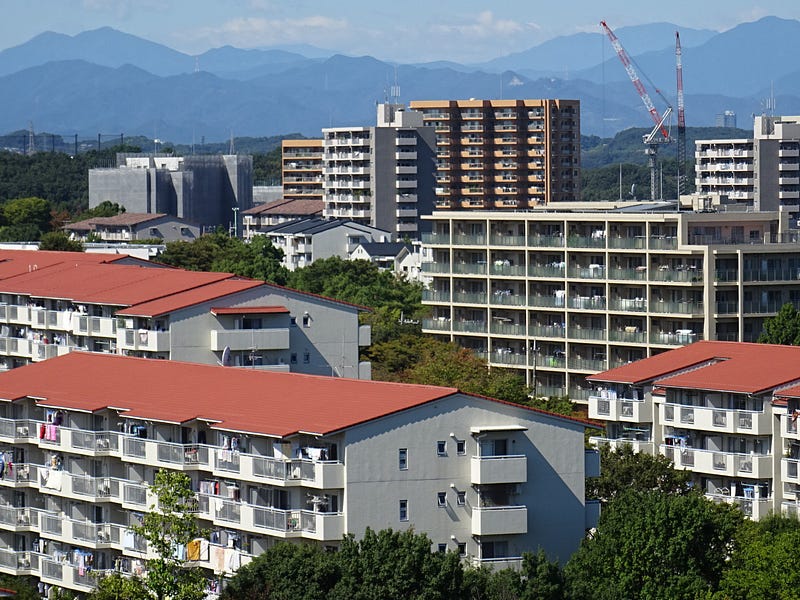
“We moved into the shataku — the company apartment — yesterday. She doesn’t want anyone to see me coming home early.”
“Naruhodo,” I said as if I understood, but I really didn’t.
It took a few years for me to fully unpack everything that one sentence conveyed about life in Japan. She doesn’t want anyone to see me coming home early. As if that were the worst thing in the world he could do.
It boggled the brain. Their first day apart, didn’t she want to see him? And what did that have to do with living in the company apartment?
Almost all the regular employees in the office lived either in the dormitory or the company apartment. The dorm where I lived was nice — it even included a bar and a beautiful sentō bath, and it was within walking distance of the office on the outskirts of Kobe.
The apartment building was further away, and not as new or nice. But it was a decent apartment, essentially rent-free. Most of the staff lived there, including the kachō and buchō managers.
Employees were rotated through different jobs at different locations. The company apartment in each area made it far easier to move on short notice than a regular apartment. And did I mention it was rent free?
So while all the men worked at the office, the wives made their own community. Some worked at home, others raised kids full time, some had their own careers. They drank tea together, played tennis together, took their kids to the school together. And they gossiped about the other residents and all the husbands.
What I came to learn was that women’s position in the pecking order of the shataku community was determined not by their own age and experience but by their husbands’ position in the company hierarchy. The wife of the buchō lorded over the wives of the kachōs; the wives of the newest employees had to bow deeply to everyone, serve tea to the group, and hand out chūgen presents.
The women of course gossiped over tea in the afternoon just as the men did over beer in the evening. They knew who returned to the building early and who worked until midnight.
The man who came home early to be with his wife was not an attentive husband but a slacker who would never get far in the company, or anywhere else in life. His wife wasn’t envied for marital bliss but pitied for having no hope of advancement.
There were a lot of things I admired about the lifetime employment system in Japan — the sense of a shared mission, the feeling that the company belonged to the employees and customers instead of rich shareholders who cared about nothing but returns, the ability to invest in training employees knowing they wouldn’t jump ship to join a competitor.
But there are also downsides that result from having no good options other than gaman and gambare. Once you’ve joined a company, there is nowhere else to go, not for years. That keeps wages low. And employees are transferred around the country, sometimes around the world at the whim of the HR dept. regardless of the employees’ desires or their family situation.
But the absolute worst is the shataku — the company apartments. Instead of paying a decent wage and allowing employees to decide how they want to spend it, the company provides benefits like free housing, transportation, and food.
Living in a dormitory was bad enough — spending 24 hours a day with a small group of workmates with no interaction with the outside world leads to groupthink. I’m sure having no connections outside the office also contributes to the declining marriage rate.
But the shataku is far worse. The whole family is subject to the pressure of the office. There’s no escape, no separate life. If your wife doesn’t properly sort the garbage, the buchō’s wife is watching and reporting the infraction to her husband. Don’t expect to be at the top of the promotions list if your kids are too noisy in the sandbox.
Yes, it takes a village to raise a child. Japanese society does a great job of watching over family and neighbors, especially outside of Tokyo. But mixing neighbors and office hierarchy adds a whole new level of complication — the husband’s chance at promotion based on his wife being properly courteous and deferential to the boss's wife, the wife’s status based on the husband’s success makes life an unhealthy, stressful fishbowl.
And the women in the office? There were a few female engineers on our team and as far as I could tell, they were treated equally and promoted the same as the men. The single ones were given a house to share in lieu of a dormitory. But once they were married, they were expected to move to their husband’s shataku. Or get their own apartment.
Yamashita-kun went home late that evening, and the rest of the week, too. But when Minami-kun got married, he went home early. And Uchida opted to get his own apartment closer to downtown Kobe where his wife worked. I left the country entirely and tried to combine Japanese work life with an American-style home.
I’m not sure whether it was a coincidence that Yamashita-kun was promoted before Uchida and Minami. But there are more important things in life than rising through the corporate hierarchy.
Years later, my nephew who works at the same research office is moving into the same shataku apartment. I’ve told him to go home early the first day, and every other day, too.
Japan is changing, more due to economic factors than a desire to improve work-life balance, but it is changing slowly, slowly…
The only way it will change, though, is by our own decision. So go home. Now. Don’t wait for the boss to leave. Especially if you just got married. Your husband or wife is waiting. It’s more important to make them happy than your boss and coworkers.