
The Day Of The Dead | Nov 2, 2023
A time to remember and care for the dead.
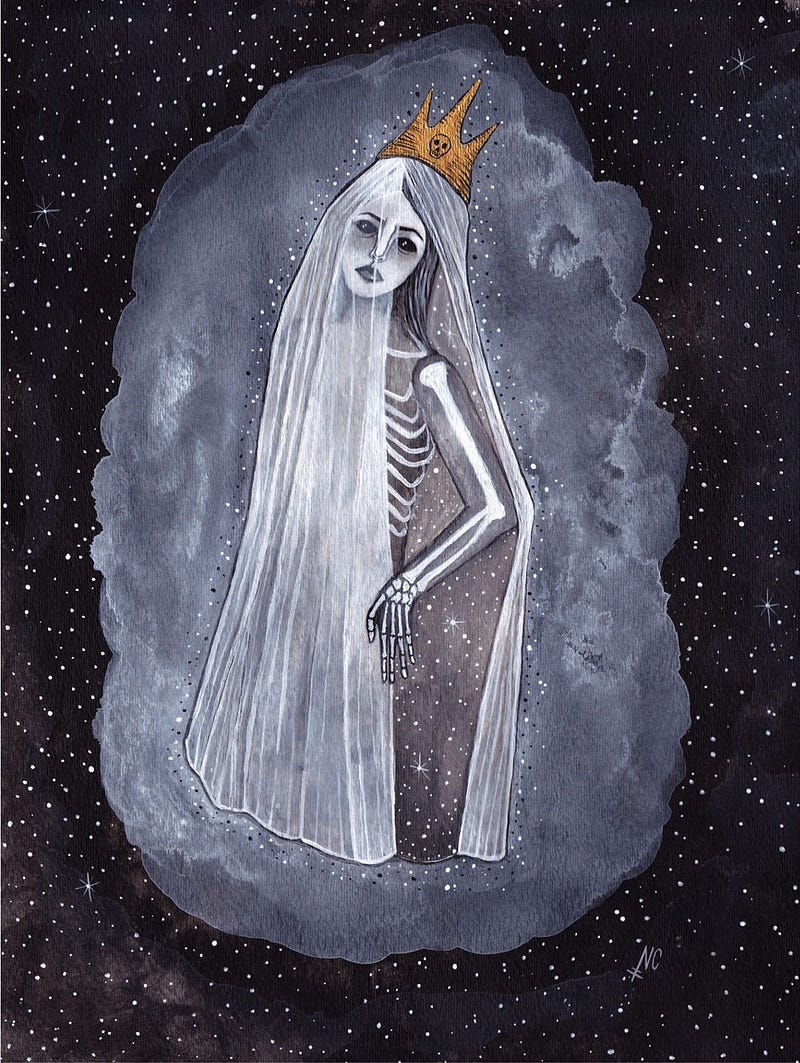
The Day of the Dead is celebrated in Mexico and Brazil, on November 2, 2023.
Scholars trace the origins of the modern Mexican holiday to indigenous observances dating back hundreds of years and to an Aztec festival dedicated to the goddess Mictecacihuatl. It has become a national symbol and as such is taught (for educational purposes) in the nation’s schools. Many families celebrate a traditional “All Saints’ Day” associated with the Catholic Church.
Halloween is a fun celebration mostly for children to dress as ghosts and ghouls and delightfully spook neighbors. The Day of the Dead is more personal and familial. It’s aimed at remembering the departed, both the loved and unloved.
And why not celebrate our dead, remember, and commemorate?
Your reasons need not be religious or cultural. The reasons can be found in the origin of the words, commemorate, memorable, memorial, remember, and memory itself. The Latin root for these is memor, meaning “mindful”, and the Greek word mermēra, meaning “care”. Merriam-Webster Dictionary
We remember to be mindful of to remember and to care for the dead for one day… before we forget again.
Gone And Forgotten.
Obsessed with the here and now, the new and the better, we forget the past and the departed. It’s as though we suffer mass amnesia.
Prolific intellectual, art critic, and poet Clive James addressed this in his tome Cultural Amnesia, published in 2007.
Shining a light on the legacies of public figures that have shaped the culture and thinking of this century, James' central idea of the book is that cultural amnesia is a deficit that touches us all in the Western world. He traces the origins of forgetting to the mass trauma and ongoing grief of World War 2. We are compelled to forget the inhumanity of the Holocaust, (and many ongoing wars), and yet, in doing so, we are impoverished both culturally and personally.
This shared forgetting causes us to neglect the history that created our here and now, the cosmic soup in which we all swim.
We neglect to even know of the public lives whose legacies we benefit from, whether by liberation, peace, beauty, or empowerment. We forget our teachers, those accessible gurus who lit our path. In a hurry to become the teacher or authority, we overlook rightful homage to the blessings given to us.
We forget grandparents and ancestors who created us, whose essence and, to an extent, superficial characteristics and temperament, we embody throughout our mortal lives.
We forget the past not only because of cultural amnesia caused by trauma but also because we prefer tangible, finite, knowable things. The Western world is hyper-focused on material living. Unless we seek it consciously and with the idea that it can enrich us, the unknown, the greater mystery of life itself, makes us feel insecure.
Death is a mystery. Without attention to the mysteries, we are poorer. As Joseph Campbell wrote in The Power of Myth, “It’s important to live life with the experience, and therefore the knowledge, of its mystery and of your own mystery. This gives life a new radiance, a new harmony, a new splendor.”
Radiance and splendor are essential to wellbeing. Without them, mundanity possesses us.
The Fecund Void.
“Into the void of silence, into the empty space of nothing, the joy of life is unfurled.” — C. S. Lewis
The void is more than half of our conscious existence.
In his book, The Archetypes and the Collective Unconscious, Carl Jung describes the personal unconscious as the house of forgotten or repressed memories that are unique to the individual. Because the memories are outside of our awareness, they form psychological complexes — for example, the Mother Complex.
The collective unconscious, said Jung, contains archaic patterns, images, symbols, and characters (archetypes), belonging to all humans. Example archetypes are Mother, Child, King, Trickster, Fool, Hero, Sage. Over our lives, we embody several archetypes. An archetype can take hold at any moment. Think of the times the Fool archetype seized you (you did a risky or stupid thing), or by the Sage archetype, (you shared helpful wisdom).
Our backstories (unconscious) create the main (conscious) story of our lives. And yet we believe the opposite — that our conscious actions and thoughts alone construct our lives.
Creative potential lives in the unconscious, the void. The cross-cultural myth and symbol of creative potential is the coiled serpent waiting to unfurl and manifest.
Investing our focus and energy wholly into the tangible, material world, the already manifest, ever-changing, temporal, conditional aspects of life, can never bring lasting satisfaction. It brings the opposite, psychological fragility and, if left unattended, mental illness.
The tangible material world divides people into winners and losers, the successful and the unsuccessful. Winning and success are strictly about money, prestige, and material trappings that trick us into believing we are merely visible beings and that once our visible self ceases, so do our souls and spirits.
But winning and success are rarely constants. They balance out with loss and failure. For this reason, Carl Jung joked with his patients, “Have you had any terrible successes lately?”
Fortunately, forging a connection with the invisible in us, to the inner void, the unconscious, and to death, is possible through inner-life development.
Opening our minds to see death as something more than emptiness is available to us through reading myths, studying art and artists, and observing foreign and indigenous cultures' funerary rites and festivals for the dead.
On November 2nd we can all join the collective energies with a ritual to remember and celebrate our departed.
Ritual To Remember The Dead.
“Do not allow me to forget you.” ― Gabriel García Márquez
You don’t need to be Mexican or Brazilian to celebrate The Day Of The Dead. Nor must you be religious. Connection and remembrance transcend these.
Many of my friends, a few clients, and I have done the following ritual to commemorate our dearly departed. Each time we do, we feel a weight lift from our minds, whether subtle or significant.
You can do this simple ritual alone, with your family or friends.
Prepare.
It’s not essential, but if you wish, gather a few ritual items such as a candle, incense, flowers, photos of the departed, or a symbol that represents your departed.
The symbol should be resonant for you. It could be an image of the moon, a star, the ocean, a stone, a picture of or an item that belonged to your dearly departed, or a religious symbol.
Place the items on a table in front of you.
Sit quietly and make yourself comfortable.
Take three deeper-than-normal breaths, and relax with each exhale, letting go of any tension in your body.
Now breathe naturally.
Light (or imagine) lighting a candle. The flame is the symbol of eternal light.
Envision the flame glowing steadily in your heart.
Remember.
Using the photos, the symbol, or memories within your mind’s eye, recall the departed: the ancestors who gave you life, family members, teachers, friends, pets, and any public figures that inspired you or made your life experience better.
Slowly, move your attention to each, acknowledging them, recalling, and feeling your connection. If you had issues with the deceased, remember carrying ill-feeling hurts you. See if you can ask for their forgiveness and if you can forgive them. This helps dissolve negative attachments.
In your own words, thank them, and wish them well for having touched your life in whatever way they have.
Smile. Be happy for them.
To get further acquainted with death and the void — the infinite, eternal part of you — read my in-depth article: 7 Potent Ways to Live And Die Without Regret
All love!


