
The Day I Realized I was Crazy — I Mean Creative
How Madness Influenced Writing and Creativity
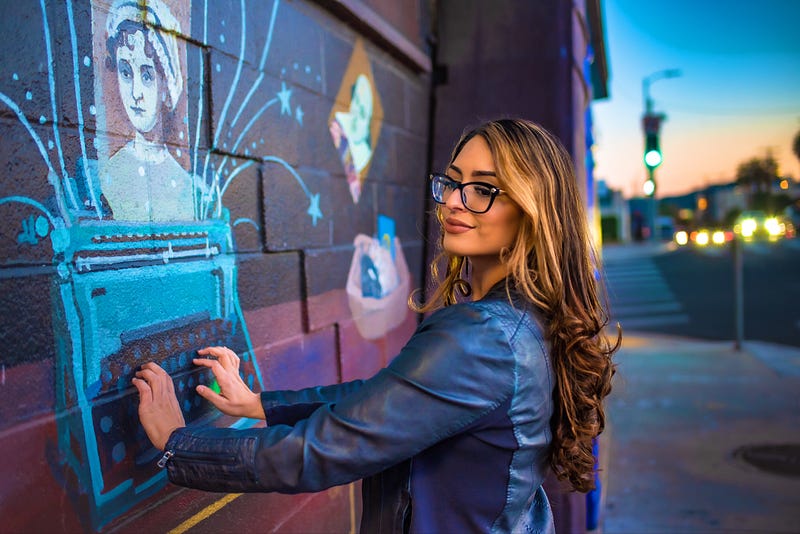
A local photographer, Stacy Soriano, had asked me to be part of her series on Inspirational Women, a 12-part photoshoot that would present women around the area with various talents.
Stacy and I have known each other for a long time but she had reached out through my Instagram with the idea to have me take photos in front of a Los Angeles bookstore.
For those of you that don’t know, my Instagram focuses heavily on reviewing fiction and content writing.
When Stacy finished taking photos, she sent me several questions to respond to regarding my writing and I found myself stumped.
Reading and writing have become an enormous part of my identity, and a large reason for helping me remain clean (5 years now), that I never bothered deciphering the reasons I do it and how it started.
For the first time in a long time, I had to think about it.
I write because I want to — because I have to. I write because I have manic, imaginative scenarios running through my head all day like a naked, homeless, man on fire running down a busy highway. If I don’t write down something on a daily basis, this man on fire continues to run around making impulsive, destructive decisions.
One thing I can say for certain is it stemmed from a coping mechanism — a survival instinct born out of aching loneliness and childhood trauma. Mental health and writing went together.
(There are ties between creativity and troubled minds).
Literature and writing ground me.
A Lonely Childhood
Before I answer the questions I’d been asked, let me paint a few small details of my background.
At five years old, my parents divorced. My father drove off into the sunset with his half-brained teenage secretary in his brand-new sparkling corvette. My mother went mad from grief and mental health issues and addiction started n the home. To cope, my brother chose video games and I chose novels. This is where creativity developed.
By seven years old, I’d been voraciously consuming a variety of chapter books weekly. And, by ten years old I started creating short fiction stories to entertain my friends and classmates.
It was a wondrous escape from a harsh, lonely reality where fictional characters and conversations substituted the real connections I craved.
Creativity Born of Intermittent Episodes of Rage and Manic Depression
In all honesty, bouts of madness are behind the inspiration.
Mental health issues started when I was 10 at the same time I discovered a passion for writing. My fourth-grade teacher requested we each create a short story to present to the classroom. My story, about a Native-American leader by the name of Moco Loco (crazy booger in Spanish) who haunted his family had the entire classroom howling with laughter.
At this time, I’d been struggling with long periods of severe depression and intermittent episodes of rage. Years of abandonment had been swiftly replaced with a new stepfather, a new home in a new city an hour away, a new school, and a new baby with no explanation as to what the hell was happening.
Why? Why are you always so angry? Mother would ask again and again as she reached for the belt for yet another angry outburst of mine.
My mom and stepfather both came from severely, physically abusive homes embedded in drug and alcohol abuse. Because of their backgrounds, the two possessed explosive tempers. Enflamed spirits that were always tangled in some form of earth-shattering dispute. (If the two processed their trauma and their own struggles with mental health, life would have been much different.)
Storms and lightning in the night sky were the angels bowling with God, my mother used to tell us.
Did that mean, the thunder within our house was monsters dancing with the devil?
Addiction and Mental Health
When I stumbled into addiction, I stopped everything that made me, well, me. My purpose at the time was to only live by and serve my new God — opiates. More specifically, heroin, Oxycontin, and Norco.
My entire life, I had felt there was something inherently wrong about me. Something is broken with the inability to recover.
Broken. Unloveable. Ugly. Odd. Used.
And, so I self-medicated for many, many years. First with alcohol. Then, with anxiety medication. And, finally with harder drugs.
At 26, after two years of recovery, I found the motivation to write again in a creative writing class focused on autobiographical memoirs.
The professor who taught the class, author James Brown, was a recovered meth addict and alcoholic with a mad arsonist for a mother and a painful familial history with mental health and substance abuse issues.
His own tales of trauma and recovery reduced the stigma and the shame around the topic.
Recovery stirred creativity and I shifted my focus from writing fiction to writing short, memoir content, inspired by my professor.
Writing and Healing
Mental health, chronic depression, and anxiety colored my life for so long, I hadn’t realized it was an issue I could fix. It did not define me.
There were tools I could gain to battle the internal, pessimistic, self-hating sentiments that poisoned my soul for so long.
All I needed was the will to fight. (And, the right combination of medication).
Writing became the most effective tool when it came to battling all of these issues — a means to understand me and the world around me.
It was the internal, glowing torch I had repressed for so many years due to the fear of opening up wounds that had never healed.
Goals with Writing
My dream had always been to write and publish young adult books.
Inspired by Ellen Hopkins, the author of Crank and Glass, I emulated her writing by infusing my personal experiences with addiction and mental health into my fiction and non-fiction content.
After years of therapy and recovery, I can say with certainty that my issues with mental health and addiction developed in childhood but expanded in my teenage years.
My goal is to bring awareness to mental health issues, substance abuse, and trauma that form in children, using fiction and self-help content.
As they say, write what you know.
The Day I Realized I was Crazy
There was no official day I realized I was crazy.
Madness and creativity started when I was ten years old and found its way through me when I was sixteen years old, and again at twenty-six.
I have acknowledged and accepted that mental health issues, self-destructive behaviors, and addiction are an enormous part of my identity. It has become the muse for creativity in writing fiction and other content.
Had I not met Professor Brown, and many other talented authors with a history of madness, I wouldn’t have found that passion to write again.
The weight of shame I’ve carried with me for so long lessens each time I put pen to paper. Rather than numb it with drugs, I’m embracing it with creativity in writing.
And let me say, welcoming trauma and mental health, is so much more freeing than anything I’d ever felt before.
Just ask any comedian.


