
The Day a Mouse Entered my Play’s Stage
And the shocking decision of a viewer.
At the beginning of the 2000s, I was in a play called “Os Azeredo Mais os Benevides” by a highly regarded Brazilian dramatist, Oduvaldo Vianna Filho. It told the story of an aristocratic idealist (me) who, upon realizing that his family was failing, decided to explore his lands in northeastern Brazil. There he ended up gathering a group of landless people and making his property productive, generating a series of events that would culminate in a murder.
The plot itself is not essential for what I have to tell. What matters is to locate the play, which took place almost entirely on this character’s farm. To set everything up in the best possible way, our set designer decided to buy a sugar cane truck and hang his load upside down on the stage. That went well with one of the songs on the soundtrack — which said, in a particular section, “How so? Levitating colonist? Aerial pasture? Heavenly corral? A flock in the clouds? But how? A plow in space?” — and not only formed the scene but even brought the farm’s smell to the stage.
The problem is that the smell attracted unwanted animals, too…
In one of the performances, I left the back of the audience and went up to the theater’s mezzanine, where I would change clothes and go down to the next scene. As I changed, I heard a shout from the audience and went to look at what was going on.
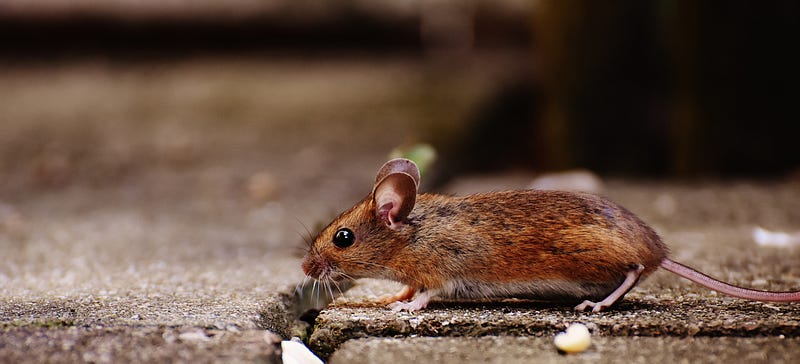
A couple of actors were on the scene. At that time in history, their characters were starving. And isn’t it that, suddenly, a mouse entered the stage? The audience reacted, shouting… And the actor who was on the scene, one of the best with whom I have acted, improvised, chasing the mouse as if he wanted to eat it at dinner.
The problem is that the mouse ran away from him and went TO THE AUDIENCE! I saw when one of the rows went, person by person, jumping around on chairs as the rat passed by, bumping into their feet.
Worried about what might happen, I watched from up there to try to come up with a solution… But, after going through that whole row, no one else reacted to the rat.
Apparently, the pet had found a way out of the audience.
I changed costumes, went down, made my scenes, and the play was over. The audience applauded and, little by little left the theater.
Except for one person, a friend of mine, also an actor, who had come to watch us.
I went down after changing clothes to talk to him, who was still sitting in his chair in the audience… And it was only then that I saw: HE WAS HOLDING THE MOUSE WITH HIS FOOT! The rat passed through his entire row and, when he realized it was going to reach him, he decided to hold it with his foot so that the play would not be harmed!
My friend, however, did not dare to kill the rat. He stepped on the animal gently so that he couldn’t get out but could still breathe. After releasing the weight of his foot, the rat ran out again and disappeared into the theater.
The actors’ presence of mind is impressive. We always think about what’s suitable for the play. Even if it is something disgusting like a mouse, if that is compromising the storytelling, an actor will do whatever is necessary.
It is not for nothing that they say that “The show must go on.”


