
Inspiration and Technology
The Dawn of the Visual Society
What is the visual society and how does it affect your life?
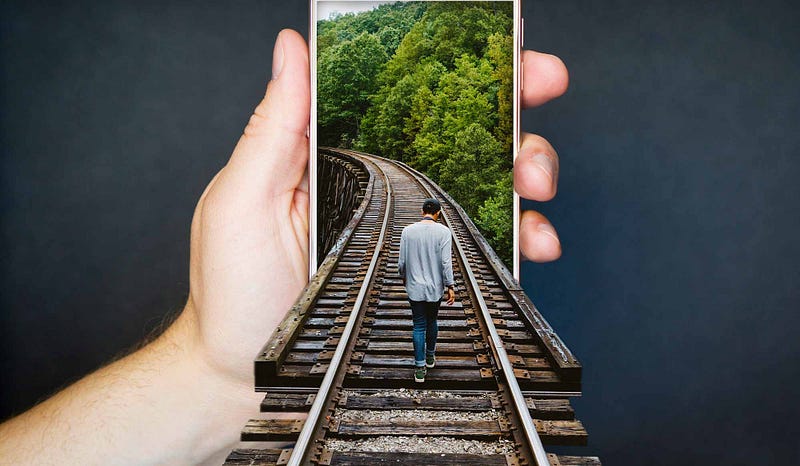
F.W. Lancaster first posited a paperless society in 1978. While some debate whether we can ever become truly paperless, it is fascinating this idea dates back less than 50 years!
Considering paper is used far less today than it was only a few decades ago because of email replacing most snail mail, another revolution in communication has simultaneously taken place. This revolution is not about communicating paperlessly but is about communicating visually.
Becoming a visual society
I recall AT&T trying to sell its $1500 ($3173 in 2022) videophone in 1992. The television ads attempted to entice people by showing grandparents seeing and speaking to their children and grandchildren. It was an exciting technology few could afford, even after they dropped the price the following year to $1000 ($2054 in 2023).
At the time, none of us imagined a much-improved version would be available for free in our pocket on a smartphone within two decades!
Face it, we are visual creatures, and it only made sense we would one day become a more visual society. In the past twenty years, we have become the most visual society in history.
Much of what we see, we judge. Often, we not only judge but also compare. We will leave a discussion of judging and comparing to another day. Suffice it to say, for now, judging and comparing, as well as showing off, is what much of social media is about today.
Social media platforms are heavily visually oriented. Some, like Instagram, Snapchat, Pinterest, etc., are entirely visual, with Facebook and others quickly moving in that direction.
“Think of Instagram. Journalism will continue to exist, but communication is now visual.” Franca Sozzani (1950–2016)
How visual is society today?
Did you know the average American consumer watches more than 4 hours of video from television and digital sources daily? Practically every social media platform supports video as well as photographs.
According to one source, we will take 1.72 trillion photos in 2022. That is 4.7 billion photos per day, 196 million photos per hour, or 8.2 million photos per minute — every minute of every day! This rate will continue to increase for the foreseeable future! And this says nothing about the 1 billion hours of video watched daily on YouTube alone! To say we are a visual society is a massive understatement!
Much of the increase in visual images and videos is due to the smart phone. Think about this marvel of engineering. It is no longer a wired device used for phone calls as it was for over a century. It has morphed into far more. Today it is a wireless handheld pocketable computer that acts as a piece of telecommunications equipment, with audio and visual capabilities. That says nothing of having an entire world of information ready at your fingertips via the internet!
“We’re living in a world where everything moves very quickly. We’ve become a very visual society, so I think it’s a very natural thing that people are captivated with the illustrations in a story.” Stan Lee (1922–2018)
How did society become so visual?
Fifty years ago, the mere thought of holding such a powerful device as a modern phone in your hand was not even conceivable to most people, if anyone! Compared to the 1969 Apollo 11 computer that put the first man on the moon, an iPhone in 2019 had more than 100,000 times as much processing power. This iPhone also had a million times more memory and seven million times more storage!
In a few short years, the current phone’s capabilities will be paltry by comparison and many millions of times more powerful than that 1969 computer! Oh, I did mention this is something you can put in your pocket, didn’t I? Absolutely astounding!
The power of that little computer in your hand has played a prominent role in our ever-increasing move toward the visual world.
Just think what that little telephone can do. It can summon almost any information available on any subject in the world. It allows you to speak to practically anyone anywhere at any time. You can also video chat, take pictures and videos to your heart’s content, and share them instantly! And that is to say nothing of its navigation, tracking, texting, and storage capabilities!
My, how we take for granted today what was pure science fiction less than 50 years ago!
Can you imagine what Alexander Graham Bell would think of the device he invented if he saw it today? It would be beyond the comprehension of anyone from his time! He certainly would consider it a marvel and a miracle.
Final thoughts
It is difficult to imagine what the next 50 years will hold if even a fraction of the current development rate is maintained. One thing for sure is it will be as visual or more so than it is today. Perhaps the next evolution is making the visual three-dimensional. Time will tell, but you can bank on it that the visual will be a big part of future society. After all, can you think of a more efficient way to communicate? As the old saying goes (and no, it was not said originally by Confucius):
“One picture is worth ten thousand words” Fred R. Barnard (1846–1996)
What do you think the future holds in store for us? I would love to hear
LinkedIn |Twitter| Medium| UncommonSense| AmazonAuthorPage | Parlor
Bill Abbate Leadership Writer and Editor in ILLUMINATION
Thank you for reading this article! If you enjoyed it, please check out the others below!


