
The Dawn of the Decentralized Age: DAOs and The Shaping of Tomorrow’s Digital Society
You may have heard of the term “DAO” floating around in the tech space, causing waves in the crypto-enthusiast community.
While some consider it a revolution in business management, others see it as a quirk of blockchain technology.
So what exactly is a Decentralized Autonomous Organization (DAO), and how might it shape our future?
Strap in as we navigate the exciting prospects and inherent challenges that lie ahead.
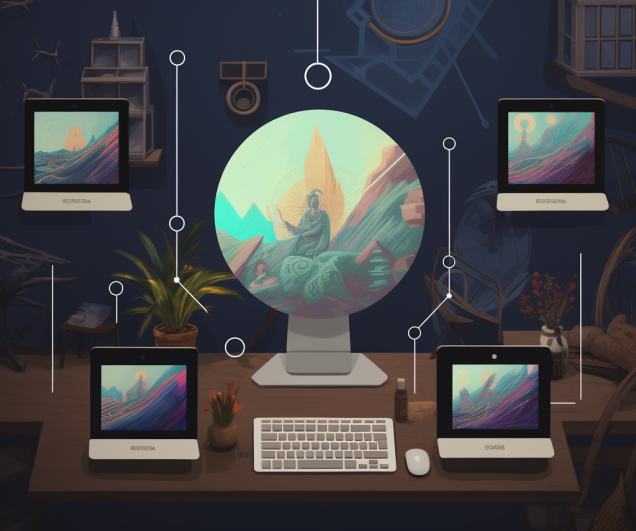
Centralization vs. Decentralization
Let’s start with a metaphor. Imagine two cities: Central City and Decentral Town.
In Central City, all decisions are made by a single governing body, much like traditional corporations today. Decisions, whether they are about building new parks or implementing rules, flow top-down.
In contrast, Decentral Town operates differently. Each citizen has a say in every decision. Rather than a few dictating for the many, every decision is a communal process, ensuring transparency and equality.
In the digital realm, these “cities” are a metaphor for centralized systems and decentralized systems.
The current standard, Central City, is what we are all used to — banks, corporations, and social media platforms.
Decentralized systems, symbolized by Decentral Town, are what blockchain technology and cryptocurrencies like Bitcoin and Ethereum champion.
DAOs are the digital equivalent of Decentral Town, where power, decision-making, and governance are in the hands of the many, not the few.
The Rise of DAOs
DAOs are built on blockchain technology.
They leverage the power of smart contracts — self-executing contracts with the terms of the agreement directly written into lines of code. These contracts operate on the Ethereum blockchain, creating a transparent, conflict-free way to facilitate a transaction.
Imagine being part of a company where you can vote on every decision, propose new ideas, and help steer the direction of the organization.
This is the core of a DAO.
It’s a system of hard-coded rules that define which actions an organization will take. Since these rules live on a blockchain, they’re transparent and immutable. No hidden agendas, no sudden rule changes.
Prospects of DAOs
DAOs are revolutionary because they have the potential to democratize decision-making processes, increasing transparency, and fostering a greater sense of community.
1. Democratization and Transparency: In a DAO, every member has the power to influence decisions. This democratization can lead to more creative, efficient, and fair outcomes. Moreover, all transactions and decisions are recorded on the blockchain, which means they’re public, immutable, and verifiable by anyone.
2. Lower Operational Costs: DAOs don’t need a traditional management structure or a physical location. This drastically cuts down operational and overhead costs.
3. 24/7 Operation and Global Inclusion: As DAOs operate on blockchain, they’re always “awake.” This enables members across different time zones to participate at their convenience. Additionally, anyone with internet access can join a DAO, potentially bringing in diverse perspectives and ideas.
Challenges for DAOs
Despite these tantalizing prospects, DAOs face several challenges that need addressing.
1. Regulatory Hurdles: Since DAOs operate in a relatively new space, the lack of clear regulatory frameworks can be a double-edged sword. On one hand, this allows for innovation. On the other, it can lead to legal uncertainties.
2. Technological Risks: Smart contracts are still prone to bugs and hacking. A notable example is the 2016 DAO hack where a loophole in a smart contract led to the theft of $50 million worth of Ethereum.
3. Governance and Decision-making Issues: While DAOs are designed to be democratic, they can face problems with low voter turnout or power concentration among a few wealthy members.
Conclusion: DAOs — The Trailblazers of Digital Democracy?
DAOs are poised at the cusp of an exciting future, with the potential to redefine how we think about organizations and governance. They embody a paradigm shift, championing transparency, equality, and community participation.
However, the road ahead is not without its potholes.
DAOs have to navigate a complex maze of regulatory, technological, and governance challenges. As with any new technology, they need time to mature, learn from their mistakes, and build robust frameworks.
Despite the challenges, one cannot deny the captivating allure of a DAO — a world where power structures are decentralized, and every participant has a voice.
As the adage goes, “Rome wasn’t built in a day.” The evolution of DAOs will undoubtedly require patience, resilience, and collective effort. But with every step, we inch closer to the vision of a decentralized digital democracy — and that’s a future worth striving for.
- “What is a DAO?” by Coin Telegraph: A beginner-friendly explanation of DAOs.
- “A beginner’s guide to DAOs” by Ethereum.org: An excellent source to understand the basic concepts of DAOs and their connection to Ethereum.
- “The DAO Hack Explained: Unfortunate Take-off of Smart Contracts” by CoinDesk: This article details the infamous DAO hack of 2016, which led to significant discussions about smart contract security.
- DAOstack: A complete operating system for DAOs. If you’re more of a hands-on learner, this platform lets you experiment with creating your own DAO.
Enjoyed the read? For more on Web Development, JavaScript, Next.js, Cybersecurity, and Blockchain, check out my other articles here:
If you have questions or feedback, don’t hesitate to reach out at [email protected] or in the comments section.
[Disclosure: Every article I pen is a fusion of my ideas and the supportive capabilities of artificial intelligence. While AI assists in refining and elaborating, the core thoughts and concepts stem from my perspective and knowledge. To know more about my creative process, read this article.]