
The Dark Side of the Moon at 50
Pink Floyd’s singular 1973 masterpiece is more than a popular album — it’s a generational rite of passage.
In last week’s Billboard 200, SZA’s S.O.S. logged its tenth week at №1. The album’s an eclectic tour de force of modern melodic R&B; it deserves to stay perched on the top for a while.
SZA’s a spellbinding, hugely talented artist. Even before making her full-length debut on 2017’s sublime CTRL, industry tastemakers and music adventurists buzzed with confidence in her. She brought a cool, dreamy charm to the 2014 FADER Fort; flexed hard on some Schoolboy Q cuts, and, oh yeah, cowrote the international megahit “Feeling Myself” with Beyonce and Nicki Minaj.
Then CTRL dropped, spawning two of the most delicious pop cuts of the past decade, “Love Galore” and “The Weekend” and launching her to well-deserved fame. That was before her skyscraping feature on “All The Stars” and a record-setting chart run with Doja Cat.
That S.O.S. debuted at №1 is well-deserved and unsurprising; the real stunner lurks at №155, down 23 slots from the previous week. It was the best-selling album of the 1970s, Pink Floyd’s The Dark Side of the Moon.
On March 1, 1973, The Dark Side of the Moon descended upon us like an alien spacecraft piloted by god. In the now half-century since, it’s grown to become the absolute most perfect, most iconic, most universally beloved slice of recorded popular music ever gifted to us.
That sounds like hyperbole, but … is it?
Cooler heads may quibble and there do exist some (perhaps many!) living, breathing humans who don’t much care for the album or the band. Still, the album has defenders, from the obsessed to the merely enthusiastic. Don’t take my word for it; check the stats.
The Dark Side of the Moon has spent an incomprehensible 972 weeks on the Billboard 200, including 741 consecutive weeks from 1973–1988. Both of those figures are Gretzky-level all-time records that tower above literally every other album ever pressed. It is the world’s third best-selling album ever (after “Thriller” and “Back in Black”), and also the 183rd best-selling album of 2015. The work was selected for inclusion in the US Library of Congress.
In all, 45 million people around the world and 17 million in the United States have bought The Dark Side of the Moon on vinyl, 8-track, cassette, CD, or digital download. Each song on the album has been streamed over a hundred million times on Spotify.
The album’s considerable profits even helped fund another seminal work of British pop culture: The 1975 film Monty Python and The Holy Grail. Per Rolling Stone:
The members of Pink Floyd often spent their downtime during the Dark Side sessions watching Monty Python’s Flying Circus on BBC2, so when the British comedy troupe ran into difficulty raising money for their first full-length feature film, the Floyd — now flush with cash from the sales of Dark Side — were more than happy to pony up 10 percent of the film’s initial £200,000 budget.
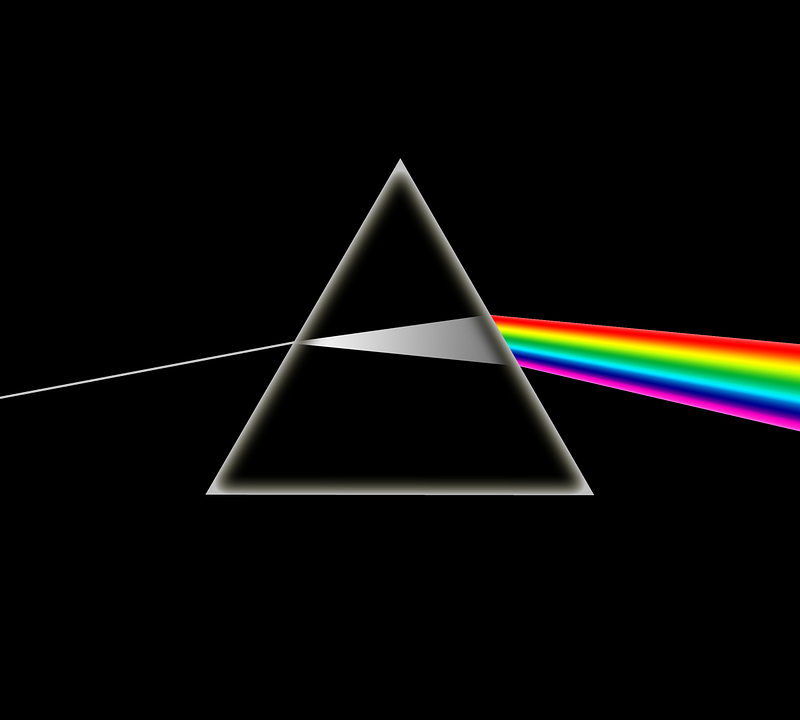
The album’s reach extends far beyond physical copies and record spins. The iconic cover art, a prismatic graphic whose notoriety puts it on par with the McDonald’s golden arches and Nike swoosh, is easily the most recognizable and reproduced in rock history. At least someone you know had that cover art on a dorm room poster. Just about every city around the English-speaking world has a Pink Floyd cover band, laser show, or theatre troupe that reinterprets The Dark Side of the Moon back to front.
More than the staggering numbers, The Dark Side of the Moon has transcended music to the point where it’s become a rite of passage. Most people have a story of where they first heard it, when it first clicked for them, when they tried to do the legendary Wizard of Oz sync-ups The Dark Side of the Rainbow, or when they first heard it while in some chemically altered state. (For some people, it’s all the same story.)
But why? What explains such lasting, feverish appeal for a work of art that while objectively very, very good, rarely gets named as people’s favorite album or even at the very top of all-time “best albums” lists? [Rolling Stone, for example, slots it at №55 in its latest all-time ranking. The Guardian puts it at №37. It’s obviously very good, but it’s never named along with Sargeant Pepper or Pet Sounds or Songs in the Key of Life or What’s Going On? What makes The Dark Side of the Moon different?
For starters, because it sounds beautiful. It’s a continuous work of shape-shifting sound, 43 lean minutes separated into somewhere between 8 and 10 songs, all laconic tempos and lush melodies, sparse lyrics and hidden Easter eggs. The quadraphonic mix and endless synths and overdubs create a fascinating listening experience that keeps you surprised, curious, and enraptured.
Still, despite Pink Floyd’s penchant for stylistic experimentation and the album’s lack of proper song breaks, the parts with words — “Breathe (in the Air)”, “Time”, “Money”, “Us and Them”, “Brain Damage / Eclipse” — are actually standard verse-chorus melodic pop songs with common chord progressions. They play that way on the radio, but they sink into a much greater cinematic whole on record.
The Dark Side of the Moon is a concept record, clearly, and one with the most audacious moonshot goal: the 43 minutes trace the entirety of life itself. (No one ever accused Pink Floyd, and lyricist Roger Waters in particular, of being modest.) The album opens at birth and ends at death. In between, it navigates childhood, adolescence, adulthood, religion, money, conflict, love, madness, and decline. The lyrics are elemental (and frankly pretty basic), enough to relate to almost everyone at some point.
That concise approachability — again, this is a complex recording, but not a complex record — leaves it an aggressively easy get. You can appreciate it at any phase of your life, share it with your children, and revisit it any time you wish. The Dark Side of the Moon ages with you, and ages as well as you wished you could. That’s why so many people continue to discover and rediscover the work, and why it remains rapturous 50 years after its release.
If you haven’t taken a listen in a while — and, if I’m honest, it had been a couple of years since I last did — you should. While it rewards headphone listening and repeat listening, you can pretty much visit The Dark Side of the Moon anywhere. It’s a road trip album, a bedroom album, an arena album, and a coffeehouse album. That’s part of its charm.
As I listened to it again this past week, I was struck by how similar the experience remains. The album still feels like one of life’s inevitabilities — all sonic wonder and pseudo-deep life observations — a nearly sacred bestowment that feels as though it’s always existed and somehow always will. It’s evergreen content before the term was coined. It’s perhaps as close as humanity will have to something approaching a common text, even if we don’t all speak the common tongue.
No, The Dark Side of the Moon is not my favorite album — or even my favorite Pink Floyd album, that would be Animals — and it probably isn’t yours, either. Still, if I was asked, “What is music?” by an alien landing here on Earth, I’d probably play them The Dark Side of the Moon. And I think that’s the point — in crafting a seamless, flawless opus to encapsulate life, Pink Floyd tidily captured the essence of what music itself actually is. It is of itself but belongs to everyone, and it exists apart from space and time, fact or fiction.
Pink Floyd created a truly transcendent work — a rite of passage, a common language, an ancient script, a delicious slice of pop art, and that work’s mere existence continues to take on a life of its own, nearly a lifetime after it first appeared. Great art does that; it takes a moment and extends it all the way out to forever. Not everyone makes it, and lord knows if SZA ever will, but The Dark Side of the Moon did. In just 43 minutes, Pink Floyd broke the chains of gravity and the twin prisons of birth and death to become timeless, unshackled, and immortal.