
The Dark Side Of Rich Kids Volunteering Abroad
Voluntarism Isn’t Always What It Seems
Voluntourism is making around $3 billion every year. And millions of people volunteer around the world.
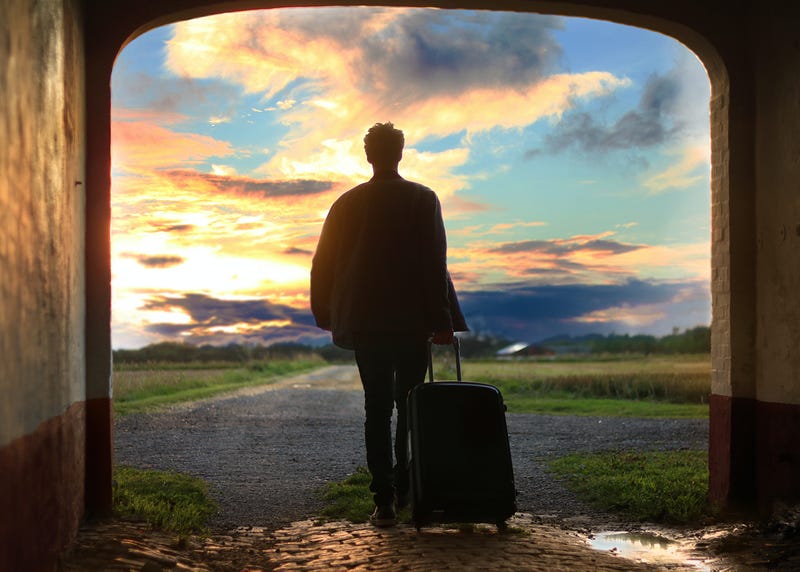
The idea is to help impoverished communities get a better life. So, volunteers swoop in to try and make a difference. Youth groups, students, and other participants are paying thousands of dollars to go on this trip and help in orphanages, build houses, and pursue other short-term projects.
But, in reality, volunteerism has a dark side.
Most international volunteering organizations are making money out of naive volunteers. And many volunteers can’t provide tangible help. They don’t have the skill or knowledge for it. And unlike what most people believe, not just anyone can build a house.
To put it into perspective — most of these trips serve no purpose. Other than to post stuff on social media or put it on a resume.
Welcome back, family. I want to shed some light on global issues that should be addressed. And the more we educate each other, the sooner we can make a change and make the world a better place.
That’s why I want to talk about voluntourism.
Voluntourism is one of the fastest-growing trends in travel. More than 1.6 million volunteer tourists are spending around $2 billion every year.
When volunteers arrive at their destination, they get a warm welcome. Whether it’s for personal, educational, or religious purposes, these philanthropists often believe they are making a difference.
Many go there with good intentions. They want to empower people. Help them when they can’t help themselves. But, as time passes, they get to witness many things. Things that don’t look quite right.
Many volunteers start to see that the work they are doing is actually hurting the people in the community. And this is not an isolated incident.
A Mindset of Dependence
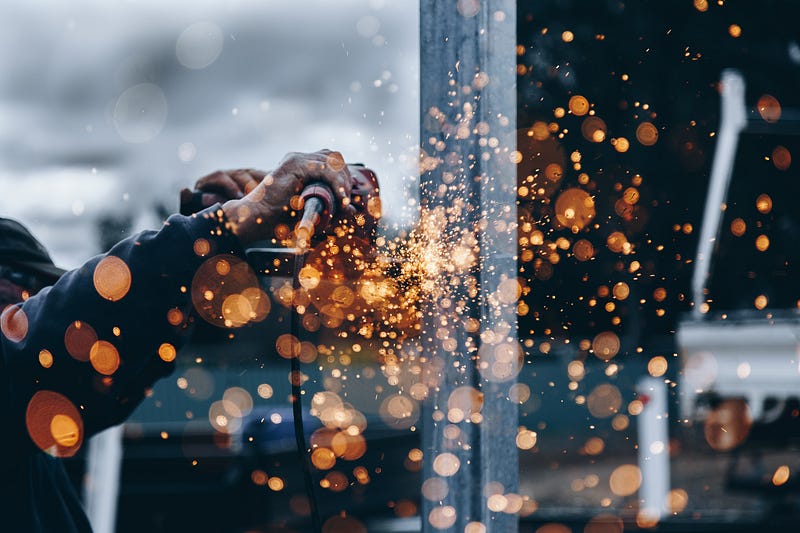
The first thing you will see in volunteerism ads is “Come build houses!”. Or “Help us construct a brand new classroom!”.
Many volunteers go to South Africa, Tanzania, Ghana, India, Kenya, or other underprivileged and rural areas. They want to make a positive impact by fixing problems that the locals can’t handle themselves.
So, they try their best to help build walls, roofs, and installations. They make clean drinking water storage units, construct toilets from scratch, and assemble water tanks designed to collect rainwater.
But how can a couple of teenagers build a home?
Don’t get me wrong. Help is always welcome, especially in places recently suffering from a natural disaster, like a hurricane or wildfire.
But, when you are volunteering, you will quickly realize that the locals are just as, if not more, skilled at it than you are. The residents are better equipped to handle the task.
However, volunteers are actively encouraged to prevent or stop the locals from helping. Mainly because they are the ones who organized the trip and are here to fix that problem. This creates a whole set of challenges for that community.
First, it conveys a message that the locals can’t handle their problems. They can’t support themselves or their community, which causes self-doubt and some humiliation.
I mean… put yourself in their shoes: You are in a bad place, and you need help. But, you are being told that the only way you can get that help is from a whole group of teenagers from another country, thousands of miles away, and travel to build that house for you. And keep asking you over and over again that you don’t participate.
In a way, it is kind of arrogant to think that teenagers can do a better job at building a house than adults from the local community can. And to assume that the adults need help from teenagers to get by.
Secondly, when more and more volunteers come to help in construction projects, local construction workers and carpenters are losing jobs. With a huge influx of outsiders eager to help, these local professionals are put on the sidelines.
Technically, volunteers are not solving problems within that community. They are creating an experience for themselves. A quick fix. They create a mindset of dependence.
This unintended consequence stems from the perception that external help is critical. So, it ends up displacing the very people who have the actual skills and knowledge to get the job done. Seasoned professionals struggle to find employment, which creates a complex dynamic with local industries.
Here is how it works: If agencies were to hire local workers for construction projects, they would have to pay for labor. This means less profit for the agency. But, when they get volunteers who pay to do the same work, the agencies profit off the local community. This is hurting local workers and creates a dependence on external help.
Even volunteers with expertise, like medical students, can disrupt the local economy.
Maya Wesby, a writer for Newsweek, shared a story from Ghana where locals started relying on the free medicine and healthcare given by volunteers. This made them stop getting medical insurance, which harmed local healthcare and insurance providers. The entire program made the locals more dependent on outsiders. Since these trips are meant for a short period, volunteers don’t realize the damage they are causing to communities in the long run.
Volunteer agencies often post ads about how desperately they need volunteers. When, in fact, these trips can cost anywhere from a few hundred to a couple of thousand dollars. It depends on how long you stay.
But, even though volunteers are putting in a substantial amount of money to help, only about 18% of the funds raised actually go to the community. The remaining 82% is used for covering travel costs. This is what keeps the voluntourism industry going.
A much better way to support the community would be to pay local builders, construction workers, carpenters, and other professionals to do the work. This not only supports the community but also creates a sense of independence and self-reliance.
If you want to make a real difference, you can donate some of the money you might have spent on volunteerism travel expenses to the frontline workers. To people who live in that community and are trying their best to provide resources and other necessities to poverty-stricken families.
Or, you can drop the volunteer part and focus on the tourism. You can buy stuff from local stores and support the economy. And spend money on beaded wallets, handmade accessories, food, or other products.
Exploiting Children for Profit
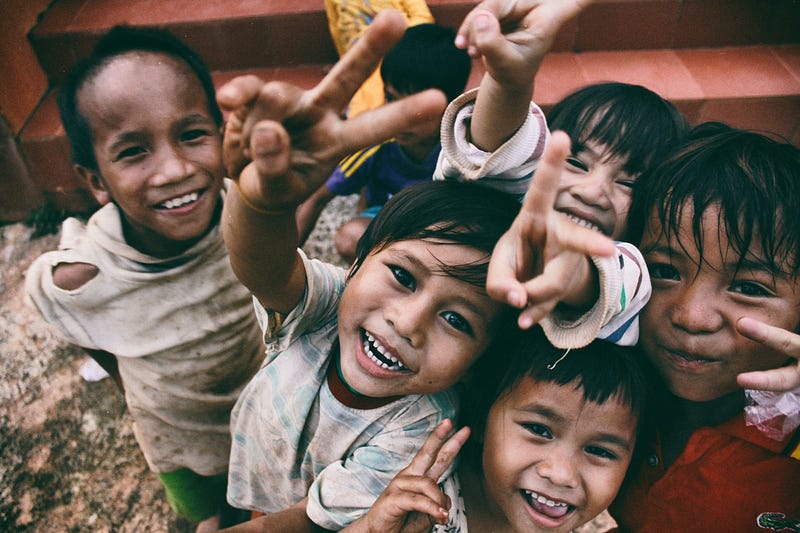
Voluntourism programs are designed to perpetuate white saviorism. This idea comes from the concept that minority communities should depend on white people to be “saved” or “rescued.”
But volunteers often forget that on the other side of poverty are people…regular people who don’t want to be looked at as someone inferior.
Now, I would also like to point out that volunteers who really want to help are not at fault here. That’s because they are primarily misled by the volunteerism industry, which recruits them. These young volunteers have no idea what they are getting themselves into.
One of the most dangerous ways to volunteer unskilled is in a children’s orphanage.
It’s not just morally wrong to parade these children for tourists, but it also creates a sense of abandonment. By spending time with volunteers, children get to see how lucky these people are. Volunteers have all this stuff that they are never going to afford. And just when they get too close and form a strong emotional bond, these volunteers leave. This can be a real problem, especially for children who don’t have a parental figure.
But there is even a darker truth that’s hidden behind a mask.
According to statistics from the U.S. State Department, more than 80% of children in orphanages are not, in fact, orphans. At least 1 child has a living parent. And they’ve been put in this institution because of poverty.
In such cases, parents are told that their kids can get a better education, food, and opportunities than growing up with their poor relatives.
Orphanage tourism, which has absolutely no regulation, can inadvertently support an industry where kids are used as tourist attractions. Take Nepal, for example. More than 90% of the orphanages there are built in popular tourist areas.
If this institution didn’t provide adequate food or education to the children, they would face little to no consequences.
The problem is that the director directly benefits from volunteers. Most of the time, they can decide to keep the children looking undernourished so they can receive more donations. Some institutions have been found guilty of trafficking and sexually abusing these children.
In a video by VICE, a former volunteer talked about the terrible treatment and dishonest practices she saw while helping at an orphanage in Tanzania. In the video, the ex-volunteer wears a rubber mask to hide her identity.
She explains how the kids at the orphanage would put dirt on their faces when they saw the volunteer vans arrive. These kids tried to look more desperate and in need of assistance. The toys that were given to the kids never actually reached them.
Instead, the orphanage director kept or sold them. The director believed that if the children were seen playing with new toys or sleeping in nice beds, future groups of volunteers wouldn’t donate that much money or stuff to the orphanage.
She said that every single one of the volunteers paid a huge amount of money to go on this trip. But hardly any of that money went to the orphanage.
The volunteers were also supposed to build a library. But they did it so badly that skilled workers had to undo the work and do it all over again when the volunteers were not looking. She also said that she had to teach English to kids. And she had no idea what she was doing. She had no previous experience as a teacher.
She said she was completely unqualified and unprepared. And as a volunteer — that was normal.
They were dealing with very vulnerable young children. Some don’t have a family to come back to. And the closest thing to a family they had — was the teachers and the orphanage.
The volunteer said she was working at a girls’ orphanage. And in this place, the kids shared rooms without running water.
The little girls only had access to basic meals, like beans and rice. And they had to cook it themselves. While the volunteers ate separately, their meals were a million times better. They ate eggs, fresh fruit juice, butter, jam, etc.
And when the children wanted a decent meal, they had to sing and dance for the volunteers.
But there is more.
Many of the kids that the volunteers met weren’t actually orphans.
They had one or both living parents.
But, in most of these cases, the children had to end up in the orphanage because their family was too poor to raise them. At other times, they were taken away by force so that they could interact with tourists — or worse.
The volunteer said there were cases where these children were trafficked and sold to couples who couldn’t have children. But…sexual predators would also pay big money to get these children.
Another journalist also talked about the awful living conditions kids in these orphanages had to deal with. The Guardian mentions a particularly bad case in Haiti.
After the 2010 earthquake, a US religious group set up an orphanage where children were kept hungry and living in filth with no mental stimulation. Yet, they received an average of $10,000 a year for each child in donations.
A former staff member claimed that much of this money went straight into the director’s bank account. It’s believed that this institution was involved in trafficking and selling children for adoption to families in wealthier countries. They even hired someone to convince poor parents that their children would be better off living in this institution.
Lumos, which was founded by JK Rowling, is working hard to end the practice of keeping kids in institutions and instead try to reunite them with their families. It’s a critical mission that is being negatively impacted by voluntourism.
The VICE volunteer and JK Rowling are not the only ones who spoke about exploitation in children’s orphanages.
Voluntourism, rather than helping these children in poor communities, is actually making things harder for them. It’s leading to more orphanages, which feeds this system that takes children away from their families.
In 2012, journalist Juliana Ruhfus went to Phnom Penh to investigate the same problem. She talked to kids, volunteers, and orphanage workers. She also met activists who were trying to stop child abuse in the country.
But, she needed a more in-depth analysis of what was actually going on behind the scenes. So, she went undercover as a volunteer. What she saw literally broke her heart. These children had no one to protect them.
The journalist explained that many of these children grew up without their families. Instead, they were cared for by people who would just come and go.
I mean… it is normal. As a volunteer, you can’t stay there forever. But, the time you spend with these children is, without a doubt, one of the most important phases in these children’s lives. So, when a volunteer leaves and the child manages to grow this deep bond with them, then the child ends up with serious emotional scars. Abandonment.
Just look at it this way. First, these children are taken away from their parents. Then, they meet these volunteers who are supposed to replace their parents. The moment they grow too attached, the volunteers leave. And that’s how you create an attachment disorder.
It’s a recipe for disaster.
Volunteerism Exploits Wildlife
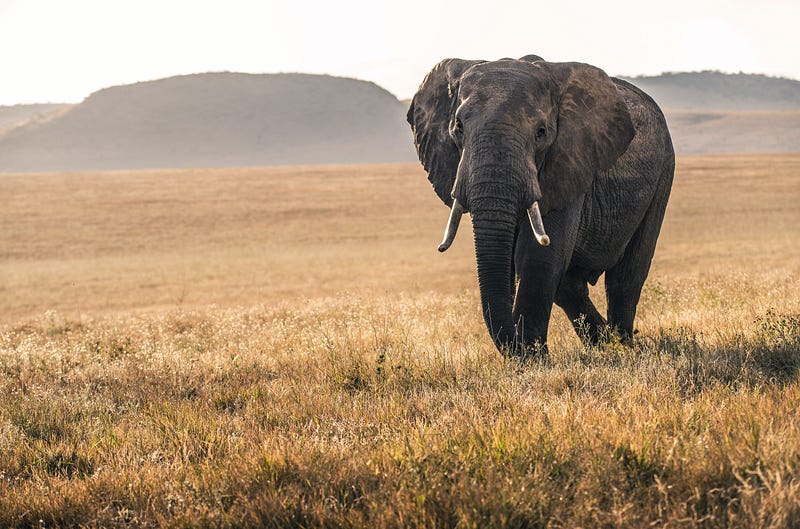
Voluntourism isn’t just harmful to people in developing countries. It’s also damaging wildlife. In places like Thailand and many parts of Asia, where cruel activities like elephant riding and wildlife mistreatment are widespread, numerous fake sanctuaries have emerged to cater to the demand for “ethical” wildlife encounters.
In reality, these establishments turn out to be just as exploitative as your typical safari and elephant attractions. Instead of being forced to give rides, elephants are now compelled to endure being touched, washed, and fed by hundreds to thousands of tourists every single day. They are often chained up and beaten, so they’ll submit.
Many Instagram influencers and YouTube personalities are promoting these fake sanctuaries. It is heartbreaking to see how many wild animals are snatched from their mothers when they are still babies.
And when they do get taken to these sanctuaries, they get beaten, stabbed, intimidated, and starved — all to fuel the wildlife entertainment industry.
Many tourists believe they are doing good when they come to these sanctuaries. They think that their money goes to a good cause. When, in fact, it is doing the exact opposite.
The question is: how can you tell if the place you are visiting is a real animal sanctuary?
Just take a look at the animal’s living space. Reputable sanctuaries do their best to recreate the natural environment of animals.
The habitat should provide different outlets for mental and physical stimulation. Such as immense structures for chimpanzees to climb. Pools and ponds for bears to splash in and bathe. And large fields for animals to enjoy.
If you see small pens with hard floors or enclosures where the animals constantly pace around the edges, cramped with little space for leisure, it is obvious that THAT enclosure is fake. It is made to accommodate the tourists — not the animals.
It’s also important to think about the social needs of the animals. Social animals should be spending time with compatible companions of the same species. This is a great way to form a bond, pack, or herd so that they can enjoy a normal life.
In real sanctuaries, all the animal’s basic needs are being met. That is why the animal looks and feels happy.
But, in fake ones, the animal lives in a cage. It is constantly exposed to public display and doesn’t live in a comfortable environment. There is too much human interference and little space for animals to live and thrive.
It’s evident that their so-called good intentions alone are not enough. There is this broken system that truly benefits from those who need help. And as volunteers, we need to ensure we support the right organizations and sanctuaries.
If you really want to make a difference, then you can start with your own community. You understand the culture and language, and there is so much you can do to help. You can volunteer at a local hospital, homeless shelter, animal shelter, or nursing home. You can donate money, toys, and supplies to local orphanages, struggling schools, and small businesses.
Together, we can make a change.
I hoped you learned something from this post! What are your thoughts? Leave a quick response — I’d love to get the input of the community. And don’t forget to follow if you want to keeup up with my latest content.


