avatarRiley York

Free AI web copilot to create summaries, insights and extended knowledge, download it at here

4076

Abstract

from Brae, all you need is a social media account and a website. And possibly a guru coach.</p><figure id="11f4"><img src="https://cdn-images-1.readmedium.com/v2/resize:fit:800/1*_bqMFpGbIKDj0a-6Y_MmMw.png"><figcaption><b>For some reason, all the coaches coaches look just like this. </b>Photo by <a href="https://www.pexels.com/photo/a-woman-sitting-at-the-table-8279816/">RDNE Stock project</a> on Pexels</figcaption></figure><p id="42ba">Brae had a coach herself, who she took a course from. I can’t remember her name, but was a <a href="https://thelifecoachschool.com/brookecastillo/">Brooke Castillo</a>-type. Castillo is a psychologist-turned-life coach who runs a life-coaching empire. After seeing a coach on Oprah decades ago she became one herself, and now runs The Life Coach School — where she trains others, for 18,000 a pop. A business that earns her about 35 million per year.</p><p id="386e">My friend makes significantly less than that. I’d guess around 45K per year (on a good year), which is about average in the field. If I remember correctly, her certification course cost her around 4,000. You can get an ‘accreditation’ on Udemy for <a href="https://www.udemy.com/topic/life-coaching/?utm_source=adwords&amp;utm_medium=udemyads&amp;utm_campaign=Brand-Topic_la.EN_cc.CA&amp;utm_content=deal4584&amp;utm_term=_._ag_141808384968_._ad_595639368892_._kw_udemy%20life%20coaching_._de_c_._dm__._pl__._ti_kwd-530268258407_._li_9000843_._pd__._&amp;matchtype=b&amp;gad_source=1&amp;gclid=Cj0KCQiAwbitBhDIARIsABfFYIKVF5AS2S5u3ILDef1G_raBHotHU7rHf8pqyokQxiOGeDC6qeTu_W4aApoVEALw_wcB">about $25</a>, so I guess there isn’t <i>zero</i> barrier to entry. But again, there are no official requirements.</p><p id="8d34">The industry itself operates under zero regulation.</p><p id="14ff">Theoretically, you could be a tax-evading serial killer with a credit score of 12 and be giving people life advice. Or as <a href="https://www.theguardian.com/lifeandstyle/2021/oct/06/life-coaching-brooke-castillo-unregulated-industry">The Guardian</a> put it in an article about Castillo and the industry:</p><blockquote id="061d"><p>“Coaching is an entirely unregulated industry — there are no oversight boards, no standard curricula, no codes of ethics; if I wanted to hang out my shingle as a life coach tomorrow, no one would stop me. Coaching is distinct from therapy, in that it tends to focus on helping functional people improve their lives, rather than treating people with clinical issues — although those lines aren’t always clear.”</p></blockquote><p id="6a98">I’ve seen those lines blur. As a side effect of Brae crashing on my couch from time to time, I’ve got to eavesdrop on a few conversations between her and clients, her coach, and her life coach colleagues. She was encouraged to get clients from online support groups on Facebook. And I heard her give advice that bordered on therapy.</p><p id="3fe5">Therapy-style advice, without regulations such as training…or <a href="https://www.cdc.gov/phlp/publications/topic/hipaa.html#:~:text=The%20Health%20Insurance%20Portability%20and,the%20patient's%20consent%20or%20knowledge.">HIPAA</a>.</p><p id="3447">Brae’s a sweet woman, with nothing but solid intentions — but when I heard her giving substance-abuse advice based on her previous experience in substance abuse, I couldn’t keep my trap shut. The conversation I had with her about that is one of the reasons why she cut ties with me years ago. Shortly after that, she tried out being a sobriety coach (two years after her last relapse). It didn’t last long, thankfully.</p><p id="df4f">We’d had numerous tough conversations over the years, which I had learned to broach carefully. One such conversation was about results and accountability. I asked her how many people see results, and what kind of results. Her answers were wishy-washy at best, but anyone who wasn’t seeing results it’s because of their poor mindset and they simply needed to try harder.</p><p id="576d">That line would be parroted again, during times she wasn’t doing well (which was ge

Options

nerally when she was on my couch). Her coach would tell her that <i>her</i> mindset was off. So Brae’s lack of success was her mindset not the program, just like her clients’ lack of success. It was never the program’s problem. She just needed to take another coaching course, to reset her mindset (and so did her clients).</p><p id="edab">I remember many a crying session from her, as she broke down in tears from the stress.</p><p id="5eb7">She did help some people though. But on a system of pure numbers, you or I could probably help some people as well. Hiring a life coach isn’t like trying out a new mustard though. It’s expensive and you don’t have anything to compare it to, to know if it’s a solid experience.</p><figure id="4260"><img src="https://cdn-images-1.readmedium.com/v2/resize:fit:800/1*eNljFuYz88-FOhbU6DA0sQ.png"><figcaption>Photo by <a href="https://www.pexels.com/photo/a-girl-sitting-at-the-table-8055488/">Annushka Ahuja</a> on Pexels</figcaption></figure><h1 id="e817">The Life-Coach Hustle Culture</h1><p id="b071">Brae ran extensive social media campaigns, and email sales funnels. Most coaches do. It’s a sales business. She would consistently create new courses and modules to feed the sales funnel — something that’s par for the course in the industry.</p><p id="6590">We had many conversations about the efficacy of that as well.</p><p id="599c">If what she used worked well in life coaching, that would just be something to replicate and become an expert in. Word of mouth would spread. And if you’re selling a time-based business, that would fill up your calendar. But life coaching for me, is sales funnels of digital products for the most part.</p><p id="6641">A pyramid-shaped funnel to be precise.</p><p id="626a">There’s an MLM vibe to it. There are coaches who make money coaching, and others coaching the coaches. They’re the top of the pyramid-shaped funnel. Coaching coaches on how to make six figures by creating courses on manifestation.</p><p id="d45e">She even tried to get me to become a life coach, with a ‘Get your own 6-figure coaching business in 12 months’ pitch.</p><p id="a881">It’s a vicious cycle, that funnels down to the end user. The end users being people who are frustrated with life, some who are desperate. People who spend hundreds or thousands of dollars to try and get beyond where they are in life. Many of whom would be better off spending the money on therapy.</p><h1 id="53ed">Is Anyone Guilty?</h1><p id="dc89">Lief coaches aren’t tax-evading sociopaths, most are just people like Braelynn (who I met while we were volunteering at an animal rescue). Well-intentioned people, hoping to make a difference while building a life for themselves.</p><p id="3c6a">Brae wasn’t a bad person, trying to hustle people out of their hard-earned cash. She was just unqualified. Coached by people who are also unqualified. In an industry with no rules, regulations or oversight.</p><figure id="4120"><img src="https://cdn-images-1.readmedium.com/v2/resize:fit:800/1*pvKGthpuvKUXdRLQOhXbTQ.png"><figcaption><b>The ‘become a life coach’ sales pitches all have aesthetics like these, what they don’t tell you is that the couch you work from isn’t always yours. </b>Photo by <a href="https://www.pexels.com/photo/young-woman-talking-via-laptop-at-home-4050357/">Vlada Karpovich</a> on Pexels</figcaption></figure><p id="c075">There are of course excellent life coaches out there. But how are people able to tell the differences? Run a credit check on them? Sadly, with no industry oversight, it’s a wild wild west industry.</p><p id="72f5">An industry that sucks people into an MLM-esque web. This is what happened to my friend Brae. She drank her coaches Koolaid. Then created her own Koolaid and sold that to her clients.</p><p id="14b6">There are good coaches out there. There are also predators.</p><p id="9034">And then there are Braelynn’s who simply drank the Koolaid.</p><p id="cca9">Support me by <a href="https://medium.com/@riley_york/subscribe">subscribing</a> & never miss a new story.</p></article></body>

The Dark Side of Life Coaches

Why friends don’t let friends become life coaches

Photo by KATRIN BOLOVTSOVA on Pexels

I had a friend who became a life coach, Braelynn. She’d crash on my couch from time to time. Over the years we were friends, she pivoted between a life coach, a health coach, a dating coach and for a brief terrifying moment a sobriety coach.

I say ‘had’ a friend, as over the course of a few years we grew apart, largely due to her career. The industry proved to be toxic for not only our friendship, but for her as well — leading her to many nights of crying, yoyo-ing financial stresses, and relapses in sobriety.

Braelynn got into the field when she met another life coach, who was living a glamorous life (or pretending to)—just like many of the other 25,000 life coaches (in the US alone). She’d use her knowledge and infectious personality to help people to ‘live their best life’. The knowledge came from her guru, who turned out to be quite toxic.

I learned a lot from Brae. Especially about the life-coaching industry itself, and its rather pyramid-like shape.

One thing I learned is that there are a lot of Braelynn’s out there. Well-intentioned people, trying to make a positive impact on the lives of others. I also learned how misguided that can truly be.

Life Coaching as an Industry (or Pyramid)

Life coaching is big business. According to one source, in the United States alone it’s a $2.1 billion industry as of 2023, which constitutes almost half of the global $4.5 billion market. Another source puts it at $1.4 billion. It’s a difficult industry to track as much of it flies under the radar (but more on that later).

There is a similar vein of coaches in the adjacent health coach market. Life coaches typically focus on personal and professional goals, whereas health coaches work on physical, mental, and spiritual well-being. There is some crossover between the two.

Health coaching is estimated to be a $7 billion market, with 128,000 health coaches in the United States. By 2025 the market will be closer to $9 billion.

But where do all these coaches come from?

Many got their start the same way that my friend did, by meeting another life or health coach, either in-person or virtually. Someone who sells them on the lifestyle and goal of helping others. It’s an easy sell, as it’s the typical work-from-home, make-tons-of-money sales pitch (often with an element of ‘Girl Boss’ in it). The sugar on the cupcake is that they get to help people in the process.

No Barrier to Entry

The coaching industry has zero requirements for entry. Ideally, you get a certification and become registered with an organization such as the ICF or NBHWC. The certification training is offered by a smattering of places, and can be done in 60 hours or less. Some training programs are longer, some even shorter than 60 hours.

But it’s not required.

As I learned from Brae, all you need is a social media account and a website. And possibly a guru coach.

For some reason, all the coaches coaches look just like this. Photo by RDNE Stock project on Pexels

Brae had a coach herself, who she took a course from. I can’t remember her name, but was a Brooke Castillo-type. Castillo is a psychologist-turned-life coach who runs a life-coaching empire. After seeing a coach on Oprah decades ago she became one herself, and now runs The Life Coach School — where she trains others, for $18,000 a pop. A business that earns her about $35 million per year.

My friend makes significantly less than that. I’d guess around $45K per year (on a good year), which is about average in the field. If I remember correctly, her certification course cost her around $4,000. You can get an ‘accreditation’ on Udemy for about $25, so I guess there isn’t zero barrier to entry. But again, there are no official requirements.

The industry itself operates under zero regulation.

Theoretically, you could be a tax-evading serial killer with a credit score of 12 and be giving people life advice. Or as The Guardian put it in an article about Castillo and the industry:

“Coaching is an entirely unregulated industry — there are no oversight boards, no standard curricula, no codes of ethics; if I wanted to hang out my shingle as a life coach tomorrow, no one would stop me. Coaching is distinct from therapy, in that it tends to focus on helping functional people improve their lives, rather than treating people with clinical issues — although those lines aren’t always clear.”

I’ve seen those lines blur. As a side effect of Brae crashing on my couch from time to time, I’ve got to eavesdrop on a few conversations between her and clients, her coach, and her life coach colleagues. She was encouraged to get clients from online support groups on Facebook. And I heard her give advice that bordered on therapy.

Therapy-style advice, without regulations such as training…or HIPAA.

Brae’s a sweet woman, with nothing but solid intentions — but when I heard her giving substance-abuse advice based on her previous experience in substance abuse, I couldn’t keep my trap shut. The conversation I had with her about that is one of the reasons why she cut ties with me years ago. Shortly after that, she tried out being a sobriety coach (two years after her last relapse). It didn’t last long, thankfully.

We’d had numerous tough conversations over the years, which I had learned to broach carefully. One such conversation was about results and accountability. I asked her how many people see results, and what kind of results. Her answers were wishy-washy at best, but anyone who wasn’t seeing results it’s because of their poor mindset and they simply needed to try harder.

That line would be parroted again, during times she wasn’t doing well (which was generally when she was on my couch). Her coach would tell her that her mindset was off. So Brae’s lack of success was her mindset not the program, just like her clients’ lack of success. It was never the program’s problem. She just needed to take another coaching course, to reset her mindset (and so did her clients).

I remember many a crying session from her, as she broke down in tears from the stress.

She did help some people though. But on a system of pure numbers, you or I could probably help some people as well. Hiring a life coach isn’t like trying out a new mustard though. It’s expensive and you don’t have anything to compare it to, to know if it’s a solid experience.
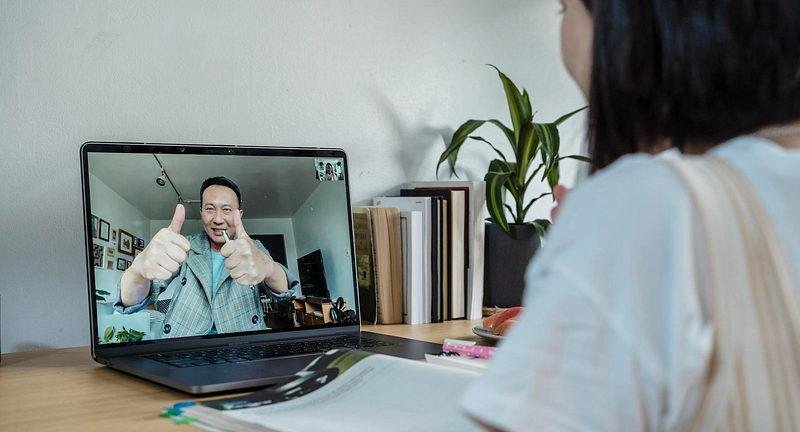
Photo by Annushka Ahuja on Pexels

The Life-Coach Hustle Culture

Brae ran extensive social media campaigns, and email sales funnels. Most coaches do. It’s a sales business. She would consistently create new courses and modules to feed the sales funnel — something that’s par for the course in the industry.

We had many conversations about the efficacy of that as well.

If what she used worked well in life coaching, that would just be something to replicate and become an expert in. Word of mouth would spread. And if you’re selling a time-based business, that would fill up your calendar. But life coaching for me, is sales funnels of digital products for the most part.

A pyramid-shaped funnel to be precise.

There’s an MLM vibe to it. There are coaches who make money coaching, and others coaching the coaches. They’re the top of the pyramid-shaped funnel. Coaching coaches on how to make six figures by creating courses on manifestation.

She even tried to get me to become a life coach, with a ‘Get your own 6-figure coaching business in 12 months’ pitch.

It’s a vicious cycle, that funnels down to the end user. The end users being people who are frustrated with life, some who are desperate. People who spend hundreds or thousands of dollars to try and get beyond where they are in life. Many of whom would be better off spending the money on therapy.

Is Anyone Guilty?

Lief coaches aren’t tax-evading sociopaths, most are just people like Braelynn (who I met while we were volunteering at an animal rescue). Well-intentioned people, hoping to make a difference while building a life for themselves.

Brae wasn’t a bad person, trying to hustle people out of their hard-earned cash. She was just unqualified. Coached by people who are also unqualified. In an industry with no rules, regulations or oversight.

The ‘become a life coach’ sales pitches all have aesthetics like these, what they don’t tell you is that the couch you work from isn’t always yours. Photo by Vlada Karpovich on Pexels

There are of course excellent life coaches out there. But how are people able to tell the differences? Run a credit check on them? Sadly, with no industry oversight, it’s a wild wild west industry.

An industry that sucks people into an MLM-esque web. This is what happened to my friend Brae. She drank her coaches Koolaid. Then created her own Koolaid and sold that to her clients.

There are good coaches out there. There are also predators.

And then there are Braelynn’s who simply drank the Koolaid.

Support me by subscribing & never miss a new story.

Culture
Pop Culture
Life
Coaching
Side Hustle
Recommended from ReadMedium