
The Dark Side of Airbnb That Nobody Talks About is What Stops Me From Investing in It
We need to stop glamorizing certain side hustles.
When I hear about Airbnb as a business, I only listen to positive things. In theory, it seems to be the business that will finally make you financially free: “You will earn thousands of dollars monthly,” “Is the easiest business to manage,” “you can make it passive by hiring an administrator.”
However, I have always had my doubts, especially since something cannot be completely perfect.
A few months ago, I was closely analyzing this business because of a housing opportunity I got in the coastal area of the island where I live. The dark side I found about this business affirmed all my doubts about starting it.
What surprises me most about what I discovered is that almost nobody talks about it. The only negative side I always heard was about the housing cost and the issues with the locals who already lived there, but it sounded like the perfect business on paper.
For that reason, I decided to write a post about these specific issues so you are aware of them if you want to start this business eventually.
The whole process of dealing with tourists is a nightmare.
Most people believe (me included for a long time) that having an Airbnb as a business will only involve giving the key to a client, waiting for him to get out, and hiring a cleaning service (or doing it yourself), and that’s all.
However, they forget that most clients are not particularly easy to manage and are strangers. So it doesn’t matter how easy you think a process is; a user will find a way to make it complicated.
One of my friends from school opened an Airbnb in the center of the city, and she detailed to me all the problems that an investor could have when dealing with people. Here are the main three I got from her:
You will have to deal with a lot of robberies.
Hotels suffer from theft of practically all the objects in a room you can imagine daily. The thing is that being a relatively large industry that makes millions, they can deal with it and have it in stock for when it is necessary.
However, as an individual, my friend didn’t have a smart TV or coffee machine in her car every time this happened to her, so she had to practically run to the store before the check-in for the other customer (because they can give you a bad review if they don’t found what you offer) with her own money.
She told me she was shocked at all the things that could be lost after a customer booked. The first time that she experienced a rob was the pillows.
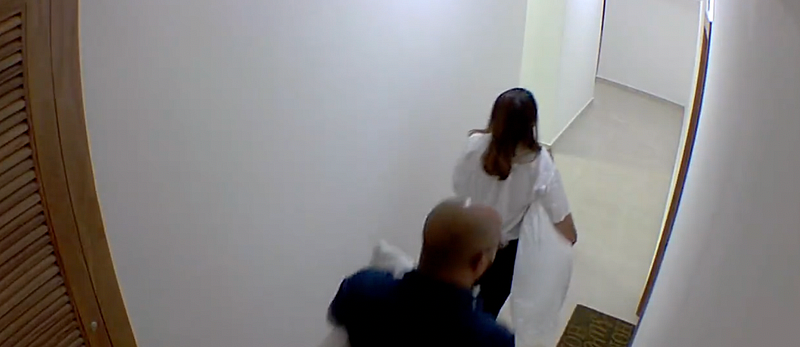
This comes to additional expenses that you probably didn’t budget for. Although Airbnb has customer support service, or you can charge an additional fee for these types of situations, the reality is that many times you don’t get the total cost of the item you lose. For example, you can’t put the full price of a TV or couch “if an emergency occurs with them” because clients won’t understand you and will only say, “it’s expensive.”
Everything they break is also on you.
Theft will not be the only thing that will send you to the store to spend your money because customers also break countless things you can not even imagine.
My friend also suffered from many broken things that she cannot explain how could have happened. The client’s response many times was, “I just dropped a glass,” “everything was fine when I left,” and “a minor incident.” But the reality was completely different.
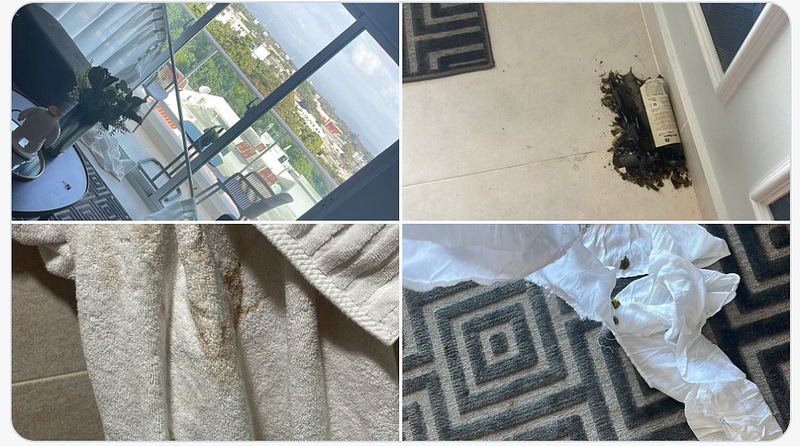
All these types of problems resort to additional expenses that are not covered by Airbnb or the client since they “should” be part of the cleaning fee of the apartment (There is an insurance called Air cover, but it doesn’t include all the problems if Airbnb decides is part of the cleaning fee).
But normally, the cleaning fees you have don’t include the repair of objects, and you already charge customers quite expensive for that fee without them complaining to you, so most of the time, those expenses will be from your earnings.
You can have everything perfect, and customers will find a way to complain.
Although my friend has everything as automated and straightforward as possible, she has had to stop working in her office to solve simple problems for clients who come to check-in. For example, “the door did not open,” and it was that they put the password wrong, even though she left it clear in the chat.
Other complaints she has received are: the water doesn’t get hot (the client was opening the shower on the wrong side), I can’t find the remote controls (they moved them), and I can’t find the blender (she didn’t put anywhere that the Airbnb had one).
One of the most serious problems she has had was a client who did not want to leave the Airbnb after his stay ended. She even had to call the police, who almost ended up leaving in favor of the client because that person’s things were inside the house.
She also told me several clients came before the selected hour because they wanted an early check-in, even though she didn’t offer that service. And they complained that there were other people inside the house they had booked.
Reviews on Airbnb are so important that going below a 4.5 already considers your place not recommended, so dealing with all these problems should be as friendly as possible and without blaming the customer, even if that person has the fault.
My friend tells me that Airbnb usually goes on the client side and that she rarely won a case regarding a negative review, so she ended up not appealing and better trying to solve the situation with the client personally.
The bookings will not always cover your rent or fixed payments.
On top of all the above things that can happen to you and many more, there is no guarantee that you will be able to cover your fixed expenses at the end of the month.
And something that surprises me a lot about this situation is that most entrepreneurs and “gurus” want you to believe that it is the most profitable business you can have (even above having that house for rent) and that you will only need a place for rent to become rich with that business.
However, the reality is completely different. Even if you have your house in a tourist place like Miami or California, a booking is not guaranteed.
I had a friend who was building a house in the middle of nowhere, with not budget enough to do something of quality, and in a place where there isn’t even a street to enter a vehicle, just because he said he was going to make a lot of money with Airbnb. Although most friends explained that the conditions of the place might not be the most adequate, he insisted that it would be a success.
The result was that the house had only had two bookings and became viral on the internet for the worst experience of the life of those clients. (if you understand Spanish, you can read the Twitter thread here).

Shelby and Monica Church, twin sisters with over 3 Million subscribers on Youtube, became Airbnb hosts in California at the beginning of this year. They made an Instagram account for the place with more than 7 thousand followers and actively promoted that house in their channels, reaching millions of fans.
Although they had the audience and the marketing experience to make thousands of dollars monthly, their Airbnb place lost money for three months in a row because they only had one booking per month in summer.
So we know two things from those stories now:
- Just having a place to have an Airbnb doesn’t guarantee success in the business, like what happened to my friend who created the worst place people could imagine and thought it would earn him thousands just because it was on the platform.
- Having an Airbnb in one of the most expensive states of the United States, 3 million followers, marketing experience, an Instagram account dedicated to the place with 7k followers, and famous people behind the house doesn’t guarantee success in the business either.
The competition and prices have made the hotel industry relevant again.
A large number of stolen and broken things has caused many hosts to raise Airbnb prices significantly to cover those small faults that Airbnb is not responsible for. Still, customers don’t see it that way and only focus on complaining about the higher current fees and prices the houses have.
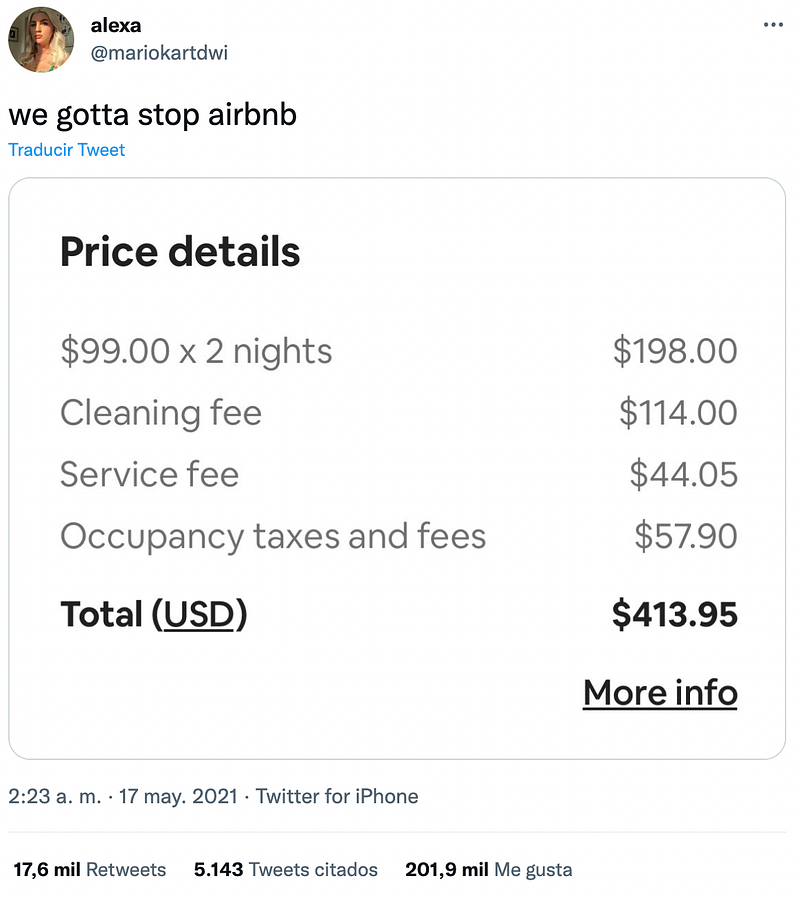
All this has made the hotel industry again relevant and the number one option for tourists, which is not the direct fault of the hosts, but decisions due to all the problems they have had with clients.
Also, by trying to lower fee prices, many house owners have opted for cheaper options when it comes to cleaning, which has caused people to be more annoyed by having to stay with individuals instead of a hotel that has a dedicated system to put everything clean:
“We called the host to ask for a vacuum and for him to do something with the marijuana. To ‘make up for our troubles,’ he offered us a six-pack of Coors Light,” “I noticed that in installing the lock, [the host] removed the old deadbolt so you couldn’t unlock the door from the INSIDE without your phone,” “Everything looks so dirty I don’t want to use this app again, let’s go back to hotels.”
Sam Kemmis, a travel blogger, wrote in Nerd Wallet an article about how “Airbnb has become terrible.” He explains how Airbnb doesn’t have any loyalty points or incentives to improve the customer’s experience and lacks innovation. He also said that all the problems that clients have in Airbnb houses don’t happen in hotels.
All those problems that I am seeing with the complaints of the users, issues with the operating system, and the points that Sam presented make me think that Airbnb is coming to an end. And it will be hard for them to recover if they find competition, which could seriously compromise new entrepreneurs.
Final thoughts
Airbnb can be a good business if you have the right conditions for a place and little competition, but it will not guarantee you a lot of money on its own, and it is a constant job that will not let you rest while you are working on it.
There is a lot of work behind the scenes that many people do not see, and that can be decisive for an entrepreneur to decide if it is worth starting that business or not.
That industry is not for me because I don’t like working directly with people, physical work (like having to buy things at the last minute), and customer service in general; that’s why I am a Software developer and market investor.
Although Airbnb seems to be a business behind a computer by an application, and you don’t need to have “contact with people” if you put a smart lock, the reality is that you will have to deal with clients more than you will desire, and this can be decisive when it comes to giving you a good or bad rate.
Airbnb alone is not passive income. Also, it is not better than a fixed rent in most cases. There are a lot of success cases, but that doesn’t mean it will happen to you, even if you have all the conditions and money for it. And that’s something you should consider before starting this project.
Don’t miss any of my articles; subscribe to my email list.


