The Daring Pursuit of German Ships by the British Fleet in the Mediterranean
How the Goeben and the Breslau Evaded the British at the dawn of World War I
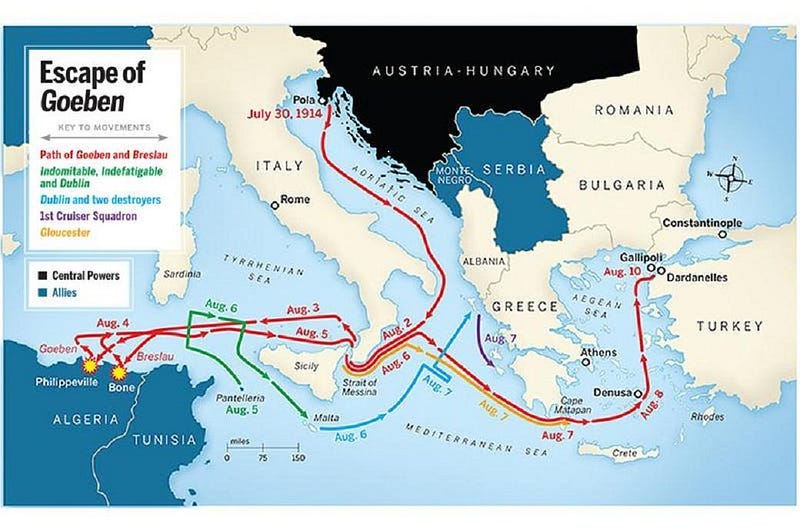
Date: August 2 to 10, 1914 Location: Mediterranean Sea, Aegean Sea, and the Dardanelles Strait Mission: Escape from British ships in pursuit
In Winston Churchill’s words, this bloodless naval incident brought “more massacre, misery, and ruin to the peoples of the East and Near East than any other incident borne on a ship’s compass.”
Under Orders
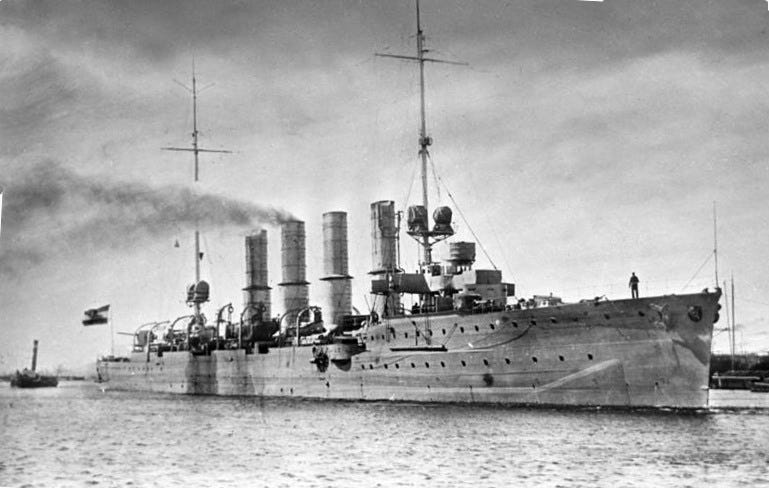
The Mediterranean fleet of the Imperial German Navy, commanded by Rear Admiral Wilhelm Souchon, consisted of the battlecruiser Goeben and the light cruiser Breslau. In the event of a declaration of war, Souchon’s role was to intercept the transport of colonial troops from Algeria to France. On July 28, when Austria-Hungary declared war on Serbia, Souchon was in the Austro-Hungarian port of Pola (now Pula, Croatia), where Goeben’s boilers were under repair. He immediately set sail for the Mediterranean.
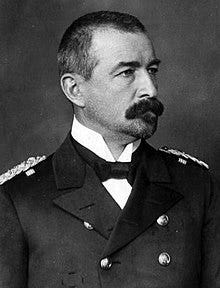
On July 30, Winston Churchill, then First Lord of the Admiralty, telegraphed his instructions to the commander of the British fleet in the Mediterranean, Admiral Sir Berkeley Milne. The wording was vague: “Assist the French in the transport of their African army, engaging if possible German fast ships, especially the Goeben… At this stage, do not engage action against superior forces.” Milne conveyed these instructions to his second in command, Rear Admiral Ernest Troubridge.
The Pursuit
After bombarding the Algerian coast on August 3, Souchon headed for Messina, Sicily, to replenish coal but “ran into the British lion’s den.” Nevertheless, by pushing his men and machines to their limits, Souchon eluded the British warships. Milne ordered not to engage action against the German cruisers.
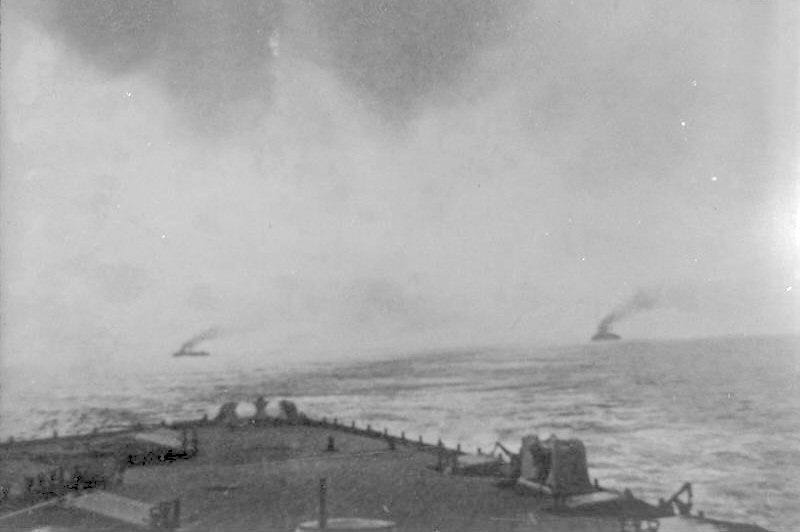
As Italy was still neutral, Milne decided to stay out of Italian territorial waters and concentrate his forces on the northern exit of the Strait of Messina. Since Turkey had signed treaties with them, the British could not imagine that the Germans would attempt to seek refuge in Turkish ports. They were unaware that Turkey was conducting secret negotiations with Germany. So when Souchon’s ships emerged from the Strait of Messina southwards, only the Gloucester could intercept them.
“Against Superior Forces”
Convinced that Souchon was heading for the Adriatic, Troubridge expressed his intention to attack shortly after dawn on August 7, but he changed his mind, considering the enemy ships a “superior force.” However, the Gloucester continued pursuing the German ships, and when the Breslau came within gun range, Troubridge ordered engagement. A brief duel ensued, with no damage, and Milne ordered the Gloucester to cease pursuit.
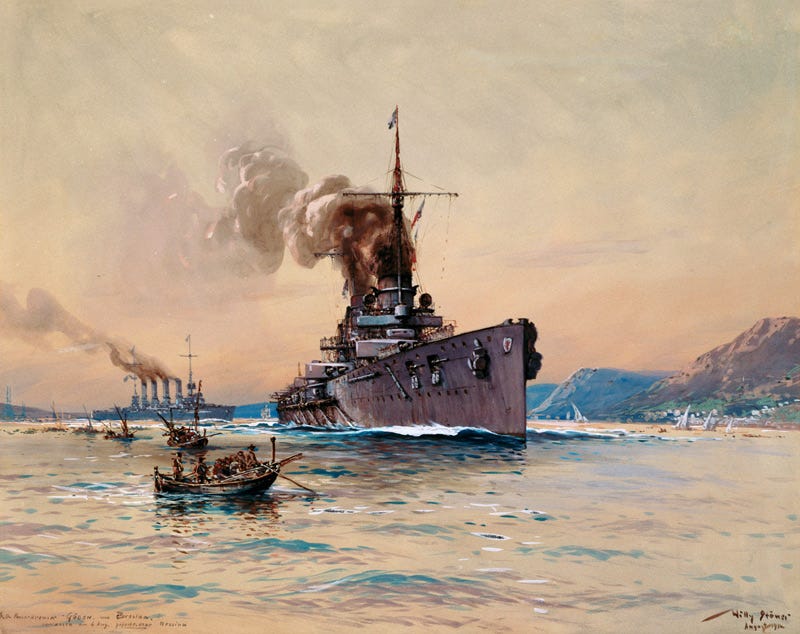
On August 10, Souchon crossed the Dardanelles Strait and reached Constantinople, where he was warmly welcomed after declaring that the Goeben and the Breslau would now be part of the Turkish navy. Turkey entered World War I on the side of the Central Powers. Troubridge and Milne were officially exonerated, but this incident marked the end of their careers.