
The Dangers of A Good Story
Historians have to be wary of heroes and villains. Like Trump, for instance.

Most cultures have epic tales, and many of these have the proverbial good guys and bad guys. In a globalized world, some figures emerge as icons of evil (Adolf Hitler is usually cited), while others are more ambiguous, whether it is Ulysses from the Greek myths or Napoleon as invoked in France (usually positively) or Italy (often less so). Thus, when Donald Trump is critiqued by likening his rhetoric to that of Hitler’s, it is designed to emphasise just how bad he really is, but does it reliably have that effect?
As someone who spent his academic career in an interdisciplinary department, and at a time when there was a broader trend to re-examine the use of language (to deconstruct, or as the jargon went, take the linguistic turn), I have always had an interest in the impact of literary practice on History. The way we read our sources and the way we report our findings are all affected by our conscious and subliminal use of language.
There is a general assumption that private, contemporaneous sources, written by actors close to the event, are more trustworthy in establishing the facts than media reports, or later documents, released to provide a public version of events. At the same time, it is customary for scholars to view the diaries or private correspondence of historical figures as inherently likely to support the outlook or interests of the figures concerned. As the recent UK COVID-19 inquiry has demonstrated through its review of messages sent between ministers, civil servants, and advisors, such communications may reveal abusive language and countless disputes concealed at the time, but they rarely contain genuine confessions. They are shaped by the performative demands of a specific social network. A Whatsapp message typically has a different tone to a departmental memorandum, but both are crafted to fit the conventions of those addressed. Whether it is Nixon’s Watergate tapes or messages shared by Boris Johnson’s Cabinet, the insiders will often underline that this is an informal, confidential exchange by using foul language — like teens discovering the cathartic power of plosives. F-**-K!!
The prevalence of such language can also reveal, of course, the power dynamics within the group, underlining the tight clique that Ehrlichman, Haldeman, Mitchell and Dean, (plus Kissinger in foreign policy matters) formed around President Nixon, or equally, exposing the puerile macho culture of Downing Street under prime minister Johnson. But it remains a fine historical judgment to decide what weight to give to the emotion as distinct from the substance of these exchanges. Johnson’s adviser, Dominic Cummings, had a low opinion of government officials long before he entered government, and his coarse language was his well-established means of conveying his combativeness and contempt. Whether its toxicity can be judged to be significant in the shaping of policy, however, is less clear. It didn’t help, but equally the habitual blandness of bureaucracy in Whitehall can also have an impact on the ability of agencies to respond to crises with the urgency required.
While these are just a fraction of the multiple challenges within the task of “reading archival sources,” ultimately they may have less impact on historiography than the writing of historical studies itself. This is often apparent in matters as basic as the sequence of writing. If you want to argue that the Norman Conquest of England was a progressive development, then you are very likely to begin by depicting the Anglo-Saxon kingdom it replaced as flawed in multiple ways (in much the same way as nations around the world are depicted as potentially benefiting from regime change). Conversely, if you intend to take a revisionist view of the settlement of North America, you are likely to dwell on the positive features of the numerous indigenous peoples living on the continent, typically stressing their skillful adaptation to local environmental conditions and their resilience in the face of diverse challenges. In this context, you may also dispute the hypothesis that European settlers had superior technology that ensured their eventual triumph and assert instead the role of pathogens in debilitating native peoples and the reality that what is remarkable is not European domination but the endurance and resilience of the native tribes. They did not vanish. Sequence guides the reader towards the preferred interpretation.

Prompting me today, however, is the profound impact of other literary tropes, especially when historians adapt their scholarship for mass consumption. It is obvious that one of the gravest challenges to historical scholarship in the twentieth century was to convey the enormity of the evils perpetrated by the concurrent totalitarian regimes of fascism and communism. Hitler’s ‘final solution’ to the Jewish question and Stalin’s multiple mass killings can be seen as embodying the extremes of evil that modern state power generates. How does a historian convey this?
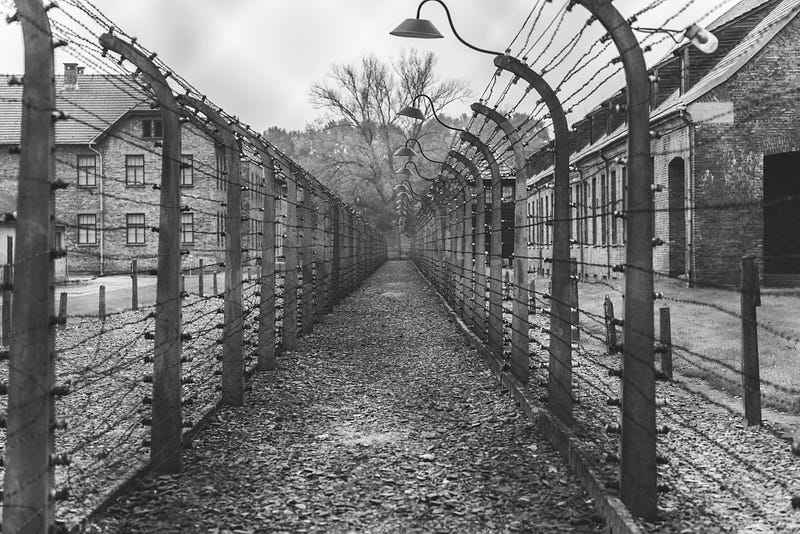
Famously, Hannah Arendt warned that in addressing the crimes of the Nazi regime, it was essential that we accept the banality of evil. Part of the banality lay in bureaucracy: the segmentation of responsibility, and the associated physical distance from the violence perpetrated. The same perspective has subsequently critiqued the policy of mass bombing both by the Allies during the Second World War, by the US in South-East Asia, and it resonates in today’s conflicts. Nonetheless, Arendt’s insight is more easily stated than followed. The enormity of Hitler’s genocidal policies seems to demand that we place him a category that goes beyond the banal.
The purpose of such a step is to amplify the dangers and indefensibility of the regime Hitler created. Despite this worthy aim, there is a concomitant disadvantage. Whenever we place someone on the margin, we risk losing our ability to recognize that they nonetheless represent part of the humanity we share. Cumulatively, by making fascism synonymous with Hitler’s Holocaust, the general public loses sight of its connection to numerous other regimes, both historical and contemporary, and thus, its proven popular appeal.

This is a real danger at the present moment because there are so many regimes that have features that parallel those of fascism. In Donald Trump’s case, one of the most significant is the way he articulates the shared sense of aggrieved victimhood. Trump supporters often share the idea that there is a conspiracy against them, a ‘woke’ liberal plot to diminish their status, and destroy the America that they believe is properly theirs and theirs alone. In the same speech in which Trump quoted Hitler implicitly by portraying illegal migrants as ‘poisoning the blood’ of America, he also reiterated his claim that the charges against him were, in effect, all part of an effort to take him down because he was their champion. The indictments against him — even the ones involving dubious accounting practices in his business — were actually attacks on the American common man.

This invocation of the status of victim is a frequent aspect of populism and provides a key justification of fascism. The serious and pervasive threat to the people can only be met in fascist thinking by unquestioning unity and obedience to the strong leader who will confront this threat, and both protect his followers and exterminate their enemies, thus restoring the proper order of things.
The dilemma therefore is that the more Trump is likened to Hitler, who has previously been established in the public consciousness as a historical figure of unprecedented evil, the more his followers see the analogy as confirming his charges of persecution, and the more waverers wonder whether the parallel holds. They regard Nazism as an aberration rather than just one example of a tendency visible in many eras.
Trump is dangerous not because he is like Hitler. Trump is dangerous because his appeal is similar to that which brought Hitler to power by responding to a mass psychology generated by successive shocks, traumas, and structural changes. Consider the shock experienced by those who have fought for their country and enjoyed no victory. Consider the trauma of people who feel economically and culturally threatened on every side, and who harbour a deep sense that they are not only different from their political opponents but despised by them. The past decades have been marked by simultaneous de-industrialization in terms of heavy industry and a still unfolding revolution across the service sector (now associated with AI) that seems to threaten not just the jobs of the past but those of the future. In such a world, fascism appeals, and if we have made its historical icons into bogeymen, we are unable to understand why the appeal works, and why the threat is real.