
The Dangerous Truth About Sleeping Pills
Sleep medications don’t work as billed, numerous side effects include death, and then there’s the ironic part

Before you pop another sleeping pill, you might want to sleep on three cold, hard facts: Common sleep medications don’t work as marketed; side effects range from depression to death; and in one of the greatest ironies of modern medicine, sleep aids can cause a variety of frightening “complex sleep behaviors” and then… get this… leave you drowsy the next day.
In most cases, sleep medications are like toxic Band-Aids for broken bones, often making bad matters worse.
Evidence for the ineffectiveness and outright dangers of sleep drugs — over-the-counter varieties and especially those requiring a prescription — is abundant. They can be useful for serious cases of insomnia or other conditions, under the strict direction of a physician, experts advise. But sans medical guidance, they should be avoided while we instead put intention into the many alternative, natural, proven approaches to better sleep (more on those below).
“Although sleep problems can happen at any age and for many reasons, they can’t be cured by taking a pill, either prescription, over-the-counter or herbal, no matter what the ads on TV say,” says Preeti Malani, MD, a University of Michigan physician.
Even in cases where sleep drugs do help for diagnosed sleep disorders, their usefulness wanes with repeated use, says Susheel Patil, MD, director of the Sleep Medicine Program at University Hospitals in Ohio and clinical associate professor at Case Western Reserve University School of Medicine.
“We really want to try to avoid medications as much as we can,” Patil told me in a phone interview last fall when I was researching my book on how to sleep better. “Medications can be helpful in the short term, no doubt about it, but most often people build tolerance.”
Cancer, death and …sleep-driving?
Science long ago revealed that sleep medications can be dangerous, particularly prescription aids. Among the most common sleep medications known to have serious side effects: temazepam (Restoril), eszopiclone (Lunesta), zolpidem (Ambien) and zaleplon (Sonata), along with barbiturates and sedative antihistamines.
- In one study that ran for two years, people who took prescription sleep aids were several times more likely to die than people who did not, scientists reported a decade ago. You might think that’d be the end of it. But no. The heaviest users who didn’t die developed cancer at higher rates.
- Older folks who start taking benzodiazepines — sedatives including Valium, Xanax and Klonopin — are more than twice as likely to fall and break a hip during their first two weeks on the medication, a more recent study found.
- New research published in the Journal of Alzheimer’s Disease last month linked prescription sleep medications to higher risk of developing dementia.
But you don’t need more scientific studies to reveal the dangers of sleeping pills. Just look at manufacturer’s warnings. Here’s a mere sampling from Lunesta’s website:
- “Worsening of Depression or Suicidal Thinking and “Impaired alertness and motor coordination.”
- “Complex sleep behaviors including sleep-walking, sleep-driving, and engaging in other activities while not fully awake.”
- “Abnormal Thinking and Behavioral Changes.”
Ambien’s list of side effects includes worsening depression, breathing problems, dizziness, confusion and aggressive behavior, along with this doozie: “Complex sleep behaviors. After taking AMBIEN or AMBIEN CR you may get up out of bed while not being fully awake and do an activity that you do not know you are doing. The next morning, you may not remember that you did anything during the night.”
Not exactly sweet dreams.
Even over-the-counter sleep meds are known to be largely ineffective, according to the Mayo Clinic and the Cleveland Clinic and every sleep expert I’ve spoken to, and they come with side effects ranging from headaches to constipation (or diarrhea—take your pick) and the ironic next-day drowsiness, called a “hangover effect.”
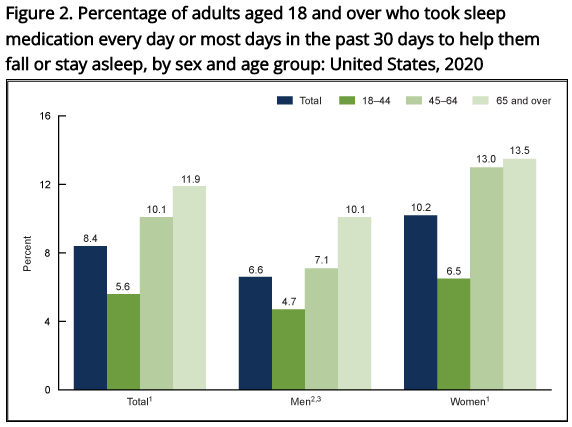
Still, more than 6% of U.S. adults take prescription or over-the-counter sleep medication every day, according to an analysis published last month by the Centers for Disease Control and Prevention. Another 2% took the drugs most days, and 10% did so on some days. Women and seniors are more likely to rely on them.
Natural alternatives to sleeping pills
Quality deep sleep of sufficient duration cleans the brain of toxins that build up every day, solidifies new information into memories, settles emotions through dreams you may or may not remember, and rejuvenates the body at a cellular level on a nightly basis, reducing stress and giving you the physical energy and mental focus to enjoy your days and get things done.
Good sleep rests on having a simple strategy that involves several well-studied factors. Among the most important:
Get up: Setting a consistent bedtime and wake-up time are key. Our brains and bodies have adapted over millions of years to the cycle of the sun and prefer a routine sleep-wake cycle. Even night owls can benefit from a consistent schedule, and most can move the timing up if they wish to, studies have shown.
Get out: Natural daylight is critical for setting the body’s internal clock, its circadian rhythm, which governs the release of sleepytime melatonin in the evening and suppresses it during the day, when you want to be awake and alert. A recent study confirmed the benefits of getting outside, finding that each hour of exposure to natural daylight can pull the body clock ahead by 30 minutes (and each hour of bright indoor light at night can push it back 15 minutes). “We need to get out — even for a little while and especially in the morning — to get that natural light exposure,” said the study’s senior author, Horacio de la Iglesia, PhD, a professor of biology at the University of Washington. “In the evening, minimize screen time and artificial lighting to help us fall asleep.”
Get going: Any movement during the day is better than none, and aiming for at least 22 minutes of moderate daily activity, such as a brisk walk or anything that gets your blood pumping, offers clear benefits for sleep and improved brain and body health overall. Findings published recently in Mayo Clinic Proceedings yet again suggests physical activity helps people sleep better, said study team member Linda Ernstsen, PhD, an associate professor at the Norwegian University of Science and Technology. The study’s findings were fresh in one important respect, however:
“People who are in better physical condition have a lower risk of taking prescription sleeping pills,” Ernstsen said.
Related:
- Should You Take Melatonin to Help You Sleep?
- Should Kids Take Melatonin to Fix Sleep Problems?
- Your Sleep Quality Probably Sucks. How to Know and What to Do.
Your support makes my health and wellness writing possible. You can sign up for emails when I publish on Medium, or join Medium to directly support me and gain full access to all Medium stories, get my health news briefs on Mastodon, or check out my book: Make Sleep Your Superpower: A Guide to Greater Health, Happiness & Productivity (paperback or Kindle version). — Rob


