avatarProf. Dr. Caio Moreno

Free AI web copilot to create summaries, insights and extended knowledge, download it at here

1171

Abstract

iables increases or decreases together. For example, Time spent studying and grade point averages, Education and income levels, Poverty and crime levels.</p><h2 id="aa2d">2 Negative correlation</h2><p id="6edb">A negative correlation is a relationship between two variables that the value of one variable increases, the other decreases. For example, Yellow cars and accident rates, Commodity supply, and demand, Pages printed and printer ink supply, Education, and religiosity.</p><h2 id="b554">3 No correlation</h2><p id="03ba">When two variables are entirely unrelated, then is the case of no correlation. For example, change in A leads to no changes in B, or vice versa.</p><h1 id="186c">Causation</h1><p id="a9b9">If the capacity of one variable to influence others, then it comes under causation or causality. The first variable is the reason to bring the second one into existence. The second variable can fluctuate because of the first variable.</p><p id="1e21">Causation is also known as causality.</p><h1 id="8510">What is Illusory Correlation</h1><p id="b17e">Illusory correlation occurs when we incorrectly believe that two variables have a relationship with ea

Options

ch other. For example, a soccer player may put tape around his socks before a game. They score a goal and attribute it to the fact that they are wearing tape. The connection between the two variables is an illusion.</p><h1 id="7bec">The danger of mixing up causality and correlation: Ionica Smeets at TEDxDelft</h1> <figure id="49c7"> <div> <div> <img class="ratio" src="http://placehold.it/16x9"> <iframe class="" src="https://cdn.embedly.com/widgets/media.html?src=https%3A%2F%2Fwww.youtube.com%2Fembed%2F8B271L3NtAw%3Ffeature%3Doembed&amp;display_name=YouTube&amp;url=https%3A%2F%2Fwww.youtube.com%2Fwatch%3Fv%3D8B271L3NtAw&amp;image=https%3A%2F%2Fi.ytimg.com%2Fvi%2F8B271L3NtAw%2Fhqdefault.jpg&amp;key=a19fcc184b9711e1b4764040d3dc5c07&amp;type=text%2Fhtml&amp;schema=youtube" allowfullscreen="" frameborder="0" height="480" width="854"> </div> </div> </figure></iframe></div></div></figure><p id="8741"><b>It is not enough to have a correlation. Before you conclude something cause something else, you need to know why it does and how it does.</b></p></article></body>

The danger of mixing up causality and correlation

If you work with data analysis, you should read this blog post to avoid wrong assumptions based on Illusory correlation.

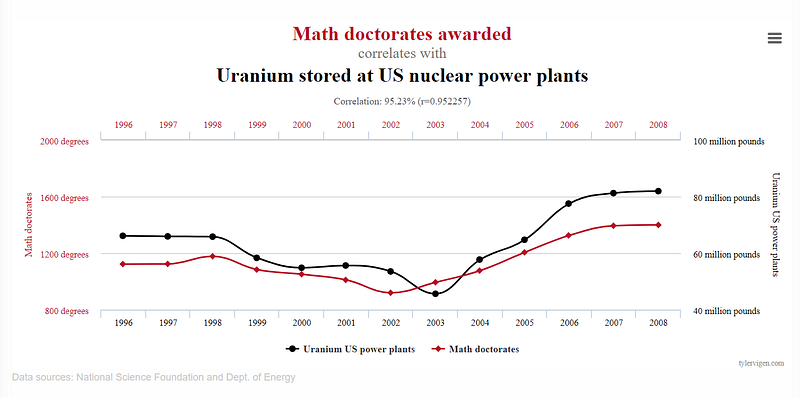
For example, what do you think about this example below?

True or False? Check more examples like this one at Spurious Correlations (tylervigen.com).
Correlations

Be careful, when you find a correlation, please take time to understand the correlation and do not conclude without properly understanding the results.

Correlation does not imply causation.
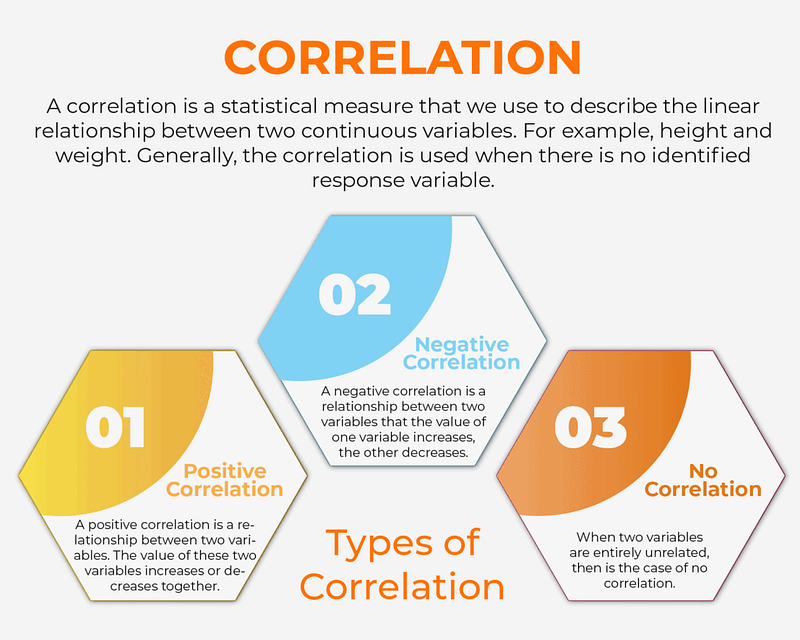
Types of correlation

1 Positive Correlation

A positive correlation is a relationship between two variables. The value of these two variables increases or decreases together. For example, Time spent studying and grade point averages, Education and income levels, Poverty and crime levels.

2 Negative correlation

A negative correlation is a relationship between two variables that the value of one variable increases, the other decreases. For example, Yellow cars and accident rates, Commodity supply, and demand, Pages printed and printer ink supply, Education, and religiosity.

3 No correlation

When two variables are entirely unrelated, then is the case of no correlation. For example, change in A leads to no changes in B, or vice versa.

Causation

If the capacity of one variable to influence others, then it comes under causation or causality. The first variable is the reason to bring the second one into existence. The second variable can fluctuate because of the first variable.

Causation is also known as causality.

What is Illusory Correlation

Illusory correlation occurs when we incorrectly believe that two variables have a relationship with each other. For example, a soccer player may put tape around his socks before a game. They score a goal and attribute it to the fact that they are wearing tape. The connection between the two variables is an illusion.

The danger of mixing up causality and correlation: Ionica Smeets at TEDxDelft

It is not enough to have a correlation. Before you conclude something cause something else, you need to know why it does and how it does.

Causality And Correlation
Causality
Correlation
Statistics
Recommended from ReadMedium