
The daily habits with the biggest impact on your productivity
Get a grip on the habits that can make the most (or the least) out of your productivity.

by: E.B. Johnson
Our habits are all the puzzle pieces of our day that can make or break things. When we build good habits in our life, we build good things in our lives; when we build bad habits in our lives…well, that’s when things can get a little sticky.
Habits impact everything from our attitudes to the level of success we experience in life. They’re essential to framing our day and orientating us with the things going on in our environment. Building smart habits can boost our mood and even our productivity, but bad habits can really make a mess of things if you aren’t paying attention.
The common habits that are destroying your day (and how to fix them)
Our lives are filled with dozens of counterproductive habits, some so subtle that we hardly notice them. These little things chip away at our energy and our resilience, making it harder for us to accomplish the goals we set for ourselves.
Eliminate these 19 common habits if you want to start getting the most out of your day — and your life.
1. Obsessively checking social media.
We’re all guilty of trolling our social media pages a little more than we should, especially when there’s a good bit of news or promise of gossip out there. Getting sucking into social media, however, can be a slipper slope that leads to not only a loss of time (and productivity) but can also lead to a degeneration of your emotions.
Social media draws us in using addiction and our need for validation. It feeds our need to be “liked” and it does it quickly; but it compromises our time and even our self-esteem.
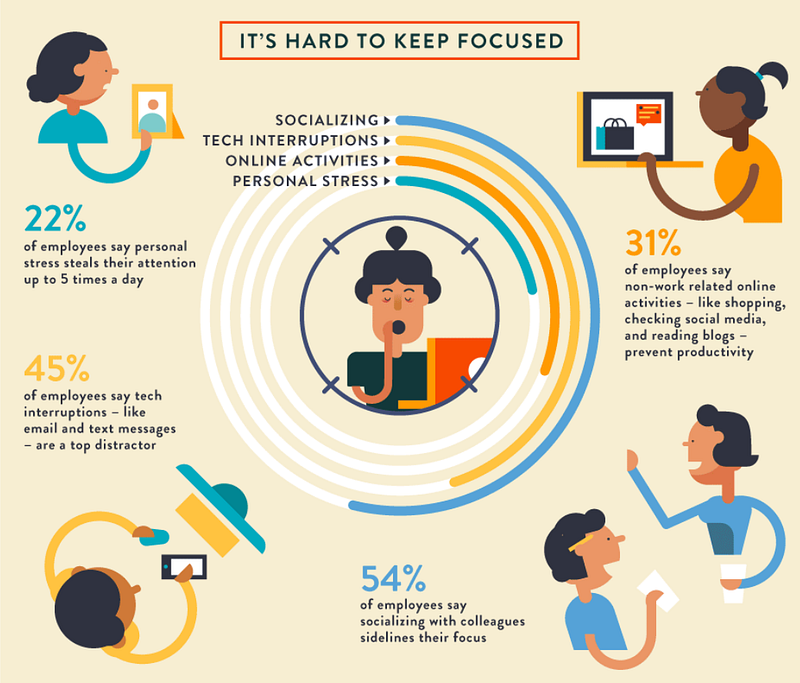
Rather than being a slave to your social media’s whims, shut off all notifications and remove the applications from your mobile device. Reward yourself every few hours with a short check, but allocate the smallest amount of time that you can and make sure you stick to that time limit every single time.
If that doesn’t convince you, grab an app that tracks the amount of time you spend on your social media platforms. You’ll be surprised — and most likely disgusted — to see how much valuable free-time you waste scrolling through nothingness.
2. Obsessively checking email.
Surprisingly, it’s actually email that tends to be the biggest suck on the average person’s day. It doesn’t seem to matter if we’re in the office or at the dinner table, when you neurotically check your emails, you send yourself into a static, useless reactive mode that lends nothing to getting sh*t done.
Just like social media — turn off your email notifications when you’re outside working hours or focusing on an important task. This will allow you to psychologically detach from the need to see your emails, and will help you to focus on the task at hand.
If you’re the kind of person that just always has to be attached to their email, set scheduled periods of time to check your inbox and make the periods shorter each day.
3. Letting your brain go flat.
We get so easily caught up in our busy lives that we forget about the importance of continuing our education.
We’re not talking a return to university, here (though that’s a great idea). Just the idea of continuing to grow your understanding of the world around you each day. Just like running and staying active is important for our body’s, constantly educating ourselves is good for our minds.
It should be a habit to learn something new every day.
This can be as simple as listening to an audiobook or watching a TEDTalk. Either way, learning is one of the greatest ways to improve not only your understanding, but your productivity.
Learning builds confidence and when we have confidence it gives us the energy we need to move forward in life. The more you know, the better suited you are to make a wise decision. Get some clarity and perspective by giving your brain the love it deserves instead.
4. Refusing to ask questions.
One of the biggest and baddest habits that affects our productivity is our refusal to ask questions. This can happen for 1 of 2 reasons: you’re either insecure about your knowledge, or you’re lazy.
Asking questions will educate you faster than anything else. Though most people are afraid to ask questions, it is through asking questions that we solidify our knowledge and understanding of the world around us.
Rather than worrying about whether you “look dumb” or brushing off the chance for “another time” take advantage of the moment and get proactive about building your knowledge. Ask questions when you find something interesting or don’t understand it.
5. Unhealthy lifestyle habits.
We don’t particularly think of our lifestyle habits as impacting our productivity, but that’s limited thinking. Being unhealthy affects every aspect of our lives. If you don’t feel well, you can’t perform well. Taking care of the body is key in boosting your productivity and your success.
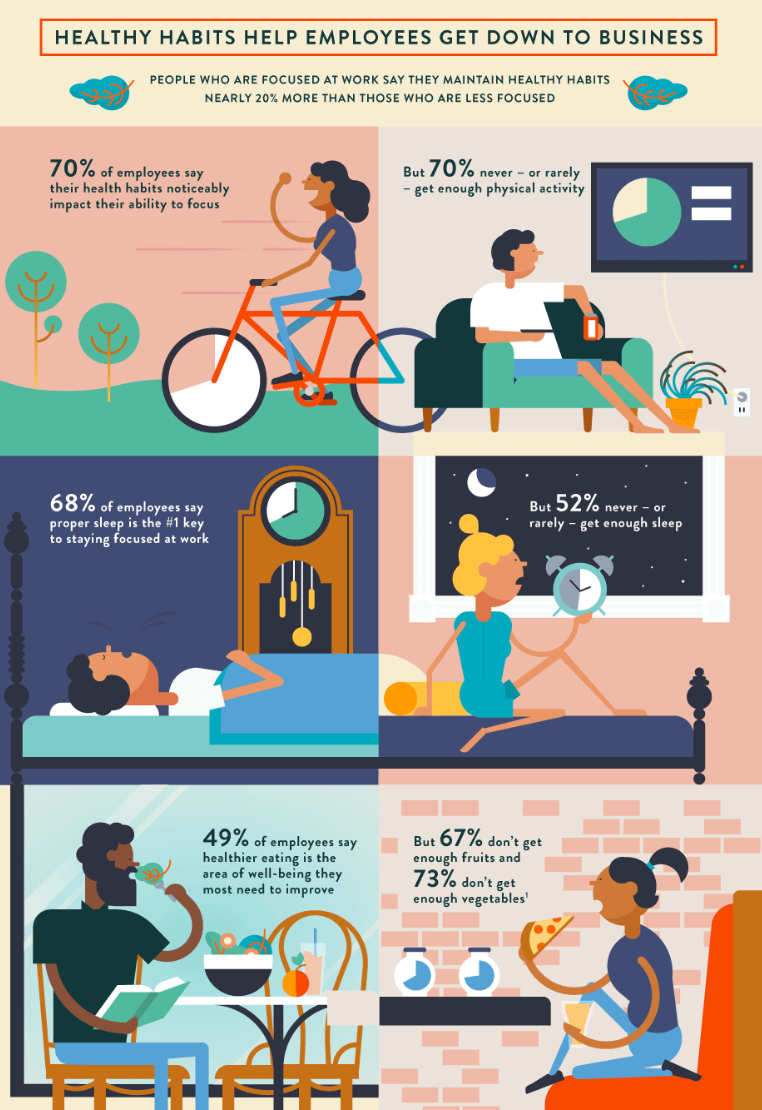
Lack of sleep, unhealthy diet and a lack of exercise are just a few of the things that can leave us feeling off or “in a funk”. Finding a solution that works — whether that means getting more sleep, going on a diet, or starting a workout routine — is key to finding your way forward again.
6. Embracing falsehood and excuses.
Those who don’t live a life that demands transparency are going to have productivity issues no matter what they do. When we hide things from one another (and ourselves) we only make it harder to find real solutions and we only make the journey longer for ourselves.
You have to make it a habit to embrace and condone transparency in all aspects of your life. When you can be honest with yourself and others around you, you’ll be able to get to the root of problems rather than putting them off eternally.
Burying things and excusing them only leads to bigger blow ups later on down the road. The best way to conduct yourself is to have zero secrets to hide. Demand the same from those around you.
7. Refusing to prioritize tasks.
Without a day-to-day to-do list of actionable items, it’s highly unlikely you’re going to get anywhere close to where you want to be.
When we don’t sketch out and prioritize the things we have going on in our lives we leave ourselves in reaction mode; overwhelmed and unsure where the next ball is going to drop.
You must make it a priority to prioritize your daily tasks and focus on only 3–6 things you can accomplish, rather than an endless sea of to-do’s. A lot of this battle is a psychological one, but when we break things down into more bite-sized chunks they become instantly easier to deal with.
Prioritize the things you need to do from the most important to the least important task. Get the most important tasks out of the way early and leave the easier stuff for the end of the day when your energy levels are at a low.
8. Being attached at the hip (hand) to the phone.
Having your phone constantly near you is nothing more than a distracting tease. Every time you feel frustration, you’re going to reach for your phone as a distraction and before you know it, you’ll have wasted all the time you needed to use actually accomplishing things.
Just like social media and email, our phones are a dangerous companion; so, we have to learn to cut the cord if we ever want to get more productive.
During those long intervals when you’re focused on a task or the general workflow, make sure you keep your phone out of sight and far enough away not to make it tempting. Turn off all your text message notifications and make sure that any linked notifications (like iMessage on the Mac) is set to “Do not Disturb”.
You can check your phone whenever you have a break or you just need a breath of fresh air. But don’t make it an all the time habit. You control your phone, not the other way around. It’s important to remember that.
9. Refusing to block time.
If you’ve worked out a prioritized list of tasks you need to tackle, then you’ve then got to block out the time it will take to accomplish those tasks during the day.
These time slots will differ for each person and each task, but they’re important when it comes to keeping things organized and in focus. Try not to block out more than 2 hours for any single task, and make sure you sprinkle in plenty of 10–15 minute breaks.
10. Not using the two minute rule.
The two minute rule is used most commonly in the professional world and is meant to help people contribute constructively to a debate or meeting. It is basically the idea that each person that takes the floor has 2 minute to make their point, after which time they have to pass the torch to someone else.
This two minute rule is great for boosting our productivity when it comes to any situation where we find ourselves presenting our ideas against those of others.
Rather than exasperating yourself and those around you with every nuanced detail of your argument, give them 2 minutes worth of your best elevator pitch and move on.
If they’re not convinced by then, they never will be.
When we limit the time we allow our interactions with others to drag on, we actually increase the time we have to effect things we can actually control. Learning how to make your point and move on is one of the best ways to boost your productivity, but it’s a habit that takes conscious effort to master.
11. Getting hung up on anything but the present moment.
Getting hung up on the past or the future is an easy habit to slip into and it’s one that can be particularly toxic to our productivity.
If you want to be truly productive, you have to learn to be present in the moment, which is the only plane in which dwells the things you can change. Productivity — true productivity — requires a unity of both focus and the big picture and that starts by creating a small daily practice.
You must make it a habit to see everything in perspective and allow your brain the energy and space it needs to systematize things.
When you allow yourself to live in the now, rather than focusing on all the big and small things that may or may not be occurring in relation to them, you ease your stress and make the going easier in the short and long term.
12. Failing to engage hyperfocus.
Hyperfocus is the idea that we can deliberately manage our attention. While we all know the familiarity of distractions, we know that place too where our brain lulls into ultimate focus. One of the parts of maximizing our productivity is learning how to engage this hyperfocus at will whenever it’s needed.
Our brains wander, on average, 47% of the day.
This is because our strange and wonderful brains are vulnerable to distraction thanks to their complexity.
When we learn how to recognize these distractions and identify the ways we can master our minds around them, we become instantly in control of our productivity and better able to navigate situations that are normally distracting or unproductive.
Be mindful of your attention and be mindful of the things that add to it or detract from it. When you learn how to identify the tasks you can control and the triggers that lead you astray, you can become more productive in a shorter period of time.
13. Not taking breaks.
It seems counterproductive, but breaks are actually one of the biggest factors when it comes to staying on track and productive. Short breaks are necessary to give our brain the space it needs to recharge and recalibrate.
After a few solid hours of focus, your brain will begin to wear down and will be unable to maintain its energy no matter how hard you try. It’s necessary, in times like this, to divert the attention to something totally different through a series of short, 10–15 minute breaks.
Everyone’s tasks are different and they each take different levels of focus, but breaks should be a part of those habits no matter what. The more you master your ability to balance breaks against your periods of focus, the more successful you’ll be at managing your time over all.
14. Staying plugged in 24/7/365.
Just like taking breaks is important to our focus, unplugging every once in a while is important for our sanity. Each week, you should be taking some time to disconnect with the digital world and get away from it all; getting back in touch with the things and people in your life that make it worth living.
Detach yourself from your work tasks and your need to achieve and let yourself just be in the moment.
While this habit might seem contrary to boosting your productivity, it’s actually the opposite.
Recharging your batteries once a week will allow you to escape that tunnel vision that success and work and ambition can throw us into. Unplugging yourself from your obligations and your work phone (or laptop) just once a week will allow you to remind yourself of why you’re grinding away in the first place.
Putting it all together…
Our productivity relies on much more than just showing up and doing a job (or sitting behind a computer). The habits — good and bad — that compose our day also determine our productivity, and it’s not until we can get a handle on these habits that can truly take charge and start getting sh*t done.
To boost your productivity, stop clinging to your phone and your email and your social media all the time. Unplug from time to time and make sure you’re giving your brain the space it needs to focus. When things get tough, don’t be afraid to take a step back and reassess, prioritizing the things that matter and embracing the reality of things as they are.
By making the effort to tweak just a few daily habits, we can dramatically increase our productivity, but it takes a conscious commitment and it takes time. Like all good things, Rome wasn’t built in a day and success isn’t either. Optimize your time and your energy by changing your habits and productivity will lead your forward toward a brighter future.



