
The Curse Of Modern Times — The Stuff
And how to make peace with it
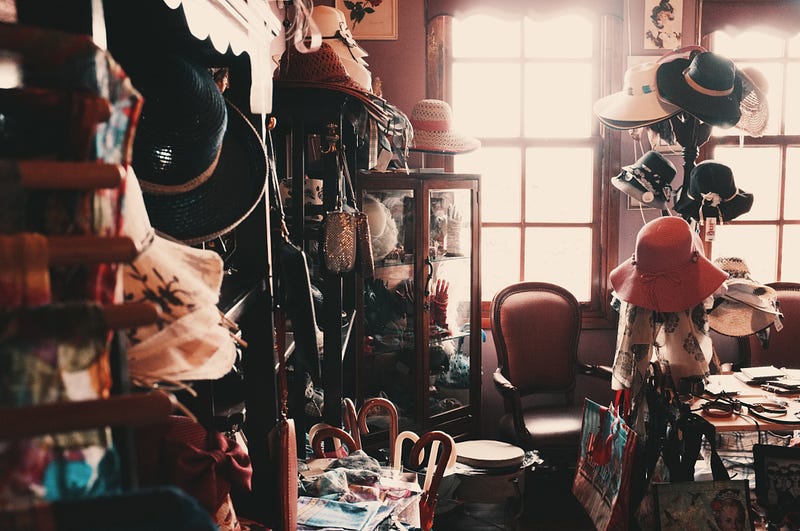
I own a lot of stuff. I bet you do too.
Beds, dressers, lounges, chaises, bookshelves, suitcases, chests, dining tables, meal tables, coffee tables, corner tables, study tables, bedside tables, outdoor tables, lots and lots of tables.
I have a six-bedroom house that houses all this furniture.
I also have lots of kitchenware — stainless steel pots, non-stick pans, crock pots, dishes, bowls, pottery, glasses, crystal ware, silverware, cutlery, and appliances to do everything. My kitchen is overflowing with things that I have not used for years. Many are still lying in the storeroom in their original packing (yes, I have a proper store-room).
I have countless books — cookbooks, reference books, coffee table books, writing books, law economics, accounting books, fiction and non-fiction books, encyclopedias, dictionaries, atlases, and history books. I have books on Australia and books about India.
A vast majority of them are unread.
My husband and I have been buying books ever since we got married with the hope of reading them when we retire. I have been ‘retired’ for almost a year now, and I still haven’t even gone through any of them. But I keep on buying more and borrowing more. There is something about unread books. They are like having a wise man in the closet, we may never ask his counsel, but the knowledge he is there is very reassuring.
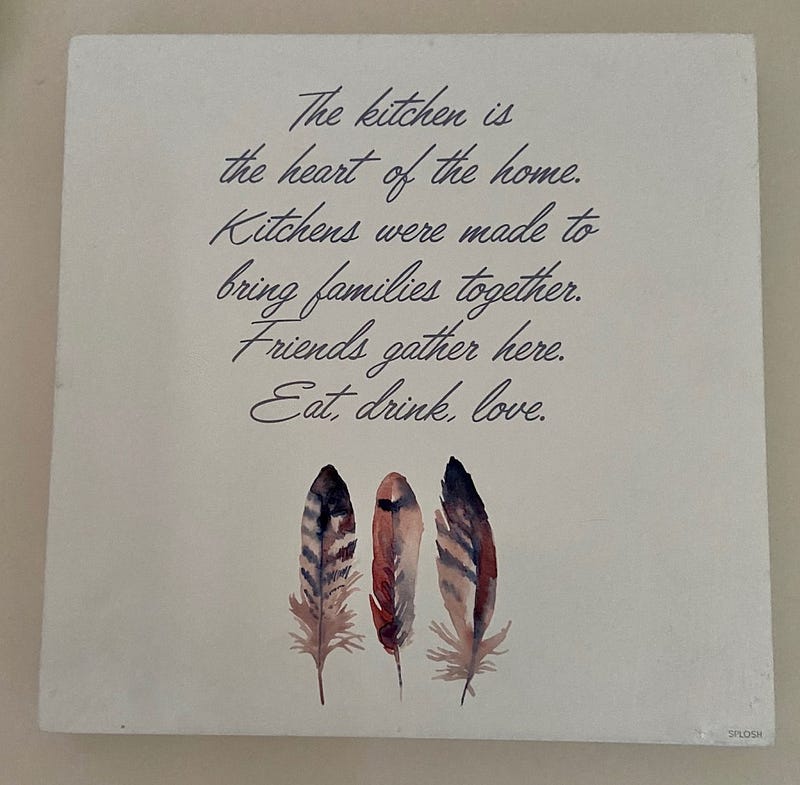
I have a lot of stuff on the walls too—family photos, modern art, huge tapestries, wall panels, wooden carvings, photographic prints. I have canvases too—canvases with pictures and canvases with words, like the one in my kitchen.
I am not even counting wedding albums, videos, old bulky photo albums, new sleek photo books and boxes, and boxes of prints. They are sacred.
So are my husband’s stamp collection, coin collection, knife collection, and crystalware. According to my husband, they are family treasures, not to be subjected to spring cleaning. They occupy the most protected and prime cupboard space.
His shoes, however, can stay in the garage, although when we ran out of space in the garage, twenty pairs had to be accommodated in the storeroom along with his wine collection.
My vices are clothes, stationery, and art supplies.
I have stopped buying decoration pieces and souvenirs, but I still buy stationery items. There are never enough notebooks and journals, and there is no joy more than finding a smooth pen that glides on paper.
Other things I don’t care about anymore. Maybe my overstuffed brain prefers barer surroundings now. The time when one’s self-worth is attached to the amount, and monetary value of the stuff they own is gone. Now is the time to simplify.
It was Thoreau who said, “Simplify, simplify.”
Hans Hofmann explained it better, “The ability to simplify means to eliminate the unnecessary so that the necessary may speak.”
We accumulate things as if we are never going to die.
But stuff demands responsibility. It needs to be dusted, insured, and according to Anna Quindlen, “willed to someone without hurting someone else’s feelings.”
I am well aware of the havoc my possessions are going to cause to my children. I have a vision of my daughters after I’m gone, looking around and saying, “What are we going to do with all this stuff?”
A friend of mine told me it took her a whole year to get rid of stuff when she downsized. It will take me many years.
Stuff also demands emotional energy. I am finding it hard to part with my things. There are too many memories attached to them.
So what I do instead?
I rearrange.
I take everything out of a shelf (like Marie Kondo suggests) and then put it back again (unlike what Marie Kondo’s suggests). Rather than asking, “Does this sparks joy?” I ask, “Is there anything I can part with? The usual answer is “No.”
Charities are not the solution anymore.
As I am writing this, the news on TV is that the charities are swamped with unusable donations. Each year 80,000 tons of rubbish is dumped in Australia's charity bins, which is costing them 18 million dollars to get rid of.
What is the solution then?
Stop adding to the stuff.
My children are my role models now. Their apartments have bare minimal necessities. Their stuff has a purpose, a role, a point.
Stuff is not just things. Our heads are full of stuff too. Between the stuff at work and the stuff at home, our heads' filing cabinets are not only full, but they are overflowing.
I am beginning to believe that our memories are failing because they run out of RAM (Random Access Memory). Today we have more on our hard discs than anyone at any time in history. Work deadlines, meeting schedules, project milestones, Gantt charts, social engagements, doctor’s appointments, family commitments, birthdays, and anniversaries. Stuff, stuff, more stuff.
Like physical stuff, we need to spring clean mental stuff too. Remember, “eliminate the unnecessary so that the necessary may speak.”
This story first appeared at www.neeramahajan.com.
If you enjoyed it, you might also like this one.


