The Cultural Narratives around the Sociopath or Psychopath Executive
Today’s Narrative of Corporate Executives as Sociopaths
The sociopathic personality is often misunderstood, and even being cited as a common personality trait of business executives, but how true is this, or rather, how long has it been true, and what consequences have we faced in collective culture in encouraging said stereotype?
In the cultural conversation around sociopathy began shifting from a cinema and tv audience to the culturally accepted stereotype for villains, moreso power. When scandals happened in the 1990’s the media began to play off this sociopath trope due to a failure in executive leadership from presidential errors to Enron executives. For example, during the Clinton Scandal, President Clinton was often referred to as a sociopath, and when the long line of corporate executives were exposed for improprieties, they too were defined as sociopaths or psychopaths in response to grossly immoral behavior. It was during this era that the public sat outraged that their leaders had failed them and sought to stigmatize the villainy with monstrous descriptors. Thus we have the cultural and cinematic narrative that a sociopath is intelligent, devious and powerful to the point where we might expect our leaders to even have those traits.
Expected and Normalized
Throughout history there have always been slurs thrown about that have such stigma as to incite mob justice. We see such duty in the term “witch-hunt” with today’s world shifting to opt for a Flawed Eugenics diagnosis, like sociopathy, that has been injected into our pop culture stereotypes. In the era (1990s) where the home document shredding industry boomed for supposed impropriety (thanks to Enron), birthed to life through the lens of the “lovable degenerate”, and the expected aptitude and demeanor for the corporate executive. Lore around this personality type being common served as a recruitment technique to attract those perceived to be executive material. As mentioned, sociopathy does not have a clinical diagnosis, and exist in cultural memory surviving the death of the Eugenics movement by living in our definitions of collective fear and villainy. So this begs the question, did we create this monster? Like in the movies, there is a villain here we must conquer, and the only way to defeat this villain is to correct the narrative that promotes a personality disorder as a requirement for power (20–29). This is the accidental ultimate disinformation campaign.
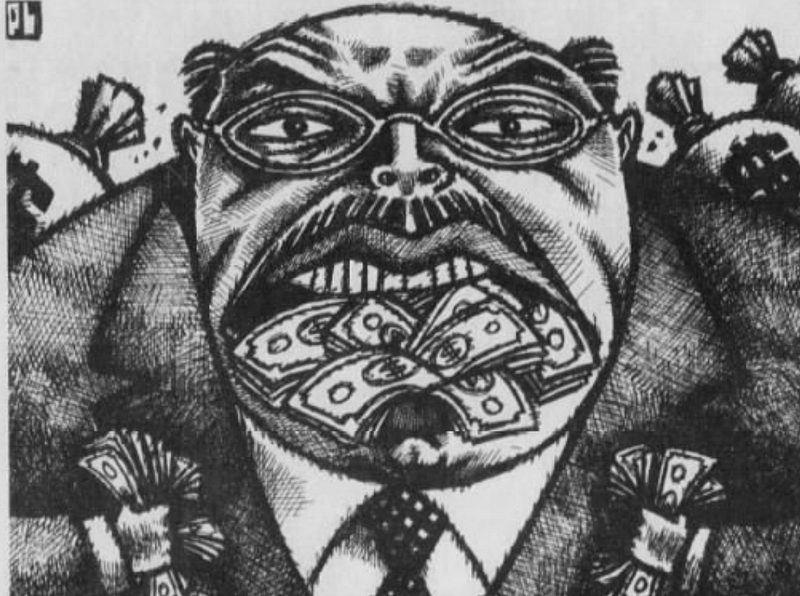
The Ultimate Disinformation Campaign: Fear + Stigma
A leader actually needs to be empathetic to lead their crew effectively, but as you might have guessed sociopathic personalities have grave deficits which flow downward. In trying to neutralize those deficits to control the narrative, a sociopath might appeal to higher loyalties, condemn those who question, deny responsibility, injury, or victim (31). The subject will also likely engage in organizational misconduct including “accounting fraud, stock manipulation, unnecessarily high job losses and corporately induced environmental damage” (32, 33). Conflict and abuse are common under the leadership of a corporate psychopath, they often claim capabilities and qualifications that they really do not possess, fostering a lack of internal expertise, distrustful cultures and organizational failure (34). They often do not allow any questioning of their behavior, do not tolerate questioning and require complete control of minor tasks (35). This subject will likely have upward mobility, going on to ‘‘bigger and better’’ roles before the gaps and deficiencies are realized (35).
In short, choose wisely. Those with sociopathic tendencies are not good leaders. They are inept and imbalanced. They cause long term organizational chaos and extensive liability. We need less of this in tech and especially in cyber security.
Citations
Like this story? Check out a list of all articles. Don’t forget to clap, subscribe, or become a member!
Because my references and resources are about 100 sources and very long, often times, this tanks my stats. I’ve opted to record them on a different page as to not ax my required reading time, here.
The opinions and thoughts expressed on this platform reflect only the author’s views alone.