
The Crow’s Egg-Movie Review
A Tale of Two Pizzas and Discrimination
“The Crow’s Egg” is a 90 minute movie released in 2015 by Fox Star Studios India Private Limited. It is about two young boys in Chennai, Tamil Nadu, India, who are among more than 600 children in a 5 acre area that is designated as a “slum” by a reporter in the movie.
Having watched “Slum Dog Millionaire” and that movie making a lasting impression upon me, when “The Crow’s Nest” was scheduled on SBS World Movies here in Australia, with the “blurb” about two boys going to extreme lengths to try a slice of pizza, I thought this is a movie for me to watch.
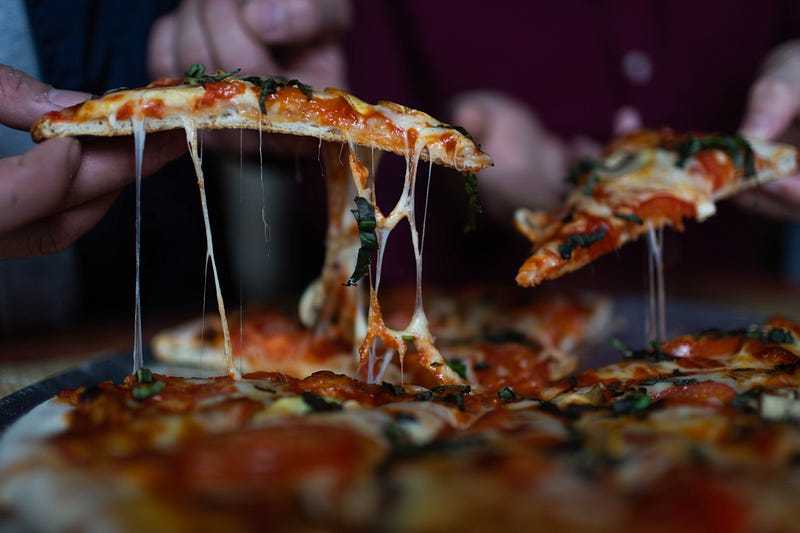
I see this movie as a tale of two pizzas: the Supreme topping pizza that can be bought in a heart-beat by anyone who has enough money to afford it, and the 45 rupee pizza, of which those who don’t have 300 rupees may be able to buy, along with its associated “dressing down” or with much less topping.
I consider myself to be humanitarian and lately I’ve been thinking about how I can give back for what I receive. I have tried to support others to the best of my ability, and carried out a lot of voluntary work, ranging from helping out Community Aid Abroad (now Oxfam) to giving school-children their breakfasts.
This movie really makes one think about one’s blessings and fortune or fate in terms of “there go I but for the grace of God” sort of thing. When you think about all that is being a mix of atoms and energy and space, even human beings, your thoughts of looking at WHY? or what are we here for, may turn to “I’m lucky that I am who I am, with all my material and physical needs met.”
DISCLAIMER: Now I am going to outline the movie story, so if anyone reading this wants to get the movie somehow or has it recorded and wants to watch it, and not know what happens, please don’t read any further.
“The Crow’s Egg” is a powerful movie which will remind you to focus on what is important and to help those with not so much, in the ways they want, and with what they want. It makes you think about other people’s needs.
It won an Indian national award for best children’s feature for first-time director M. Manikandan, although he says it’s a film with children, rather than a children’s film.
Two brothers, along with hundreds of others, see the grand opening by a Tamil celebrity, of an up-market Pizza shop. Now this pizza shop is the bees knees, with an upstairs floor with high views, and the whole she-bang fitted out gorgeously.
The trouble is that it discriminates against poor people. The brothers, called Little Crow Egg and Big Crow Egg (because they take crow’s eggs and drink them) hanker after a pizza. (The credits list them as such and not as “Little Crow’s Egg” and “Big Crow’s Egg)
The boy’s granny (their father’s mother, their father is in prison) says why give your money to someone else, and tries to make them a pizza herself. Tomatoes at 2 rupees and onions at 2 rupees and capsicum go onto a dosa (thin flat rice batter), but the boys don’t like it.
“It doesn’t have stringy bits” ← Little Crow Egg says
They will need 300 rupees and as they earn 10 rupees a day between them, collecting coal, it would take them 30 days to make this. “Fruit Juice” a kindly man and a friend of the big brother helps them out by letting them take coal from the storage repository that he is supposed to be guarding.
Soon the boys have enough and excitedly go to the Pizza shop, only to be turned away by the guard, who tells the manager that the boys are from the slums.
The kids ask some of the adults about this, and Fruit Juice tells them that the guard knew they were from the slums because of their clothes.
So they are determined to raise 200 rupees to buy themselves nice clothes, and make money from taking drunks home to their wives and by sundry tasks like handing out leaflets to passersby.
When they have the money they go to City Central and there they receive clothes from 2 similar sized Indian boys whose father won’t let them buy pani puris from a mobile stall (saying the food is not hygienic) in return for buying the boys the pani puris.
Throughout the movie, the lyrics of the music supports the theme excellently, such as “Did aversion to black make crow change its egg colour?”
The boys, with money for one pizza, and dressed to the nines, happily go to the Pizza shop, but the snobby guard recognises them and once again tries to turn them away.
‘Big Crow Egg’ plaintively counters “But we have new clothes!”
The manager comes out of the shop to ask what is happening. The guard says “these kids are causing trouble” and the bigger boy responds about the guard, “He’s the one causing trouble.”
Contrary to my expectations of the manager helping the kids, he stands idly by and does nothing when the Guard hits Big Crow Egg, knocking him to the ground.
There is a bunch of richer kids watching and one of them videos the whole thing using his mobile phone.
The clip is shown to some adults and two of them decide to cash in and black-mail the pizza shop. One of them is handed 10,000 rupees in exchange for the phone, when suddenly the news comes on, reporting that a boy was gravely assaulted outside the pizza shop!
The black-mailer had dishonestly told his companion that the company had promised them 5000 rupees and the companion had given a copy of the film to a news company for 6000 rupees.
Then the pizza company is in a pickle and holds heated meetings about what to do. Meanwhile the black-mailing couple organise a protest against kids being assaulted, promising the women, who they ask to attend, some rupees and a free meal (but not delivering these).
The boys are scared and take off, and their mother, who knew nothing about what had happened, is told by the 2 black-mailing men what happened to the boys.
The police arrive and the police and mother set off to find the boys.
The boys’ granny has just died, and this is not long after the younger boy has told her that all she does is sit and eat. This part is sad, because earlier in the story, the grandmother said just that to her daughter-in-law, but the daughter-in-law replies that she (the boys’ granny) is a good help by looking after the boys for her.
The older boy earlier on in the story, says he would rather their money be spent on a pizza than on the lawyer who seemed rather useless at getting their father out of jail.
I couldn’t help feeling that the boys’ grandmother, who was portrayed as a wonderful soul (always sticking up for the boys until one time when she didn’t and to her surprise and mine, the younger boy told her that she should mind her own business), gave up living because she was tired of it. It was too harsh. 😢
The boys end up giving their mother their 300 rupees (which was for the pizza) for their grandmother’s funeral.
The boys are found with Fruit Juice (who had been fired) and are taken to the pizza shop, where the protesters are protesting that they haven’t received their incentives.
There are hundreds of people and camera-people and media milling about, as the bewildered boys, in their un-fancy clothes, are invited (still shoe-less) into the pizzeria.
They are offered pizza but say they don’t have the money for it. The manager responds that they don’t have to pay, and can come back and eat free pizza whenever they like.
Pan to outside, where a reporter says “You are just trying to save your business.” The answer is “Oh no, we don’t discriminate between rich and poor, and we even have a 45 rupee pizza” despite the Guard still being there (not fired).
Altogether this movie was brilliant, because it was like a fable or moral story while at the same time, was realistic; with more than one theme.
Some of the themes were that discrimination is rife between rich and poor, and poorer people should be afforded their dignity and the same opportunities as others (social justice).
The boys did have a friend who offered them a slice of pizza, but the older boy refused, saying to the younger boy that they had to pay for their own.
The above is just a snapshot of the movie, which had details in it which really made the movie, and if you can watch the movie somehow, you will find it well worth-while to do so. (You may need a tissue, as I did at two points in the movie)
And what about the pizza when the boys finally got to taste it?
“Granny’s dosa was a lot better.”

This story is published in “Thirty above Fifty”, a publication which accepts stories written by writers aged fifty and over. Please FOLLOW Thirty above Fifty for a news-feed of new Stories.
If you would like to be a writer in our publication, please read our Submission Guidelines.