
The Creative Benefits of Writing on Paper
Why going analog will help you bring the best from your writing
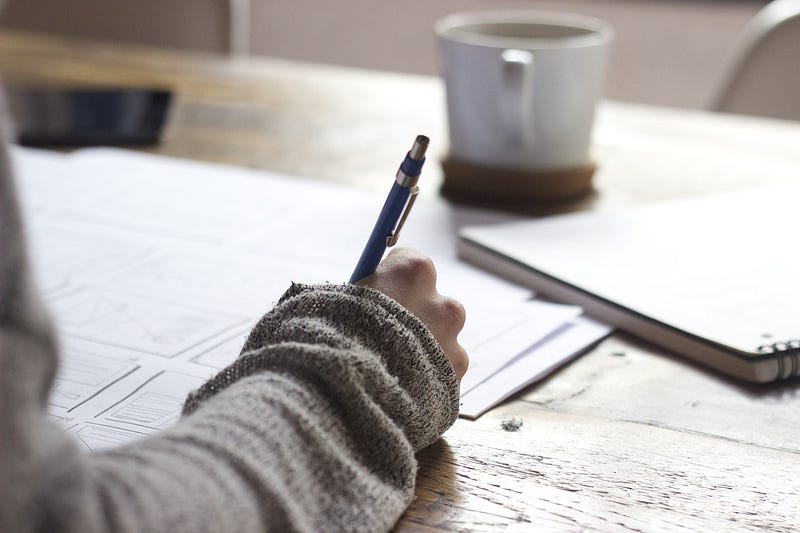
We’re going old school today, but don’t worry. I won’t ask you to dump your laptop and go live in the woods without electricity. There are big creative benefits to writing on actual paper and I’d like you to consider them for your writing arsenal.
Let’s set the stage a little. I’m a digital writer. Not only do I use my laptop, but I do the majority of my writing on my phone. I’m always carrying this little tool in my pocket and I’ve found my phone has massively increased my writing output without taking more time from my life.
I write about my wild, mobile writing here:
and here:
So, how does paper fit into all this digital business? Well, it’s an integral part, but maybe not what you’d expect. There are analog writers out there who swear by hand-writing everything and later re-typing the finished work into the computer.
I find this analog to digital terribly inefficient.
But there are a few key places I use paper and they’ve increased my creativity by adding the physical activity to the process. When we hand-write we activate the brain in more places than we would had we typed the same passage.
When we add a physical element to a creative process, there’s movement. Our creative minds thrive on movement. If our work (i.e. writing) hinges on our ability to come up with novel ideas, wouldn’t it be best to put ourselves in the most creative situation possible?
Where I use paper for writing
- Quick, first-pass outline (I’m a hybrid panster. I use a rough framework for my books) — This is the most-valuable creative use by far
- Headlines and hooks — I’ve come up with all my best headlines on paper
- Mind maps and diagrams — figuring out key points in the writing, where I couldn’t think my way through a tough spot
- Journaling
- Note-taking on the go — I find it faster to access
- Dialogue-stealing from real-life conversations (later to save them in my phone)
- Building a playbook — more on that here:
Paper is fluid and messy
That pure messiness is the reason paper writing works so well for creative processes. Lines go from here to there. Connections are made that you cannot see on a screen. You cross things out, but the ink is still there to remind you what’s underneath.
When you type it’s there or it isn’t. Yes, you can track your changes and mark the hell out of your document, but the excessive marking detracts from the creative side of the process even more.
Paper is fast.
Yes, I can type faster than I can write, but the ideas come faster when I hand-write. This is an important distinction that’s worth reflecting upon.
The physical process of hand-writing will bring ideas out of you, hidden deep in your subconscious. They needed a little motion and physical effort to draw them out.
My paper of choice is canary yellow legal pads
There’s something magic about black or blue ink on the yellow paper. You can keep writing and flip the pages back without taring anything out. You can dedicate entire pads to a single topic.
Legal pads are cheap.
I don’t worry about wasting paper. I write fast and loose. If I’m in an ideation stage it’s important to have abundant tools. Legal pads are perfect for this creative abundance.
I can draw little images in the margins to help spark ideas. I can doodle to keep my mind moving if I have trouble generating ideas. A blank screen can be intimidating. Blank yellow paper is more inviting (for me, at least).
The synergy
Once I’ve got the base creative work done on paper, I’ll transfer the work to my writing software. I’ll set up the entire outline, or document in my phone to make sure I’m prepare when I can steal time, writing in bursts.
I like to think of digital writing as the blue collar side of the writing work
Once I know the direction of my work (from paper) the rest of the process is typing-out the movie playing in my mind. I become little-more than a typist. I’ve found this to be the most-efficient way to get the writing done.
Once the creativity is established off paper I switch from artist to journalist. Instead of interviewing another person, I mentally interview myself and write as fast as I can to get the story on the screen.
Sometimes it’s best to start at the roots
If you want to give your mind the most-creative opportunities, you’ve got to get moving and write what you can on paper.
You can’t beat the efficiency of the keyboard, but if you’re looking for new ideas, stand-up, push away from the laptop, grab your stack of paper and let the ideas flow.


