
The COVID-19 Pandemic — How It Can Potentially Influence The Education System of The Future
How can we educate without a classroom?
An introduction to the pandemic

D ecember 2019, the month that gave the start to a whole new way of living, interacting and studying. A start to a pandemic which left many unemployed, weak and vulnerable, an opportunity to discover new ways of teaching, working and surviving. With this in mind, it can be understood that everyone is being exposed to a challenge that they could have not even imagined. With 5,854,945 cases registered world wide, and increasing (worldometers.info), we are placed in a situation which forces us to invent new ways of communicating, working and sharing ideas together.
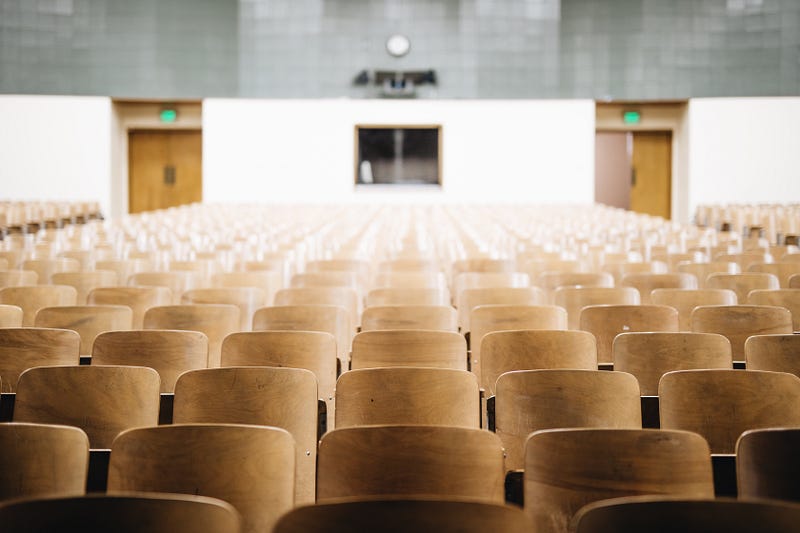
Even when, the spreading of the COVID — 19 virus was at its infancy, schools sent millions of students home, leaving many without the opportunity of socializing and seeing their educators and peers, while also putting them in a state of wonder:
“How will I be thought, English, math or science?”
“What happens if I don’t have a computer at home?”
“When will I do my college entrance exams?”
There is no doubt that this pandemic, aside from its dreadful effects on people’s health, has also left may unprepared for the next chapter to come, “How can we educate without a classroom?”.
What do the statistics say?

As of today, over 1.2 billion children, situated in 186 countries, have been subjected to school closures due to the pandemic — weforum.org. This is a substantial number, one which shows the magnitude of this crisis. It can be an opportunity for discovering new ways of teaching and potentially showing how detrimental a physical classroom is to a child’s learning. However, it can also have the chance to expose flaws in the distribution of internet connectivity and its availability to lower income groups. It is and it will be a wakeup call for all types of institutions and organizations on exactly, how many households are still left without the opportunity of having education at their fingertips.

When looking at the United States, the most concerning part of the digital schooling transition with the start of the COVID-19 pandemic, is the lack of access to a broadband internet connection. According to an NPD study, “31% of U.S. households don’t have broadband (25Mbps downloads and up) internet connections” — techcrunch.com, with many of these households situated in rural areas, also where lower average incomes can be found, consequently leading to less funding given to the schools in those specific communities. This contingency is slowly being addressed, as “certain governments have been providing digital equipment to students in need…”— weforum.com .
Luckily, statistics can also show advantages about the online learning environment. Findings suggest that online learning has the potential to increase student retention rates from “8 to 10 percent ” up to “25 to 60 percent” — e-student.org. Increased investments in e-learning solutions, gave rise to various startups focused on distance learning, leading to many, saying that this industry is “projected to surpass $243 billion” — e-student.org.
Could the educational system make the switch to an online only environment as a result of the COVID-19 pandemic?

It is hard to say. The statistics presented still show that there are many people which, in the 21st century do not have access to an internet connection or an internet dependent device. Studies have shown an increase in the retention span of online learning attendees, the only problem is, that school is not only about learning. What many of these studies omit, is the physical interaction between peers. Tests and college entrance exams can be at risk of being jeopardized as cheating becomes prominent with the lack of, in school monitoring systems which cannot be implemented seamlessly in one’s home environment.
It did and it does, in all fairness, provide us with a clue about how online teaching could assist in case of other events in which school closures would be imminent.
The Bottom line
With all of the information gathered throughout the period of the COVID — 19 pandemic, schools have adapted, children have learned and teachers have taught. Knowing how eager a student is to make friends and become part of a community, it is fair to say that the school system could implement some features of its “younger” online sibling, but it will not be replaced.
Classrooms are projected to open their doors, but with the caveat of social distancing measures, distance learning-focused businesses can integrate their systems to truly give rise to a new version of the “offline” educational system.


