
The COVID-19 Memo. Where do you want to go today?
What we know so far (by May 2020). And how this could end.
When you check out the news, they -no wonder- mainly cover COVID-19. Hence, information flows in from various sources, in varying quality. This story aims to give a consolidated status update, further analysis then can be based upon this text. So it’s the first article of a series of thoughts, analysis and strategies on how to cope with that pandemic that currently lames the whole world.
To be on terms with COVID-19. And did it really escape from a Chinese bat lab?
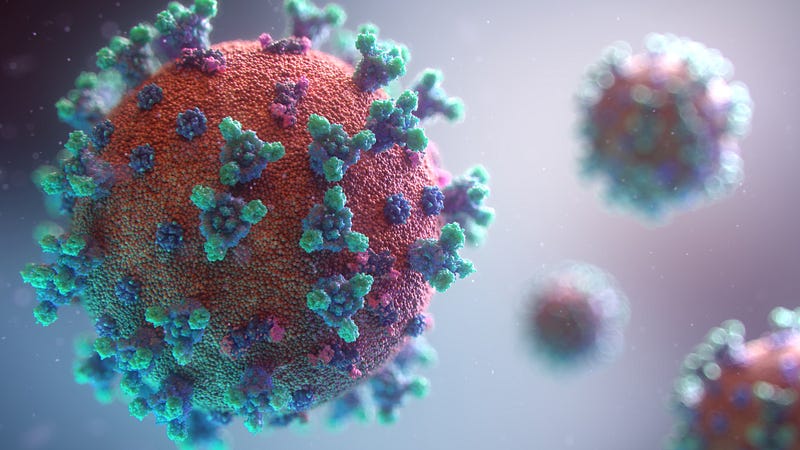
First, lets clarify important terms, that sometimes got intertwined on media: The virus itself is named SARS-COV-2, mentioning its relationship to the SARS epidemic (2002). COVID-19 is the respiratory disease induced by the virus, that apparently occurred for the first time end of 2019 in China (Wuhan, Hubei province).
The virus is assumed to originate from a bat and then jumped over to a human, maybe through an intermediary (likely a pangulin). A possible location could be a market in Wuhan, where those animals are sold. However there is no clear evidence of “Patient-0” (a term used for the first human that was infected).
All that led to various propaganda, including secret service operations that wanted to either weaken China or the Western World (depending on which side issues the accusations). Others speculated that the virus originated in a bat laboratory in Wuhan, where a scientist got infected (some voices claiming the site to be a military laboratory). During recent days, intelligence information was said to provide evidence, but there still seem not to be hard facts.
Did the Officials hesitate too long? Did they underestimate the threat?
That’s a great question — but one that is not easy to answer. Officials, especially in Europe, often praise their decisions to be evidence based. One implication of new phenomena, such as a new virus, however is that there is no genuine evidence available so far. So instead of evidence based decisions, well-informed decisions, reasonable decisions and educated guesses and even heuristics are in strong demand.
The first person that is reported to have raised his voice was Dr. Li, a Chinese physician. Among his patients he observed symptoms of a potential new virus, similar to SARS (that was found in 2002). The medic was caught by police for spreading rumors and was only released after he gave a written consent to stop telling gossips. Dr. Li meanwhile diseased due to COVID-19, the police apologized to his family.
Chinese officials however picked-up the virus topic again in January. They officially informed the WHO and still in January they put Wuhan under a “lock-down”, hence limiting the movement of 45 million people. By that time, human-to-human transmission was discussed and found to be likely. China showed to the world how rigorously it addressed the disease: They set-up dedicated hospitals within a couple of days, provided means of diagnosis very quickly and published a lot of scientific papers. The world rated that as a sign that they wanted to avoid criticism dating back to the SARS epidemic, when China was said to be too hesitant in taking containment measures and counter actions.
Asian countries reactivated their SARS protocols once they learned about the virus. That included measures such as temperature checks at airports, the distribution of hand sanitizers and the strong encouragement to wear protective masks. The first case outside China was reported in Thailand, mid of January: A tourist from Wuhan had fever and tested positive for COVID-19.
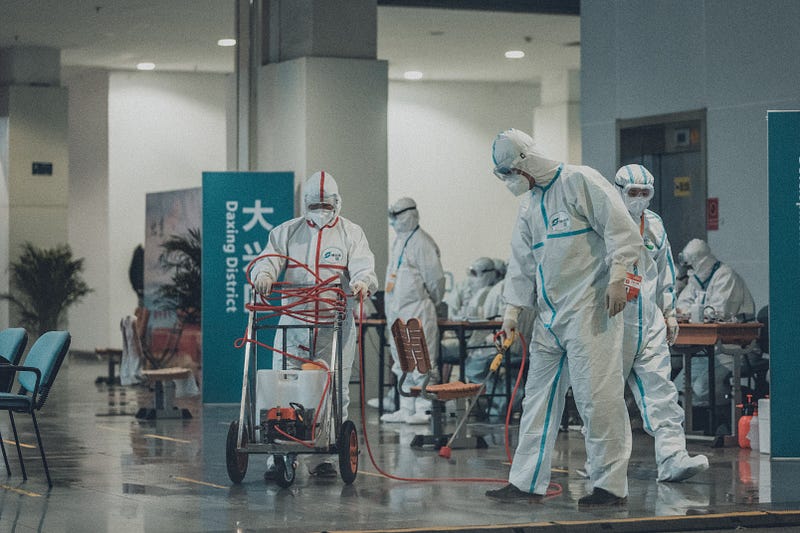
In Europe by the end of January, watching the activities in Asia from far away, experts concluded that COVID-19 is not a threat for Europe. Meanwhile, Chinese migrants returned to Italy after they have celebrated the Chinese New Year and apparently they had a stowaway on board. In Europe it was Carnival season and COVID-19 spread across all the continent, with Italy, France and Spain being the epicenters. In March, several European countries underwent lockdowns, while the origin, Wuhan, reported zero transmissions within the country and prepared its way to a “new normal” — a term that is used quite often nowadays.
In the United States, President Trump was warned repeatedly in January. No measures were taken and nearly no tests were conducted. So on official dashboards (WHO, John Hopkins University) the numbers appeared comparably good, but that was owed to the fact that nearly no tests have been conducted by that time, hence a huge number of unreported cases was assumed. Once the urgency of the situation became clear, the US reacted in an “aggressive” while chaotic way (including the idea to investigate the application of sanitizers inside the human body). Many regions had to go under strict lock-downs and the death toll was rising dramatically.
Somewehere in between, beginning of March, the WHO classified SARS-COV-2 / COVID-19 to be a pandemic. The USA, namely President Trump, was dissatisifed by the communication from China and the WHO. The USA exempted their payments to the WHO and raise claims against China. France’s Emmanuel Macron joins President Trump in holding China liable for the pandemic as they communicated the threat that comes with COVID-19 too late. Many countries in the Western world doubt the Chinese numbers (that appear to be better than theirs) and there are voices that speculate that China deliberately played down COVID-19 in order not to fall behind other countries, that would not be affected that much by the pandemic if they would have been informed earlier. Well, I leave it up to you what you make of it.
What makes COVID-19 that dangerous so that it lames the whole world?
In the beginning COVID-19 was compared to the seasonal flue with regard to the rates of infection and the mortality rate. COVID-19 however is a new viral disease and nothing was known about it. It differs from the seasonal flue as there is no basic immunization among humans. And there are no vaccines and no effective medication available. The comparison soon became obsolete, it turned out that COVID-19 is highly infectious and it appears to be quite long lasting on some surfaces, such as metal and plastic. The course of the disease appears to be more severe in many cases and the mortality rate seems to be higher than that of the flue. And again, no effective medication and no vaccines are available yet.
After infection, there is a prevalence time of up to two weeks (sometimes even longer), during which the infected person does not show any symptoms but however can already transfer the disease. To make things even more worse, there are many cases that are asymptomatic while remaining infectious for several weeks. For the affected person it feels of course better not to battle severe symptoms; but that way that person can become a super spreader, in the sense of that it passes on the virus to many other people.
The situation therefore is completely different to for instance SARS, with a short prevalence time, severe symptoms and a high mortality rate. It was quite obvious who was infected (and so contact could be avoided), the patient suffered serve symptoms, voluntarily stayed in bed and due to the high death rate (which is of course not desirable), carriers and with them the virus died. SARS after some months finally disappeared without any further human actions taken. COVID-19 is rather a silent enemy. It is hard and costly to identify many of the infections and to isolate those persons. It is deadly enough to be taken seriously as it could break down healthcare systems, but not that letal as that too many victims would die so that the spread of the virus would get to a halt.
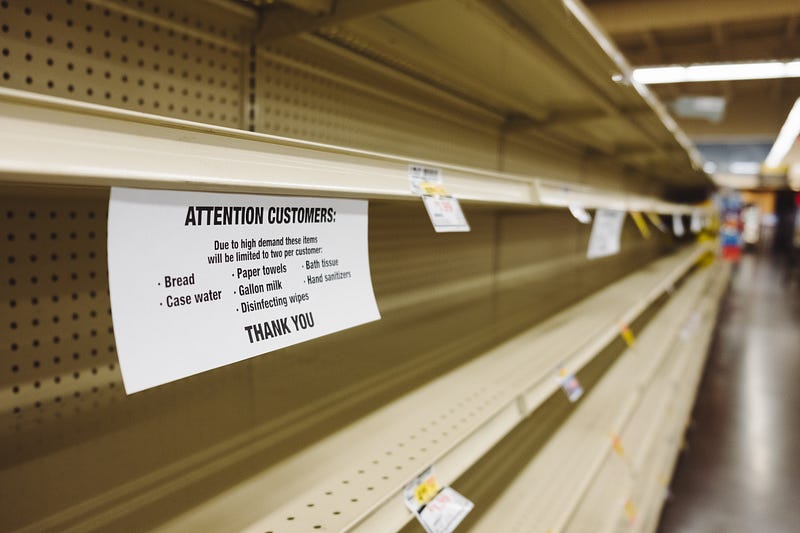
As anyone can carry and spread the virus, high personal hygiene standards need to be followed. Crowded areas must be avoided, physical distance of at least 1m must be maintained to anyone. This behaviour must be implemented in public and is nowadays even enfored by law. In the beginning, while the rate of infection among populations was very high and the virus spread exponentially (one host passed it on to three and more persons), even lockdowns had to be imposed (a complete standstill of society except providing for basic needs). In such a situation, only few businesses can earn profit or be operated at all. Rigorous economic stimulus packages are currently implemented on a global scale. 6 Trillion USD are projected worldwide and some economists think that even that sum won’t be sufficient. The economic future of many businesses, including airlines bust not just, is uncertain.
How to get out of this? How will this end?
There are two trivial but unlikely scenarios and and the anticipated but demanding approach. Lets discuss the trivial scenarios first. Viruses often mutate over time — their genetic code alters and thus the way how they spread and how they impact the host’s body. In the first scenario, SARS-COV-2 could mutate in a way so that it stops spreading and disappears, like SARS. Unfortunately that’s very unlikely, as SARS-COV-2 appears not to mutate that much. The good news about the unlikely mutation is, that it is also unlikely that the virus alters in a way so that it becomes that deadly, so that it would have the potential to erase the human race. It would then either kill all of us — or kill that many humans that quickly, so that it runs out of potential hosts and stops spreading. But as I wrote, that is quite unlikely.
The currently assumed scenario is that the virus will stay with us for a long time, like other viruses do. We therefore need to find an effective treatment for those who get infected and we need to identify effective while efficient precautions, ideally a vaccine. Both is currently in the pipeline but there is no guarantee.
If there were a vaccine, a sufficient number of people would have to be vaccinated in order to achieve the so called “herd-immunity”, the relative number of individuals in a population that must be immunized so that the virus stops spreading. Current estimations are between 60–70%. That however demands that such a vaccination can be found, can be produced in according quantity (there are 7 Billion people living on earth) and that people are willing to undergo the immunization. And that it works, although there is probably not sufficient time for longitudinal studies over years, as usually conducted for new serums in order to rule out undesired long-term effects. An alternative could be the development of the natural herd immunity, thus an according number of people would get infected over time and develop anti-bodies against the virus. Currently that is not in sight, as the infection rate appears to be very low. It would be a long way to get there, with a lot of new infections, some of them with a severe, sometimes deadly course of disease. If we had to rely on that, effective treatment is needed and according capacity of the health care systems. So the gold standard would be the timely availability of an effective vaccine.
Side Notes on the Global Economy
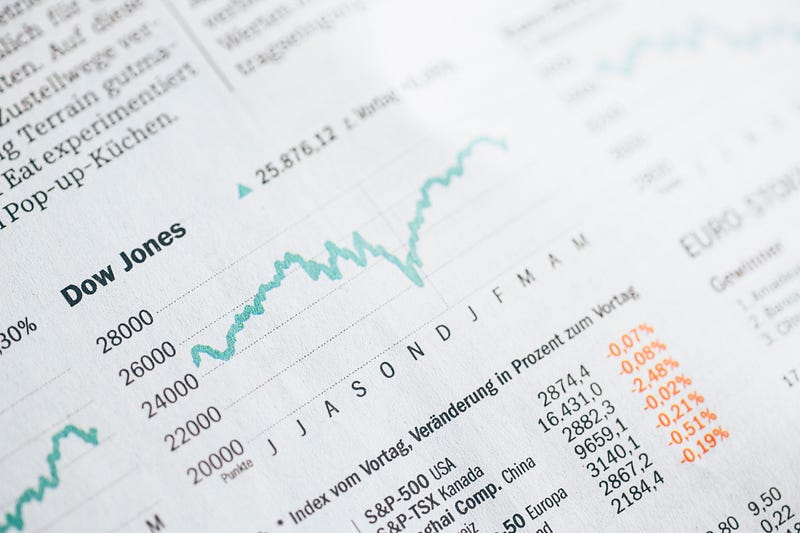
The Global Economy is suffering a lot from the plague. The reason for that is, that the COVID-19 situation introduced a lot of uncertainty. Uncertainty is more than just mere risk: Simply speaking, the latter means, that results will be around an estimated value (the measurement for that is the so called standard deviation or variance). Uncertainty on the other hand means, that there is no reasonable way to estimate those values. Take for instance one of the grounded airlines: They have no solid basis for planning when they take off again, where they can fly to (due to travel bans issued all around the world), they don’t know the short term demand and also fear long term effect, such as changed consumer behavior (for instance people that might no longer accept to travel for hours in a tight tube). The value of securities (such as stock) is derived from anticipated cash flows. The current estimations are current bets, far from being based on solid data. Thus, the value of securities is not for certain, making investors and lenders hesitant. Furthermore people lose their jobs, the household-incomes decline and therefore the demand as well.
This is not likely to change fundamentally, as long as no reasonable exit scenario (see above) is available.
It will be interesting to see whether our economic system will be questioned in its foundation in the aftermath. A standstill of a few weeks seems to lead to a global economic collapse. On the other hand: What is that important that it can’t be suspended for some weeks? The current implications sketched above do not satisfactorily answer that somehow philosophical question.
Side Notes on the Constitutional State
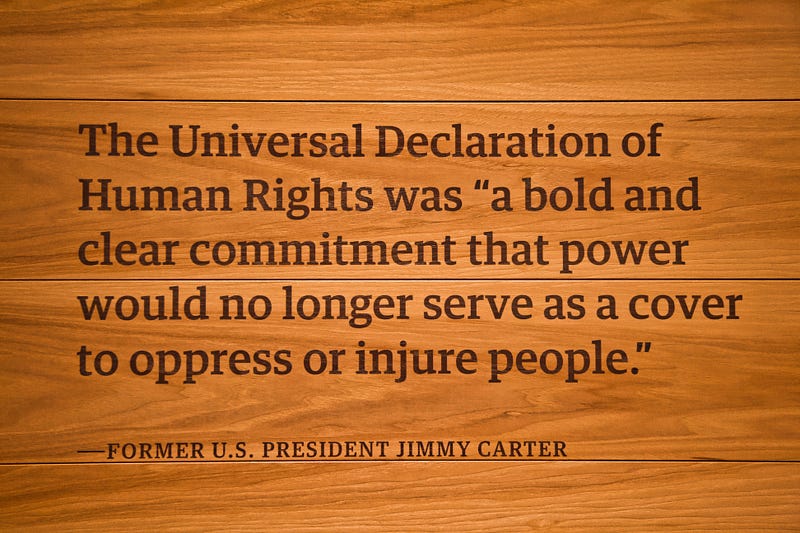
One major purpose of the constitutional state is to grant citizens’ fundamental rights, such as the right of privacy, the right for peaceful assemblements, the right to do business, the right of freespeech. To some extent the counter measures to curb the spread of COVID-19 negatively impact those rights. To some extent understandably, it was to see that under certain situations people are willing to accept the suspension of those rights. It must be worked out clearly which circumstances justify that. And it must be made clear, that the suspension is a temporarily one. Otherwise politicians could use seasonal flues to establish authoritarian regimes, to say it with a polemic voice.
Another issue ahead is the immunization of 60–70% of the population once a vaccine becomes available. Will there be sufficient volunteers to get vaccinated in order to achieve the herd immunity? Will they have any benefits? Or will they have to voluntarily take the risks implied by a new vaccine that did not undergo sufficient long term studies? Will governments dare to impose compulsory vaccination, hence violating one’s personal and physical integrity, even if undesired side effects might arise? Although this is a side note about the constitutional state, in the long run it deserves the same attention as the COVID-19 situation receives right now.


