
The Courage Needed to Love
And the War We Didn’t Know We Were Fighting
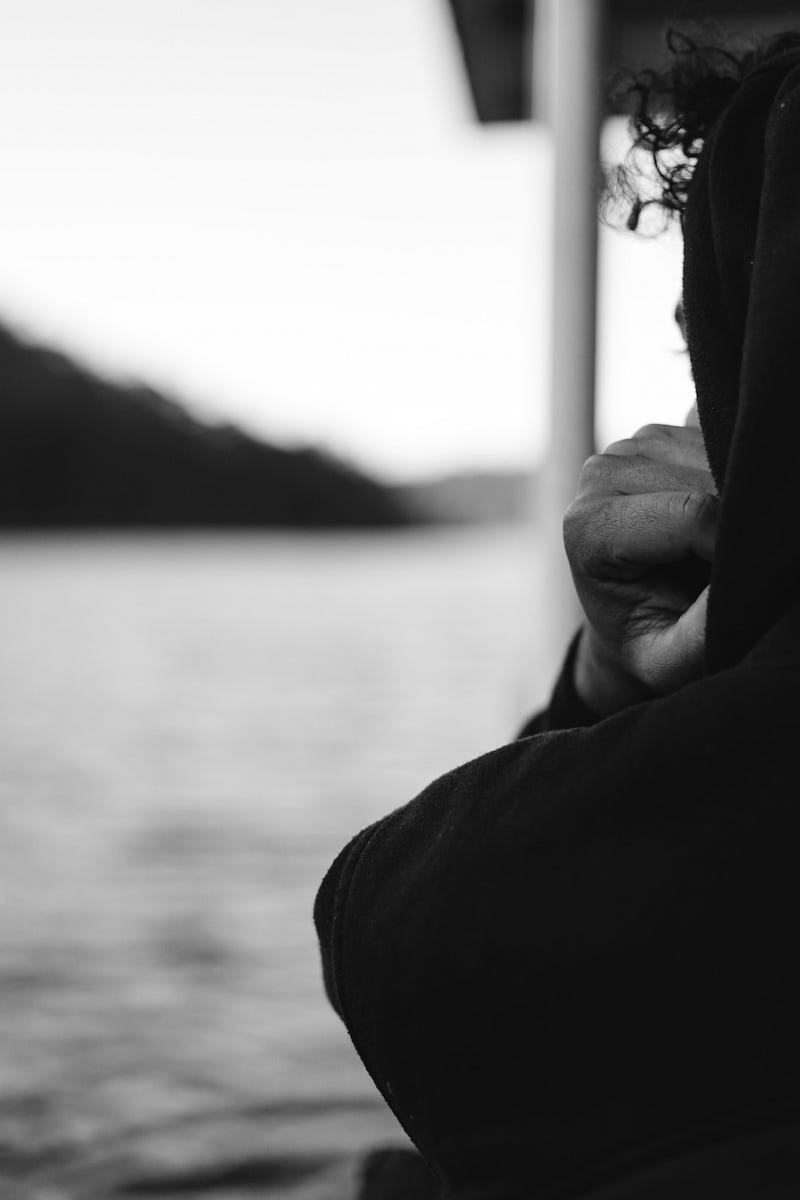
Here’s a fact: Vulnerability amplifies Love.
The idea I want to discuss in regards to this feels unbelievably hard to talk about because of how tragically twisted our society is on Love. When I think through the eyes of a reader, there are a million ways and reasons why they must keep their cards close to their chest. Even if I could guess them, I would still feel unsatisfied with the medium of writing an essay for such a person. Warmth of lofty words have to counterbalance the coldness of a computer’s screen. An in-person conversation would be better. A space where two people can just be real with each other about what’s been going on in our lives and what we need.
If we were collectively being honest with ourselves, I think many people, maybe even most people, would say, “I don’t know how to Love.” I mean how could we know how to love if we don’t even know what love is, right? It’s a reasonable problem to have. If that were true, it would make all the labels and horrible statistics and power dynamics all the more tragic. The people who exist behind the numbers on divorce, or suicide, or loneliness, or health issues, or depression, or anxiety, or homelessness, are people who don’t know how to Love or what Love is.
Any one of these issues, I imagine, bring forth an urge to reach out to someone out there who would care, even if you can solve it on your own. Any one of these issues is amplified by a lack of Love or Care in your life. What does it mean to not have anyone to reach out to like that? And even more dizzying, what does it mean to have a society of people who don’t have anyone to reach out to like that?
Well based on the fact I said in the beginning:
- We are all increasingly more vulnerable constantly.
- There is little love within any one of us, to amplify.
The love and care we would extend to each other due to the increasing vulnerability seems to be shrouded, numbed, and stifled. If we felt the sense of care for each other that a group of ‘social creatures’ would, I don’t think we would allow each other to fall through the cracks of our broken society. And yet despite our fundamental dependance on each other, this does not happen. What does it take to cause a species, built on the need for community, to throw away that need for community?
Distrust, Fear, Meaninglessness, Stress, Confusion and a cold Bureaucracy to be the intermediary between people afflicted with the previous things. Something more disturbing: a regular and genuine hug with no strings attached would probably do more to alleviate the list of things given, than a government mass could do. But there is no one to hug… or the number of people who you could hug is decreasing rapidly.
Really, the bureaucracy is no different from a computer. A computational mass that we use to feign the care we can’t expect in our neighbors, our parents, our partners, our friends. What if trust was the true currency underlying the interactions between people? That would mean that we continue to put our faith and trust in this broken system, not because it is good at what it does, but because we trust each other so much less. An unchecked monopoly on trust itself.
A Hypothetical Conspiracy
If there were a conspiracy against regular people, I’d honestly say it’s the concerted effort to keep our Trust in each other low, and to keep our trust in an inefficient cold governance or an efficient cold technology, high. If you were to attempt to enslave humanity, that would be the way to do it. If social creatures are not social, then they are simply creatures.
And if that conspiracy were true, then that huge barrier between you and those around you, the awkwardness that makes you squirm in the face of intimacy by the ‘wrong person’, the urge to punish the weak, the sense of disgust for your fellow man and their humanness, the desire to annihilate all flaw from your body in the name of perfection, the micro-dosage betrayals you guiltily offer to those suffering around you to ‘get and keep yours’, the fear of a mysterious stranger, the harrowing cult-like chants of ‘self love’ and ‘independence’ to cover over the holes in your soul, all of it, would be the enemy. All of it would be the tools of enslavement. All of it would be the many different diverse and unique walls to our prison.
And yet we can’t just ‘do away with it’ without being sure that everything would be fine without it.
Fear, insecurity, pain, disrespect, and the rest are the different metals and alloys that make our cage. One computational mass feeds you a lie of care with a leader’s rousing speech about ‘fixing our country’ or ‘solving inequality’ or ‘ending corruption’ or ‘giving the people rights’. The other computational mass lets you drink the happy faces of others on a screen, the passionate music of someone far more wealthy, and the wild stories of triumph against the odds. And every time you cry, scream, rage, and struggle against the Dying of the Night, The computational mass gives you a mic, turns on its camera, and nods patiently sending your genuine pain straight into the forge that refines the metals and alloys that build cages. Cages that started building between long generational groups, then atomized families, then the children of those families, and now everyone who isn’t paying the freedom subscription fee. But maybe later, even those who are paying the fee.
And yet we can’t simply cut out the middle man without knowing the person on the other side who we cut him out for, can we?
The fear tells me, maybe not. But I know that Love and Trust is what is really being syphoned out of society, every time I listen to that fear. If we intend to stop it, the courage required to do so is a courage to do what looks to be a unique suicide. The suicide of putting your vulnerability and tears in front of an actual human. The suicide of diving into the messy whirlwind of your emotions and that of others. The suicide of being a bigger person. The suicide of forgiveness. The suicide of saying ‘This hurts me’ and the suicide of accepting that you are hurtful. The suicide of believing that we are all, in fact, together in this and that it isn’t just you. The suicide of accepting humanity as humans with limitations and a need for patience and respect.
It’s not that different from the suicide you accept to go to war. Maybe we are the numb soldiers. Maybe it’s that edge, from having to take the trust out of someone’s eyes in a struggle for our survival, that makes us grizzled at what we do. The lives we live. Maybe the distrust is our PTSD. Maybe we are still prisoners of war waiting for a chance to go back to a home we haven’t been to for a long time.
We need to have the courage to march back to our elusive home.