
The Reflective Eclectic
The Cost of the Placebo Effect
And Whether Walking in the Woods Would Do You Some Good
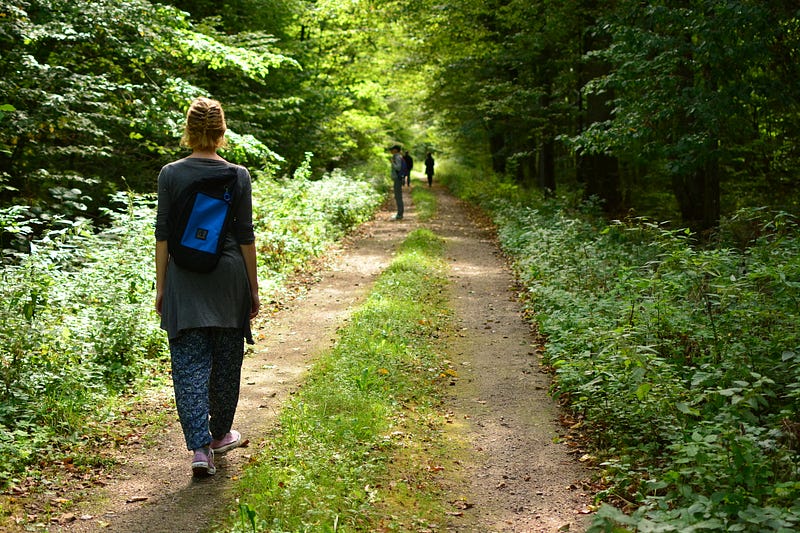
Any time is a good time for a good dose of Shinrin-yoku; but, I think early summer, after being cooped up because of a pandemic is best. Shinrin-yoku is the Japanese term for forest bathing, or forest therapy. That’s getting therapy by walking in the forest, not therapy for forests. People have been walking in the woods forever; but, I am told, since the 1980s, it’s become a cornerstone of preventive health care and healing in Japanese medicine. Researchers in Japan and South Korea have established what they call a robust body of scientific literature on the health benefits of spending time in the company of trees.
I love hiking, so I’d like to believe that walking in the woods can lower your blood pressure, lift your spirits, make you breathe easier, and be less interested in filling your mouth with junk food, your veins with drugs, your lungs with smoke, and your gullet with alcohol. It’s cheaper than Prozac and has fewer side effects than Xanax. In fact, unless you get sprayed by a skunk, eaten by a bear, or a tree falls on you, I can’t think of any side effects at all. If you’re sad, anxious, or confused, taking a walk in the woods should be the first thing you do, before you call a therapist or get a prescription for pills. As a matter of fact, there are studies that support some of those claims. In one such research experiment, volunteers were taken for a walk in the woods, or, alternatively, down a city street. Measurements were taken. The ones who walked in the woods had lower heart rates and blood pressures, reduced stress hormone production, a boosted immune system, and improved overall feelings of well being.
I’ve looked at these articles, but they only cause me to have more questions.
I’ve been walking in the woods all my life. In Connecticut, where I grew up, it’s all woods and I did a lot of walking. I seldom saw the sky, there were so many trees. Was my entire childhood one massive dose of Shinrin-yoku?
Thinking about being a kid, I read all those Grimm Fairy Tales. In every one, the woods are presented as a very dangerous place. Little Red Riding Hood and Hansel and Gretel went for walks in the woods and things didn’t turn out so well. Can you practice Shinrin-yoku when there’s witches and wolves around? Can you do Shinrin-yoku in the wilderness or is it best in safe, cultivated forests that are really gardens with a lot of trees?
There was another time in my life when I made my living in forestry. Was I practicing Shinrin-yoku when I was cutting down the trees?
Does it even have to be the woods that you walk in? Can you get the same effect from a walk on the beach with the ocean waves crashing at your feet? Or on an alpine trail, with mountains all around? For me, there have been times that a stimulating walk down a busy city street, or even on a treadmill, was just what I needed. Do you even have to be walking at all, or can paddling, sitting, reading, or swapping stories with friends around a campfire do it, too?
Finally, what’s more effective? Taking a walk in the woods or taking a walk in the woods and calling it Shinrin-yoku?
I think I know the answer to the last one. Shinrin-yoku is not the same as walking in the woods, or living in the woods, or cutting them down, or walking on the beach, in the mountains, or down a street. It’s even better than paddling, sitting, reading or laughing with friends, or roasting marshmallows. It’s more effective because it has what the rest don’t have. It’s got a placebo effect.
Shinrin-yoku, for us, has an exotic name, suggestive of an enigmatic Eastern philosophy. Walking in the woods is, shall I say, pedestrian. Shinrin-yoku is something you do for your health; whereas, walking in the woods may be something you do to get someplace. The strongest dose of Shinrin-yoku occurs when you are deliberate and mindful of being in the woods; but you can walk in the woods and may not even notice a tree. In Japan, you may be given a prescription of Shinrin-yoku from your doctor, so it brings with it all the authority and gravity of the medical establishment. Shinrin-yoku in this country is an alternative medicine, so it lacks the same authority; but, being alternative, it carries with it a sense of rebelliousness and personal conviction. Let’s face it, when you act out of a sense of rebelliousness and personal conviction, you really, really want it to work out. I would submit that those research subjects are enjoying the benefits of Shinrin-yoku because they believe there are benefits of Shinrin-yoku.
That is not to say that Shinrin-yoku is a load of bunk. I can authoritatively say this because the placebo effect is not a load of bunk. The placebo effect is very real, but it’s not without its side effects. There are counter indications to using a placebo. As cheap as it appears, a placebo can be very expensive. It uses up a lot of trust and credibility. Here’s the problem. When you say something has scientific evidence, you better mean it. When you give the authority of science to something that is less rigorous than, say, a fully-randomized controlled trial, you are risking the status of science for something that might in the end be reversed.
The problem with these studies, and any research that fails to control for the placebo effect, is that you don’t really know what you are studying. Is the active ingredient of Shinrin-yoku truly walking in the woods or is it the faith of the participant and the skill of the physician?
If you use the placebo effect too many times, people are going to start to feel manipulated. They’re not going to believe anything you say. What’s worse, if you claim to speak for science, when they stop trusting you, they stop trusting science. When they stop trusting science, well, we already know what we get.
Go for a walk in the woods; but don’t do it because someone says science tells you to and gives it an exotic name. Use your own good sense. Go because you might enjoy it.
Keith R Wilson is a mental health counselor in private practice and the author of three self-help books, three novels, and innumerable articles.


