
The Cost of Our Disposable Tech Obsession
E-Waste’s impact on climate change and Apple’s unexpected support for the right-to-repair bill
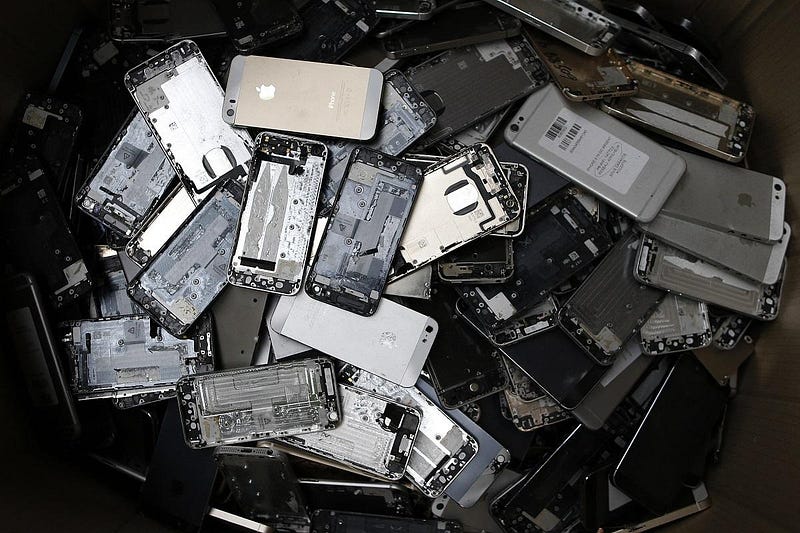
We are a generation obsessed with technology, supported by the yet-to-be-defeated Moore’s Law of the number of transistors in an integrated circuit (though they are now so small that it is getting harder to make them even smaller). We have gadgets for everything — from food to computers, reading devices, and our ever-changing cell phones.
And we replace them almost as often as we buy new clothes.
New upgrade? New toy. And throw away our old one, no matter if it’s running as good as ever.
My parents got married in 1989. One of their presents was a Philips Tropical fridge. The same one my mom still has at home.
But I wasn’t this lucky. Since moving alone 15 years ago, I had to change my fridge three times, even though I tried and persisted in fixing them. That’s a fridge every five years versus one that lasts for a lifetime. That is a disposable climate-sucking machine versus an environmentally friendly one, no matter if the new ones had an A+ in energy saving.
Can you imagine how much electronic waste we generate? Where does it all go?
After years of deliberately slowing down iPhones and piling e-waste, Apple just moved in the Tropical direction.
A culture of disposability
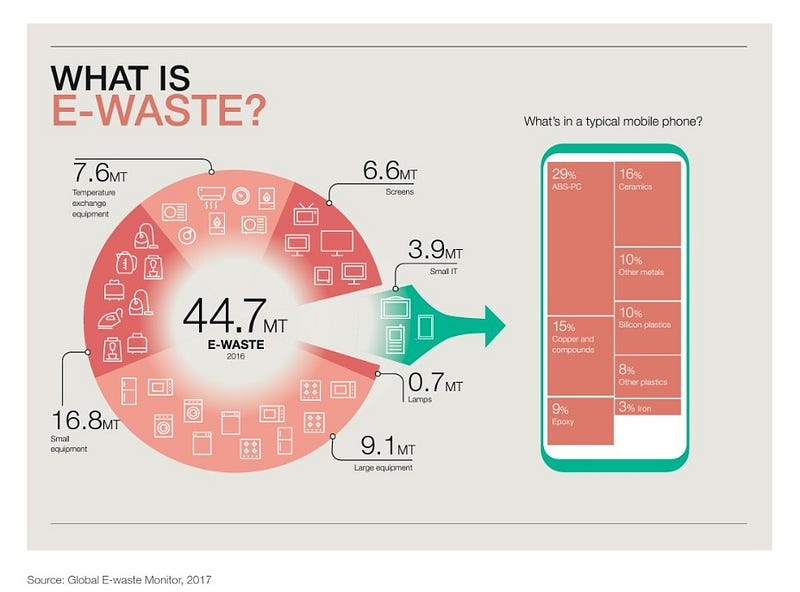
E-waste is now the fastest-growing waste stream in the world. Some forms of it have been growing exponentially. The UN has called it a tsunami of e-waste.
Every year, our capitalistic expenses generate 50 million tons of electronic waste. The e-waste discarded in 2021 alone weighs more than the Great Wall of China, the heaviest man-made structure in the world. It’s like throwing away 1,000 laptops every second. About half of this waste comes from personal gadgets like computers and smartphones, and the rest comes from bigger appliances. According to WEEE Forum, there are about 16 billion phones worldwide, and over 5 billion will become e-waste this year. If we keep going like this, we could hit 120 million tons of yearly e-waste by 2050.
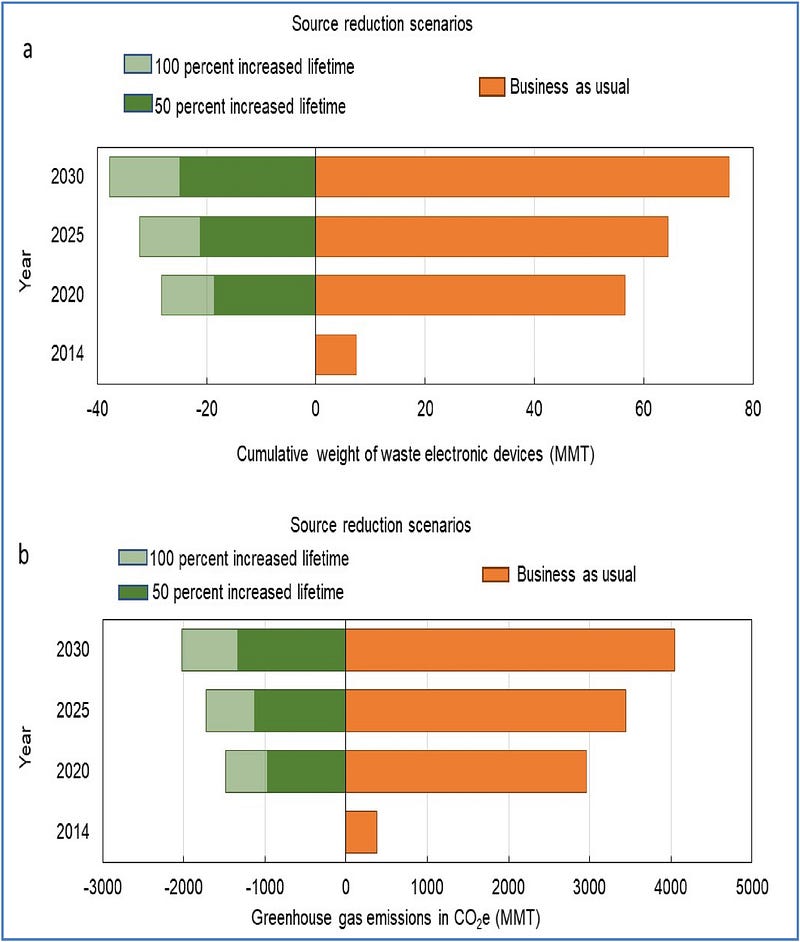
The carbon footprint of new electronic gadgets, particulary information and communications technology (ICT) devices, is a major source of greenhouse gas emissions. It’s responsible for about two-thirds of their total emissions during their lifetime. This comes from mining minerals, manufacturing, and shipping. Between 2014 and 2020, emissions from e-waste linked to ICT devices surged by 53%. In 2020 alone, they released 580 million metric tons of CO2e or the same as 140 million cars driving an average of 12,000 miles each. Without action, this will jump to around 852 million metric tons by 2030, or 206 million extra cars spitting fumes.
What’s troubling is that only 20% of this waste gets recycled properly. The rest either goes to landfills or gets recycled informally, often by hand in developing nations, posing severe health hazards due to exposure to toxic substances like mercury, lead, and cadmium. Waste in landfills further jeopardizes soil and groundwater, risking food supply systems and water sources.
Improper waste management also substantially losses valuable raw materials, including gold, platinum, cobalt, and rare earth elements. The annual worth of waste exceeds $62.5 billion, the same as Slovenia’s GDP. Our electronic trash is laterally a goldmine: an estimated 7% of the world’s total gold is there. And the number of computers and cell phones we make each year keeps growing.
This problem needs our attention to find better ways to deal with electronic waste.
A new lifecycle for our devices?
E-waste is now the fastest-growing waste stream in the world. Some forms of it have been growing exponentially. The UN has called it a tsunami of e-waste.
In a surprising twist, on August 22, 2023, Apple publicly backed California’s “right-to-repair” bill. This legislative proposal, if enacted, would compel electronics and appliance manufacturers to provide spare parts, repair tools, and documentation to the public for up to seven years after a product is discontinued.
The essence of the right-to-repair movement lies in its challenge to our culture of disposability. It advocates for extending the lifespan of products by making repairs accessible to consumers. When faced with malfunctioning gadgets, consumers often opt for replacement due to limited repair options. Instead, with access to spare parts and repair resources, consumers can conveniently and affordably breathe new life into their devices. This not only reduces electronic waste but also curbs the carbon emissions tied to manufacturing new ones.
So, what’s the impact? If this legislation passes, people will keep their devices operational for lengthier periods and at a lower cost.
But this is way more than just a win for consumers. It sends a clear message that companies can no longer make meaningful climate commitments without considering the entire lifecycle of their products.
An upgraded operating system
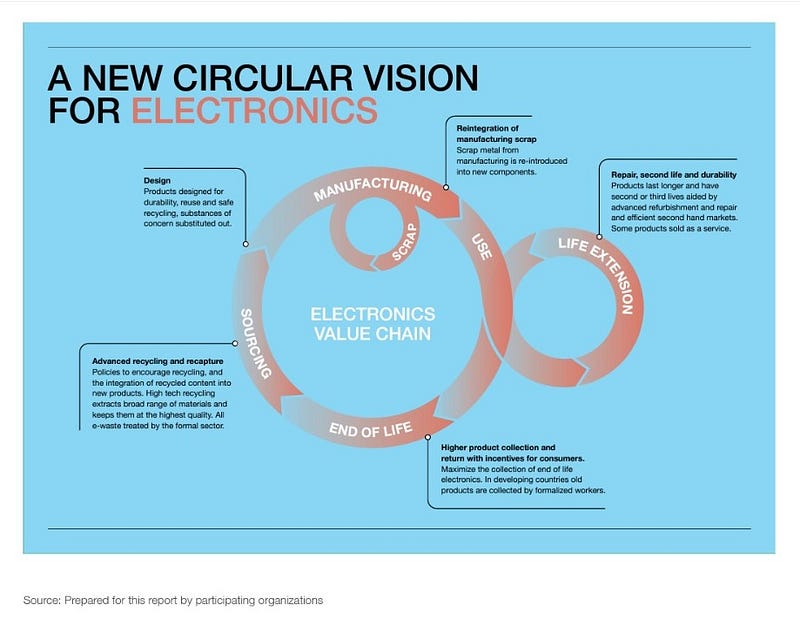
A circular economy flips the script on how things work. It’s a system where everything stays valuable, and waste is basically kicked out. Think of it as the opposite of what we’re doing now, which is more like a straight line — make, use, toss. We need to consider a few things to make electronics fit into this circular system:
- Designing for the Long Haul: Make electronics that last, can be taken apart easily, and are safe to recycle. Share what works with others in the industry.
- Make Them Tough: Electronics should be sturdy so they don’t break quickly. And when they’re done, they should be easy to fix and reuse. Think about the product’s entire life, not just when it’s new. This makes the whole system more valuable.
Sandra Goldmark, author of “Fixation: How to Have Stuff without Breaking the Planet,” said, “With steps like this legislation, good design may finally be evolving… into objects made from responsibly sourced materials, durable, and repairable.”
This shift in stance is powerful, particularly considering Apple’s historical opposition to similar bills.
But, is it greenwashing?
The new law doesn’t address software compatibility, so companies can still discontinue support for older hardware, effectively rendering it obsolete. Still, this development hints at a new era, where disposable gadgets could transform into devices for years, even decades, before being repurposed into raw materials for new ones.
Only time will tell, but at the very least, it acknowledges the environmental consequences of disposable technology.
404 Must be found
Climate change is here. It’s time to face reality and rise to the challenge with innovation on a grand scale across governments, companies, economics, and systems.
Our mission is about crafting a future that endures, not just survival. So, when discussing “preventing climate change,” we must build things that can outlast generations, not quick fixes that fade away in a year or two. But the reality is we live in a paradigm set by production, profit, and scale. And most big guns out there with fancy titles of advisors, angel investors, and consultancies are only focused on the next quarter. Our vision has become painfully short-sighted.
Electronics, much like fashion or fast food, constantly evolve. However, the core focus remains unchanged: selling the latest gadgets in large quantities. This has had a positive side-effect in developing countries, where things like mobile money have improved lives. Even used devices like laptops and smartphones get a second chance in many places. But, in the end, they all become waste.
This is a pivotal moment. It’s an opportunity for businesses, leaders, and workers worldwide to rethink how we handle electronics. Our emphasis should be on conserving resources and increasing recycling. We don’t need more electronic clutter. The old model of take, make, and discard is toxic. Prioritizing dematerialization.) and closed-loop systems, which reduce our reliance on primary resources, must be our ultimate goals.
Our economies should enhance our lives in tangible ways, not harm, devalue, or dehumanize us. Yet, that is the highway we are on.
Tomorrow’s challenges are already here. The actual race of this century revolves around those who can adapt first, not just solve yesterday’s problems.
A strong right-to-repair law in California has the potential to become the de facto standard. And take precedence over the throwaway culture towards an enduring future.
Thank you for your thorough reading and support!
If you crave more insights into climate change, scientific progress, and geopolitics with a Patagonian twist, subscribe to the newsletter Antarctic Sapiens and dive into thought-provoking content weekly.


