
The Cost Of Dishonesty

When we look at life, and we consider those times we tell the truth, and those other times when we don’t, we may give a perspective to it that is simpler than it should be. We all have those innocent white lies that we carry with us throughout our lives, but are we able to look at the consequences and benefits of what the truth, or dishonesty can do for us?
There are many negative results that can come from being a dishonest person, and it runs deeper than one may think at first. It takes away a person’s trust in us, but that can be just the very first effect, of a much deeper and longer process.
I recently wrote in a past piece about the benefits of being truthful. I referred to, the truly deeper benefits that affect us, and our lives in a very multi layered, and intense way. I brought attention to the fact that being honest was way more than just a good personal habit. It was so much more. Literally, countless ways. Honesty was a way of life. A part of a person.
So what about being dishonest?
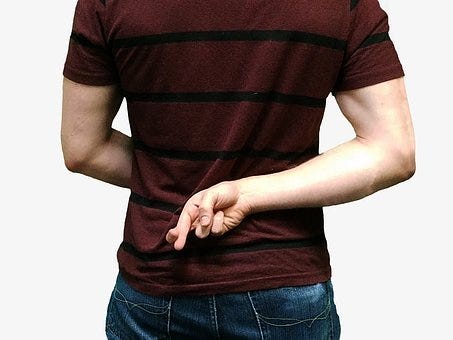
The cost of being dishonest can affect us in ways that both affect us instantly, and affect us in long term ways as well. I can vouch for many of these. I spent my entire active addiction living in a lie, and telling a lie, every single time my mouth opened. I lied about serious things, and I lied about nonsense as well.
I lied for many reasons, and I lied for no reasons. That right there really is a reflection of just how much, dishonesty can take over our lives. When we are lying like that, it becomes second nature. Almost as if, it becomes another addiction, that is done within an addiction. There may be people who say pointless lies are a victimless act. They don’t hurt anybody, and they are just no big deal. But let’s look deeper into that claim.
Dishonesty can represent a darker side of life. It can be done so innocently, but its continuous use can open up paths that we may not want to end up traveling. Lying can turn itself into not only an addiction, but a way of life and a part of who we are.
Dishonesty takes us to a lonely world. When we get wrapped up in lying, we often remain stuck, because it seems so difficult to find our way out of it.

While the world of honesty is so much easier long term, because we don’t have to work extra hard to try to remember stories or claims if they are already true. But lying gets us so deep into a world where we create more lies, as we have to work ten times as hard to remember what lie we told when and where. Instead of quitting while we’re ahead, we lie more. Which becomes the ultimate difficulty. The fantasy can no longer be followed.
It points us to loneliness, because we are in that way of life totally alone, and we become rather ashamed of ourselves. After all, what seems more difficult in our admissions, than to admit to someone close, that we lied to them?
Often times, the shame and guilt behind that, is fueled by the logic that there really isn’t much of a good reason for dishonesty. So admitting we did it just puts up a wall of denial. And that world of loneliness and shame soon develops.

What ties together pretty close with that is self respect. Those initial feelings mentioned like loneliness, guilt, shame, and denial can easily fuel a feeling of self loathing, and lack of self respect. So dishonesty will likely affect our respect of self. It becomes an even darker place when our path is laced with lack of self respect, and loneliness.
Another good point that we don’t always remember to think about is who we are affecting besides ourselves. Even if we don’t care whatsoever about ourselves, that doesn’t mean that our lying dishonesty isn’t hurting those in our lives. Especially our loved ones. Because they still love us. But they just can’t be with us any longer.
In my own journey, my lies hurt me, but it was those people around me, those loved ones, family members, and friends who felt very betrayed by me. It went on so long, and so deep, that I think everyone stopped listening to me long before I even had a clue. They may had been hearing the garbage coming out of my mouth, but as for really listening, I doubt it.

The proof of their pain became very evident, once I actually got sober. Because even though my recovery brought me back to a place of honesty, it still took the people in my life a very long time to just even to begin to start believing me.
The only way I know to truly prove myself is to live right, live sober, and live honest. Eventually, it will be known and seen. But it’s not my place to rush someone along into total forgiveness of everything I’ve done. It’s their hurt, their pain, and their decision.
My job, is to be on the straight and narrow, and keep it honest, even when it very difficult to. Remaining away from the path of of dishonesty is the place in life to avoid.

Michael Patanella
is a Trenton, New Jersey Author, Publisher, Columnist, Editor, Advocate, and recovering addict, covering topics of mental health, addiction, sobriety, mindfulness, self-help, faith, spirituality, Smart Recovery, social advocacy, and countless other nonfiction topics.