
The Cookies — Don’t Say Nothin’ Bad (about my baby)
As I was reading the article “Reclaiming Critical Analysis: The Social Harms of ‘Bitch” by Sherryl Kleinman, Mattehw B. Ezzell, and A. Corey Frost published in the journal Sociological Analysis (vol. 3, no 1, Spring 2009), I got distracted and signed onto Facebook account that was already signed in on my work computer — revealing my complicity with “time on site” and invasion of my privacy at work.
I’d just had an amazing first-time conversation with an elder Black activist from Brooklyn who is the godmother of a good friend of mine. I’d admired “Miss M.” for some years now on Facebook and asked if we might connect in person. We opted for a phone conversation; an hour that was so fulfilling and pragmatic and let me know how the blurred privacy and publicity of social media is merely an extension of COINTELPRO when it comes to members of marginalized people who wish to be woke.
Of course the Facebook feed brought Miss M immediately to the top of my feed. The algorithms knew we spoke recently. We’d made the connection in Messenger.
Miss M. posted a YouTube video that featured a girl group I’d never heard of, The Cookies singing a song “Don’t Say Nothin’ Bad (About My Baby)” released in 1963, a year after I was born. I’ve wrote an essay about a track from Nas’s Illmatic for a book by Michael Eric Dyson and Sohail Dauhatzi where I situated the reading of the song in the gendered discourse from the year Nas was born. I included all kinds of references but not song lyrics — the pop music blindness in a musicologist is obviously ironic. “Don’t Say Nothin’ Bad” is a song that surely rang in my infant ears as the daughter of a single mother.
My mother, then Ardell Gaunt, was an athlete who held the record for the 50 year dash for 20 years after high school. She also was one of the best dancers in her community — a community of youth that were forced together in a 50 mile radius from Southeast DC to Frederick, Maryland by the defacto school segregation of Jim Crow. My mother taught me most of the dances she grew up with. I wrote about in my prize-winning book The Games Black Girls Play — she had to remind me as an adult that I did not dance on the right side of the beat (or black cultural memory) when I was young. So she danced with me…a lot; reorienting my body to the backbeats of 2 and 4 common in most Rhythm n Blues and crossover Motown songs of the late 1950s and early ‘60s.
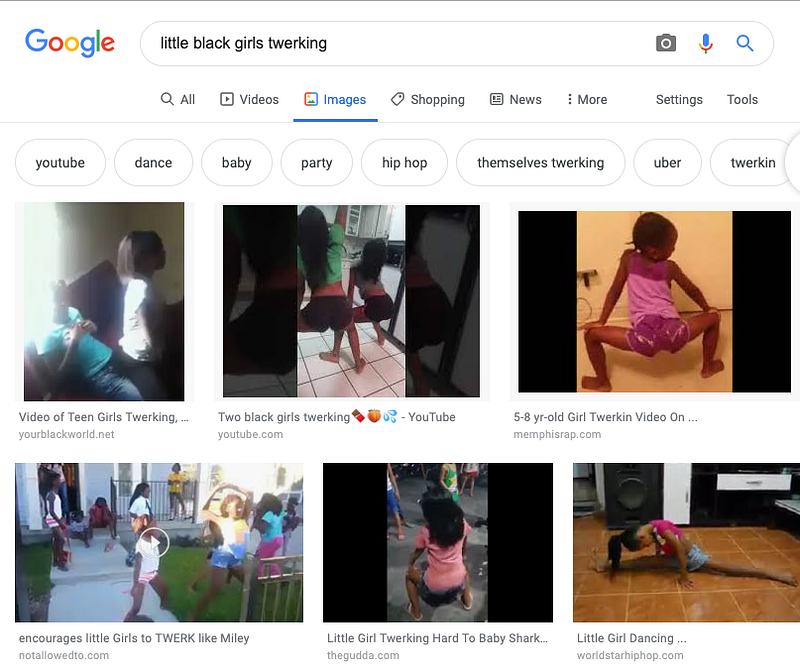
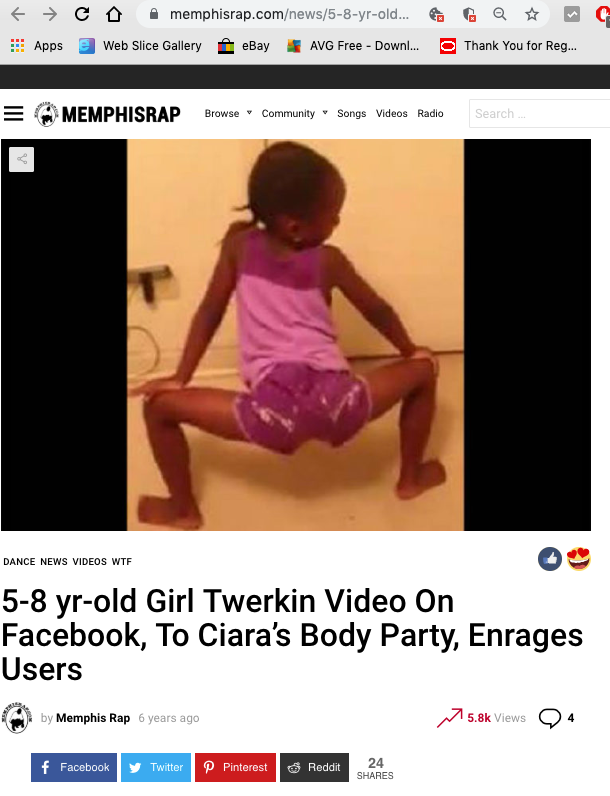
Listening to The Cookies sing “Don’t Say Nothin’ Bad (About My Baby)” is being shaped in 2019 by my scholarly research. I am currently working on a book about the role of music, tech, and patriarchy play in reinforcing sexism on YouTube based on a case study of the sexual exploitation of twerking videos featuring very young Black girls (perceived to be 8–12 or younger).
As I listened, I heard what I was reading about in the article about the social harms of “bitch”. The article uses the sociology theory of symbolic interactionism to offer a critical reading of how words reinforce sexism, even when women are seemingly using words in “powerful” ways.
“Any terms that dehumanize others can make it easier for us to harm them (Schwalbe 2008). And words often precede action. …words can signify hierarchy. Words tell us, empirically, about: increases and decreases in inequality; old inequalities in new guises; false power among members of an oppressed group; unconscious sexism, racism, or other forms of inequality” (Kleinman, et. al. 2009, 49).
As I listened to the prototypical big beat of Motown ringing behind the lyrics
He gets up each morning and he goes downtown where everyone’s his boss, and he’s lost in an angry land. He’s a little man.
But then he comes uptown each evening to my tentament. Uptown where folks don’t have to pay much rent. And when he’s there with me he can see that he’s everything. The man is tall, he don’t crawl. He’s a king.
Without batting an eyelash, I thought “Who wrote this song?” My guess was it was not a Black songwriter. I searched Wikipedia for the answer and then wrote a quick comment below the YouTube video:
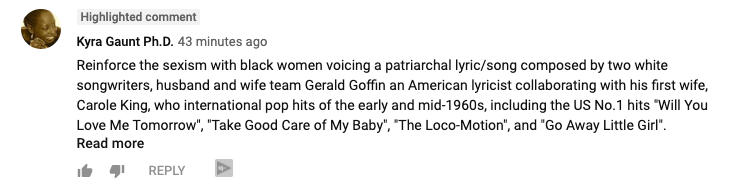
Reinforce the sexism with black women voicing a patriarchal lyric/song composed by two white songwriters, husband and wife team Gerald Goffin an American lyricist collaborating with his first wife, Carole King, who international pop hits of the early and mid-1960s, including the US №1 hits “Will You Love Me Tomorrow”, “Take Good Care of My Baby”, “The Loco-Motion”, and “Go Away Little Girl”. Wikipedia states: Goffin said his gift was “to find words that expressed what many young people were feeling but were unable to articulate.” It was mostly women whose expressions he was crafting.
I wish YouTube encouraged more criticism on its interface; the content and comments on their own perpetuate sexism and reinforce patriarchy in part because the faces we see are of Black girls/women. There should be a way to embed critical analysis in the same frame — maybe we need a separate website like repeat YouTube. We need a platform to reframe the ways audiences “read” Black girls and women’s content especially so kids are not being taught to reproduce interconnected forms of inequality and oppression.
The abstract and so-called personalized way we consume content out of any context is killing our mental capacity to think critically. Disinformation is the on our mobile devices results in abstraction; content by members of marginalized groups and the comments left by uninteneded audiences are all dislodged from any biographical, historical, interactional or situational context, particularly by the performer when they are Black and female. That is why I teach Black feminist ethnography and write in ways that help those outside black communities of girls and women ‘see’ the lives of cultural insiders they way Black girls and women do. I also do the opposite: help Black girls and women ‘see’ how music and tech are not our friends.
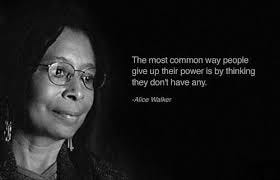
My inner patriarch lives and I’m filing for divorce right now!
I haven’t posted here for quite a white now. The need to make my own voice heard and seen has been calling me to publish more for various reasons — professional and personal. All my life I’ve resisted the limelight while former dissertation advisors, colleagues and even new friends remind me of my brilliance. I think I’ve always been interested in helping others be heard and seen because for so long I’ve felt that way. [Excuse any typos. I am just posting here and will edit later. Looking to collaborate with someone who might want to do the same — we can be each other’s editor.]
Now is the time for all girls and women of color to come to their own aid and resistance to oppression. [An ode to the days of typing lessons].
It’s time to use our voices not just to name the important process of “owning our bodies” or empowering ourselves to dance in ways that reclaim public spaces for girls and women. Booty popping in public has both affordances and constraints — it can empower our intradermal sensibilities and be used against us outside our bodies where reputation matters. The body, not unlike a computer, is a form of technology in African and African Diasporic settings and realizing when and where it should be deployed to empower and when it decreases agency is part of growing up, becoming wise, political and realizing the power of joining a feminist cause.
I intend to use these new Medium posts to write without my inner critic, who is clearly a mansplaining patriarch. lol. He often cuts me off and interrupts me and I’ve let him. He can make it rain because he reigns lord supreme in my mindlessness. My inner patriarch lives and I’m filing for divorce right now!
As I write my book about the sexual exploitation of Black girls’ music-related content and fan videos, I need to get my ideas in front of other people’s minds. To let me know that what I’ve been thinking about primarily in my office and on my laptop has meaning for others. Sexism and gender inequality demand more attention in an age where women call themselves “bitches” dislodged from any social justice movement, as the authors of the social harms article indicate. Even twerking with its ideas of self-empowerment can not shift the sexist politics of men in the music industry unless it is connected to some larger social movement.
Twerk scholar Miss Kimari Brand has been out to create body and erotic autonomy through her performance praxis of twerking. She links the work to land rights in South America. What feminist movements do everyday girls and women like their use of “bitch” to, for instance. What sociological leverage is it creating to resist the adultification, hyperabuse, and sexualization of not only Black women, but particularly very young black girls.
When reports of the dozens of underage white girls who were victims of the sexual abuse and sex trafficking by Jeffrey Epstein used the phrase “underage women,” media distributed across platforms around the world then reinforce sexism in ways that demonstrate the power of words to increase gendered inequality and patriarchy.
The work I am doing with my next book is designed to unmask the ways music and tech perpetuate these forms of symbolic annihilation and gender-based violence and Black girls and women.
Last weekend, I finally started watching Dream Hampton’s documentary Surviving R Kelly. Paid $9.99 to view the episodes on YouTube since I don’t have cable TV or a television. I’m study and consume everything by YouTube, Netflix or HBO Direct (thanks to AT&T). The first episode triggered me when the psychologist said that boyhood trauma often leads adult men to try to dominate before anyone will dominate them again. I had flashbacks to a significant emotionally abusive relationship I escaped with my life and it really made me question the dynamics of a very new romance. Even music associated with the abusive relationship still triggers me as others who’ve been gaslighted and flooded by the musical manipulation of narcissists — mine wooed me with the same songs he used on the other women he’d exploited. “You Make it Real for Me” by James Morrison was a favorite ploy. The YouTube video has over 18M views since it was uploaded 10 years ago in 2009.
Sexist music is muting us. The voices of Black girls in particular are my biggest concern. Music on YouTube is silencing our ability to give consent, to dissent from male generic culture and stand up for ourselves beyond the shame and embarrassment of being a victim to predators as children or adults. It’s muting our ability to feel heard and protected not only on the dance floor but also in sharing our #MeToo stories.
When underage girls are sing along with sexist and sexualizing lyrics enacting gestures and dances they learned from sexist music videos often directed by some invisible patriarchal director, we never stop to think about all that. We never pay attention in the attention economy to the preponderance of sexist music whether from a male or female point of view that dominates the songs trending on YouTube.
R Kelly trolled the spaces of high school choir rooms, malls and McDonalds for his prey. Digital predators get to say home. YouTube is the largest playground in the history of mankind and its predominately male predators are preying on the digital labor of Black girls play since the rise of twerking in 2013. For very young Black girls, being alone in your own bedroom isn’t safe or protected.
When journalist and music critic Jim DeRogatis concluded after a 20-year investigation of R Kelly, whose time is finally coming up as past due, he too begins perpetuating the erasure of girls with his language but then corrects himself:
“Nobody matters less to our society than young black women. Nobody. They have any complaint about the way they are treated: They are “bitches, hos, and gold-diggers,” plain and simple. Kelly never misbehaved with a single white girl who sued him or that we know of. Mark Anthony Neal, the African-American scholar, makes this point : one white girl in Winnetka and the story would have been different. No, it was young black girls and all of them settled. They settled because they felt they could get no justice whatsoever. They didn’t have a chance.
The ACLU recently reported “Black women, girls, and non-binary people are seldom seen as victims. Instead they are seen as deserving of harm or unable to be harmed” (finoh and Sankofa 2019). Black girls are hypervulnerable to abuse and often are disproportionatly met with severe punishment whether they were standing their ground against sex trafficking and gendered violence (Cyntoia Brown) or being sentenced to 30 years for “failing to protect” their children against an abusive boyfriend (Tondala Hall).
So when very young girls dance to the sexist popular songs of artists like Kstylis, Juicy J, Lil Wayne, Nicki Minaj, and even Bruno Mars they are being set up to become unintentional victims. The mute performance of popping their asses to the cultural ventriloquism of extremely sexist and sexually objectifying lyrics for videos that are not age-appropriate for girls under 13, much less 18, if you asked me, becomes part of the information embedded in YouTube’s massive archive. Girls’ reputation as women will be compromised before they ever get a chance to do the identity work of becoming a cis or trans gendered woman; before they even reach the age of majority in any state.
The question we must grapple with is this: Who will protect young Black and Brown girls from the consequences of their user-created dance content? When they are mute and prone to the texts audiences listen to whyle they dance, who will believe them when they cry for someone’s protection…and when it’s apparent they won’t. That is what scares me most.
The American Pscychological Association Task Force on the Sexualization of Girls reported several negative effects for adolescent girls on social media including “decreased cognitive functioning (e.g., impaired ability to concentrate), worsened physical and mental health (e.g., eating disorders, low self-esteem, depression), unrealistic expectations about sexuality, and reductionist beliefs of women as sexual objects” (Ng 2017).
The self-objectification, self-sexualization, the self-harm of calling one’s self a bitch without any social justice movement framing your identity work as a child, and the impairment of your ability to think about being called a word synoymous with thinking; calling Black girls a “T.H.O.T.” — that ho over there — has perplexed me for years now.
We’ve bread a climate and culture where Black girls and women protect Black boys and men, but where it is rare for one of them to publicly protect us.
After conducting research since 2013, I have the empirical evidence to say something valuable about the ways music and tech reinforce sexism and misogyny against Black girls aka misogynoir. And that’s why I am writing this next book.
The book could be called “The Digital Games Black Girls Play” after my prize-winning book The Games Black Girls Play: Learning the Ropes from Double-Dutch to Hip-Hop. However, the emphasis in this book will be on Black girls, girls generally and on unmasking the situations primed by the industry of music and technology and its third-party advertising that have conned too many Black girls (and women) into giving up not only their consent, but also their ability to use their voices to dissent patriarchy.
We still don’t pen enough songs we dance to. We still don’t compose music as much as we consume it. We still don’t own strip clubs we may dance in or use female generics to call out toxic masculinity, sexism, or patriarchy. The social harms article mentioned the cis-gendered female rugby team members’s use of “bitch” in ways that continue to reinforce rather than dismantle the very patriarchy that live to reject. One player said of a chemistry test: “I bent that test over and made it my bitch.”
The remnants of segregation were still apparent in 1963 despite the rise of Motown. If black girls and young Black women had had the chance to pen their own lyrics, perhaps they would have sent a somewhat different message that a white scripted version of “Stand by Your Man” for Black women. Or maybe the hegemonic femininity would find it’s way back to a masculine center in a society steeped in the sap of sexism. Things have both changed for the better and gotten worse.
More soon.
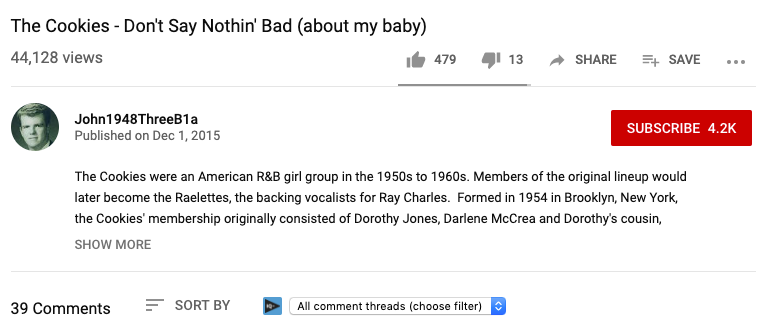
The complete description from below The Cookies’ YouTube video upload:
The Cookies were an American R&B girl group in the 1950s to 1960s. Members of the original lineup would later become the Raelettes, the backing vocalists for Ray Charles. Formed in 1954 in Brooklyn, New York, the Cookies’ membership originally consisted of Dorothy Jones, Darlene McCrea and Dorothy’s cousin, Beulah Robertson. Robertson was replaced in 1956 by Margie Hendricks (Hendrix). The group was introduced to Ray Charles through their session work for Atlantic Records. After backing him and other Atlantic Records artists, McCrea and Hendricks helped form the Raelettes in 1958. (Pat Lyles was a Raelette, but never a Cookie.)
In 1961, a new version of the Cookies emerged in New York, with Dorothy Jones joining newcomers Earl-Jean McCrea (Darlene’s younger sister) and another of Dorothy’s cousins, Margaret Ross. Jones also recorded one solo recording for Columbia in 1961. This trio had the greatest success as the Cookies: under their own name; as backing vocals for other artists, including Neil Sedaka’s hit songs “Breaking Up Is Hard to Do”, “The Dreamer” and “Bad Girl”; and recording demos for Aldon Music, under the direction of Carole King and Gerry Goffin. They provided the backup vocals for the Little Eva hit song, “The Loco-Motion”, as well as her follow-up hit “Let’s Turkey Trot”, both from 1962; and for Mel Tormé’s hit version of “Comin’ Home Baby”. They scored their biggest hit in 1963 with the song “Don’t Say Nothin’ Bad (About My Baby)”, which reached #3 on the Billboard R&B chart and #7 on the Billboard Pop chart.
A 1962 hit, “Chains”, was later recorded by the Beatles. Earl-Jean McCrea left the group in 1965 after two solo singles, which included the first recording of the Goffin/King song, “I’m Into Something Good”. The Cookies also released several recordings under pseudonyms, mostly with Margaret Ross on lead. Their alter egos on recordings were the Palisades (Chairman), the Stepping Stones (Philips), the Cinderellas (Dimension) and the Honey Bees (Fontana 1939 only).
In April 1967 they released their last record, produced by the Tokens. Darlene McCrea returned to replace her sister for this recording. Dorothy Jones died on Christmas Day 2010, from complications of Alzheimer’s disease, in Columbus, Ohio, at the age of 76. Margaret Ross, now Margaret Williams, tours today as the Cookies with new back-up singers. She also performs with Barbara Harris and the Toys occasionally.
PLEASE NOTE: I divided my uploads among multiple channels, Bookmark this link in your browser for instant access to an index with links to all of John1948’s oldies classics. LINK: http://john1948.wikifoundry.com/page/...


