
The Context You Never Had for Your Web Apps — The 7 Theoretical Models of Disability
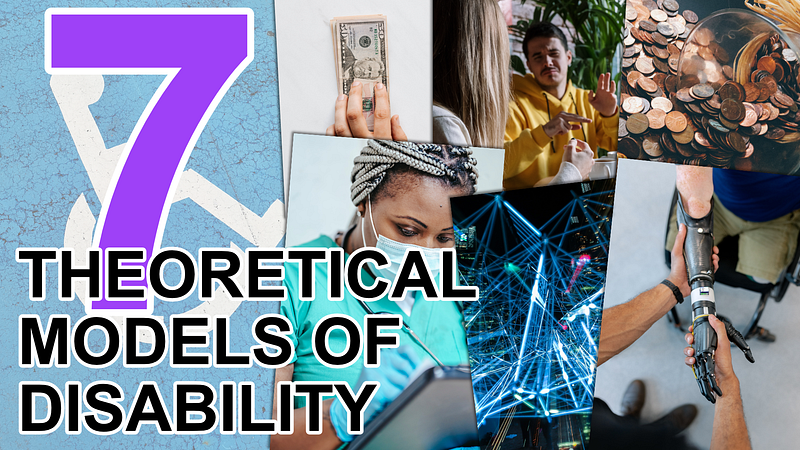
We’re so self-conditioned to assume the world works they way we know or experience it, that anything else seems entirely out of the realms of possibility. It’s a dismissively narrow view of an incredibly vast world, which unfortunately all too often translates to web and app development as well, especially when it comes to accessibility.
I bet that when I say “disabled person”, the first thing you get a mental image of is a white cane or a wheelchair. Well, fun fact, Roy Orbison was never blind, he just wore shades. It was his thing, just like Kiss wearing a tad too much makeup. Moral of the story is, wearing shades doesn’t make one blind, nor does wearing excessive makeup render someone a clown. It’s all about perception and context, which very conveniently brings me to the seven theoretical models of disability — medical, social, biopshychosocial, economic, functional, social and charity.
Turns out you can have seven of more than just dwarves, legs on a slightly disabled spider, candles in a jewish candelabrum, continents (debatable), or hey… days in a week, each of them ending in a “y”! Who knew 7 was such a popular number!
The Medical Model
This is unfortunately the most popular model for the time being and it tends to look at the individual as broken and needing to be fixed through some sort of medical intervention or support mechanism. People, like everything in nature, come in all shapes, sizes and other variations. The world is very diverse, get used to it. One of the most notorious people who didn’t, was called Adolf Hitler, and we all know how horribly that went.
The Social Model
The social model highlights the fact that individuals with disabilities are in many ways disabled by the world around them, by environments that aren’t inclusive enough. While hard to argue with that when 98% of the web was created with zero regards to various disabilities, it does tend to downplay certain biological realities. Let’s put it this way. A 45 degree incline is not a wheelchair ramp, but a death-trap!
The Biopsychosocial Model
The biopsychosocial model besides being a mouthful, is also the most difficult to grasp. Partly because it’s the newest model, but also because it’s a multi-faceted one. It requires a good understanding of the three key factors: biological, psychological and socio-environmental. Well, one could argue that’s nearly four, but we’ll let that slide. 😉 It’s a holistic and nuanced approach, and a lot fairer than other models, which is great, but unfortunately makes it also the most difficult to apply.
The Economic Model
In comparison to the biopsychosocial model, the economic model tends to oversimplify it and attempt to solve everything with money. While some might claim that money makes the world go round, and at times financial support may be a solution, it creates a lot of controversy around who qualifies for it, and often tends to be a fit model only from policy-makers’ perspective preoccupied with social benefit quotas. A bit of a “road to hell paved with good intentions” type of scenario, if you ask me.
The Functional Solutions Model
The functional solutions model is what tends to get inventors’ juices flowing, as just like the economic model, it assumes that all disabilities need, is some ground-breaking technological innovation. While this does genuinely help a lot, and attracts a large new wave of accessibility professionals, when some of those innovations — such as the perfectly accessible the HTML standard — get ignored, or become financially unattainable — say an iPhone or a braille reader — it kind of misses the point.
The Social Identity Model
The social identity model is probably the most interesting one, as it flips the story around, turning disability into a source of pride and identity. The Deaf community for example tends not to consider itself disabled, but simply a minority that speaks a different language and has its own culture. With this of course unfortunately also comes the downside of feeling excluded should one not fit the group’s expectations.
The Charity Model
“You poor thing” — should probably be the charity model’s slogan because it does look at disabled persons as unfortunate, needy and helpless. In fairness, while the intentions are good, and wanting to help is encouraged, it’s quite a tone-deaf approach and can feel condescending as often the subjects of this model are actually spectacularly good at taking care of themselves and don’t require charity, which also has the downside of often being short-lived.
Looking at these seven models, the software engineer in me is of course most intrigued by the functional solutions model — yes, I suppose I am part of the new wave — but innovation at low cost is often nigh on impossible or takes unaffordable amounts of time. The objective pragmatist in me, however recognises that we should probably all start at the biopsychosocial model and combine that with some of the others, as needed, and it should start at the ideation phase of every software project.
Let me know in the comments which model you prefer or perhaps identify with and why. Until next time, stay creative and accessible.
Attila Vago — Sr. Software Engineer building amazing ed-tech software. Cool nerd since forever, writer of codes and blogs. Web accessibility advocate, Lego fan, vinyl record collector. Loves craft beer!


