The Connection of Ancient Maya Prophecies to Modern Climate Science
The mysteries of the Mayan calendar and the galactic alignment of 2012

The history of the Ancient Maya civilization is a treasure trove of wisdom, rich with observations of the cosmos that echo through to our modern times. Thousands of years ago, the Maya made intricate calculations about the universe and celestial events, including the 26,000-year cycle of the galactic alignment. The precision and accuracy of these observations inspire and reveal how their understanding aligns impressively with today’s scientific knowledge.
The Ancient Maya also made prophecies, several of which resonate strongly with modern climate science. They understood the ebb and flow of nature’s cycles and how these could dramatically impact human societies. Today, there is a change in the climate, and people can relate to the prophecies made by the Maya millennia ago. Could the Maya these prophecies, paired with modern science, enlighten us on our cosmic role and environmental impact?
The Galactic Alignment
The galactic alignment was not an ordinary event but a rare astronomical phenomenon that occurs once every 26,000 years. When it happens, the Sun, Earth, and the Milky Way galaxy align perfectly.
This alignment occurs on the winter solstice, the shortest day of the year. This makes it an incredibly unique occurrence, not just for astronomers but for all of us intrigued by the mysteries of the universe.
The science behind this alignment helps us appreciate its rarity. The Earth wobbles on its axis in a cycle that lasts 26,000 years, known as precession. When the tilt of the Earth’s axis lines up with the center of the Milky Way, that’s when we witness the galactic alignment. The fascinating thing is how precisely these cycles match up — a testament to the universe’s grand design.
Sun plays a significant role during this alignment. Throughout the year sun forms a line against the backdrop of stars, known as the ecliptic. At the point of galactic alignment, the Sun sits right on the galactic equator — the midline of the Milky Way. This creates a captivating celestial spectacle that has captured the human imagination for millennia.
The ancient Maya, for instance, had a keen interest in these celestial events. They developed a sophisticated calendar system that not only recorded time but also kept track of these celestial cycles. Their long count calendar ended on December 21, 2012, coinciding with the most recent galactic alignment. This has led many to believe that the Maya deeply understood this astronomical event far beyond what we initially assumed.
Echoes of an Ancient Prophecy
Long ago, the Maya civilization grasped the potential of climate to reshape societies.
Their meticulous records and astute observations of weather patterns led them to make long-term predictions. Today, we stand on the precipice of a world facing drastic transformations due to climate change, and it is hard to dismiss the significance of the Maya prophecies.
Significant shifts in climate marked the periods of galactic alignments, events recurring every 26,000 years. The most recent alignment happened in 2012, an event that spurred both interest and concern worldwide. As weather extremes are becoming increasingly common today, we may be experiencing a pivotal shift similar to those foreseen by the Maya.
Our climate has another extraterrestrial tie — the Sun’s 11-year cycle of solar activity. This celestial cycle alternates between calm periods and stormy outbursts. The solar disturbances from these outbursts have far-reaching effects, leading to changes in our planet’s climate. This unstable cycle of the Sun may indeed be contributing to our rapidly changing climate.
As the effects of climate change become progressively evident, the relevance of Maya prophecies grows. Their astute observations about the relationship between cosmic events and earthly changes offer many insights. Harnessing this ancient wisdom could give us a unique tool to understand, predict, and adapt to the climate crisis more effectively.
The message from ancient Maya prophecies and our current understanding of climate science is unequivocal: the need for climate action is urgent. Similar to how the Maya adapted to their changing environment, we must also rise to the challenge.
The Sun’s Cycle and Its Impact
Our Sun follows an 11-year rhythm known as the solar cycle. This cycle witnesses the Sun’s activity rising and falling like a celestial heartbeat. This solar rhythm impacts a wide range of phenomena, from satellite communications to weather patterns on Earth, from stormy outbursts to periods of tranquility.
During the peak phase of the cycle, known as solar maximum, the Sun becomes incredibly active. It releases solar flares and hurls solar particles into space, causing what we know as geomagnetic storms. In contrast, the Sun’s activity reduces during the solar minimum, leading to fewer solar storms. The swings between solar energy highs and lows can cause significant changes in our planet’s climate.
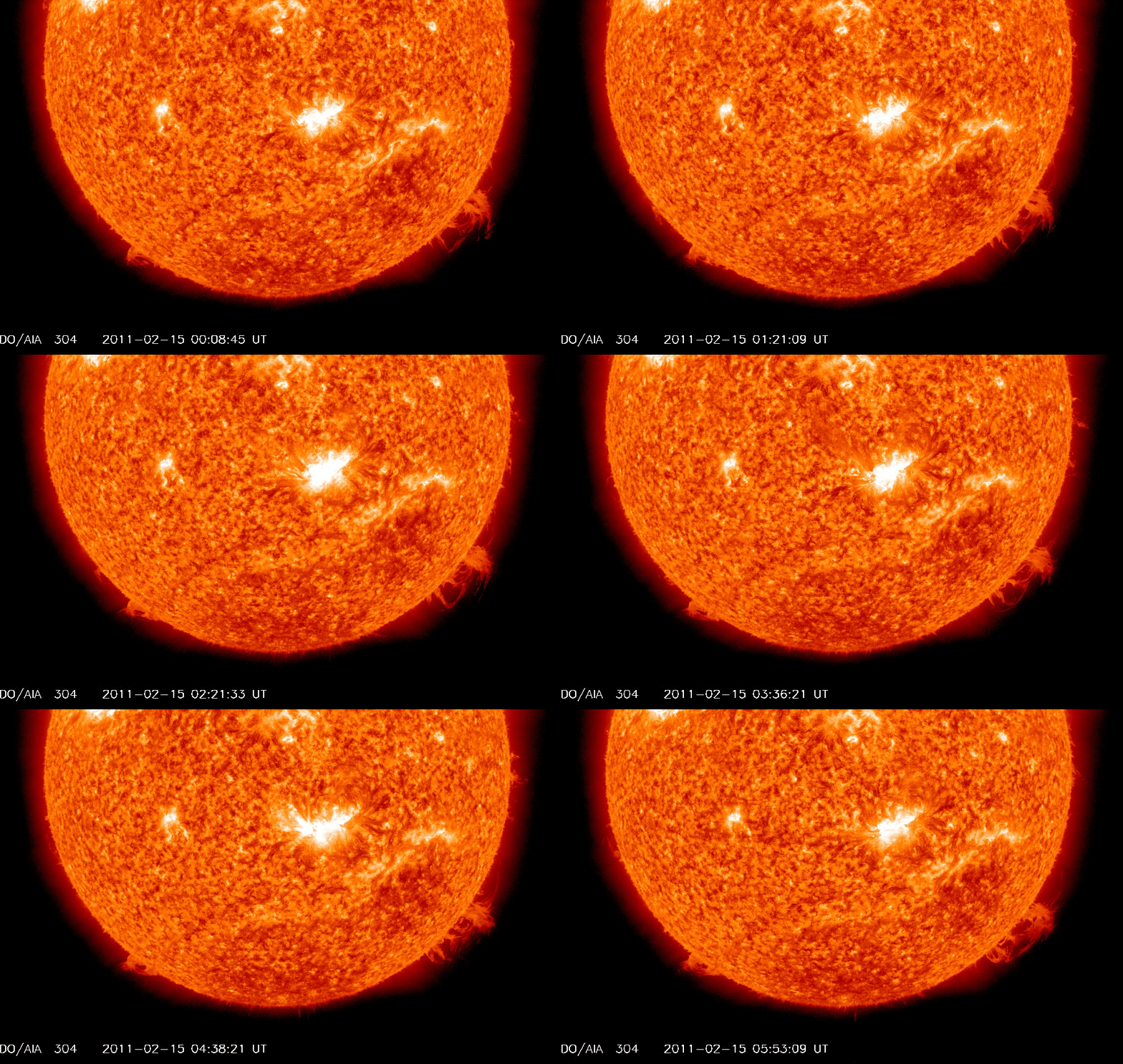
The influence of the Sun’s activity on Earth’s climate is direct. When the Sun’s activity is high, it can heat the Earth’s atmosphere, leading to warmer temperatures. On the other hand, during periods of low solar activity, our planet can experience a cooling effect. The precise mechanisms and the extent of the Sun’s impact on our climate are still areas of ongoing research for scientists.
Beyond climate, the Sun’s cycle also impacts our technology. Increased solar activity during the solar maximum can disrupt satellite communications, power grids, and navigation systems. Understanding and predicting these solar events is crucial for us to mitigate their effects, ensuring the smooth operation of our tech-dependent world.
Interestingly, the ancient Maya civilization recognized the importance of the Sun’s cycle. They revered the Sun as a powerful entity that profoundly influenced their lives and the environment.
Modern Relevance of Maya Prophecies
The ancient Maya civilization has left us with a trove of knowledge that resonates strongly in the modern world.
Known for their advanced knowledge of astronomy, the Maya made accurate predictions based on their observations of the cosmos. Today, some of their prophecies are relevant to our understanding of climate change and environmental shifts.
The Maya were aware of the Sun’s activity cycle and the impacts it could have on the Earth’s climate. They understood that the changes in the Sun’s activity, now known to us as the solar cycle, could lead to changes in temperature and weather patterns. Our modern scientific findings support this understanding, revealing how advanced the Maya were in their understanding of the universe.
Final Verdict
Today, as the effects of climate change become increasingly evident, the wisdom embedded in Maya prophecies grows more relevant. Their observations and predictions about the link between celestial events and earthly happenings offer valuable insights. We can utilize this wisdom to understand better, predict, and adapt to the climate crisis we are currently experiencing.
The ancient Maya’s understanding of the cosmos was impressively advanced, their predictions profound. Their prophecies, particularly those concerning climatic changes, align with our present scientific observations, offering a roadmap to understanding and navigating our future. Could this be the countdown to Armageddon, or could it be a call for humanity to understand better and respect our cosmic connection and planet? Only time will tell.