
The Concorde Effect in Everyday Life
Do we have to go on till in the end in everything?
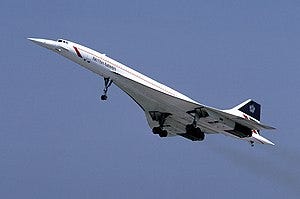
France and UK governments in the 1960s joined forces on the project of a supersonic passenger airliner: a plane for civilian flights capable of overcoming the speed of sound.
Nonetheless, it is famous (or should I say INfamous) for its huge costs, increasing year by year from a starting estimate of £70 million to an actual +£2000 million (in the 1970s, today it would have been billions). The project was carried out but was never able to produce adequate incomes.
It was affected by all sorts of problems both before and after release. It could fly at supersonic speed, but only over oceans because the sonic boom would have been dangerous for populated areas. It even had overheating problems depending on the colour of the paint, namely the blue from Pepsi sponsor painting. But the investors kept investing, in fear of losing what they already put in the project. They just kept increasing losses.
From this example, the term “Concord Effect” was born, also known as “Sunk-Cost Bias”.
These terms are used to describe wrong financial behaviours, such as not knowing when to quit an investment before it’s too late:
“we’ve spent so much already, we might as well carry on”.
But, interestingly enough, it can be applied also to everyday life by just switching the concept of money to energy, time, feelings. Every day we invest in what we do — an activity, a job, a relationship. We put effort into them and very often we keep doing so beyond the limits of reason. We do this. No matter what, we keep watching a TV series on the Nth season wandering why, as well as we keep believing in an ill romance.
History has to serve as teaching. Think of the Concorde Programme losses. The simple fact you invested so much till now is not a valuable reason to continue investing.
I won’t bring you love and friendship loss examples, because I’m sure you can think of one of your own. I will bring you my personal experience, which hurt me more than any broken heart I experienced in my life.

I am a nuclear physicist. I loved (and still love) physics since the first time I met the concept of measurement and error.
I kept believing it was my way, physics. I overcame all sorts of adversities and difficulties, and I am proud of myself for making it. I graduated bachelor, then master, then started my journey as a PhD fellow.
10 years in the academic world. Then, one day, I started noticing some little things. They seemed to be off, strange. I was arguing with my girlfriend a lot more than usual, or necessary. I was bored, I was anxious (never have been). I was worried about something all the time. I felt a boulder on my chest all the way from home to the laboratory. I felt unhappy. Unsatisfied.
But the most terrifying thing was realizing that those feelings weren’t new, at all. I was just denying them since who-knows-when.
I was depleted in energy and motivation but decided to finish the PhD since it would have taken just a few more months. The hardest few months of my life.
I felt so wrong. I felt as I was throwing away 10 years of efforts and sacrifices as well as results and gratifications. I felt like a failure and a disappointment. To my parents, to me.
I went through therapy to understand what was wrong with me, just to realize that I was wronging myself, by forcing myself to live a life not suited for me anymore, for many reasons.
I forced myself into investing time, energy, effort (and also money) into a career that was not mine anymore. It took courage to admit I was living a Concorde effect time of my life. And it took even more to decide to step back, regroup, start over again having constantly the sword of Damocles of those 10 years I was throwing away. But I didn’t want to increase my loss anymore.
So here I am. Breathing, working and living much lighter. Trying to follow my dreams. Finally feeling free.
Get access to my stories and those of other Medium writers for just $5 a month. As a Medium affiliate, I receive half of your payments as a commission.
Join my newsletter and receive regular notifications when I post.


